REVIEW · ARUBA
Aruba Flyboarding & Jetovator Experience: Fly Like a Bird & Dive Like a Dolphin
Book on Viator →Operated by Delphi Watersports · Bookable on Viator
Flyboard turns Aruba into an action movie. In about 30 minutes, you’ll learn to control a jet-powered board that lifts you over the Caribbean Sea right from the beach. It’s one of those rare activities where you go from land legs to hovering fast—no slow ramp-up. Flyboarding is the whole point, and it’s exactly as intense as it looks.
I love that instruction is included, even if you’ve never tried it. Instructors like Jhon and Olga are the ones expecting you at Delphi Watersports, and people also call out coaching from Brandon, Jay, and the in-water help of Kamal and Oscar. I also like that it’s a private experience, meaning your time feels focused on your group instead of shared with strangers.
The main drawback to keep in mind is that this sport can be tough at first. You’ll likely splash, crash, and struggle briefly as your balance catches up, and that learning curve can feel frustrating if you expected instant control.
In This Review
- Key things to know before you go
- Aruba’s beach-to-water setup: why it feels so immediate
- From quick lesson to flying: what your 30 minutes actually feels like
- Private by design: how the group format changes your pacing
- Meet your team at Delphi Watersports: Jhon, Olga, Brandon, Jay, Kamal, and Oscar
- Entering the session: what to expect right from check-in
- Price and value: does $150 buy enough adrenaline?
- Weather, weight limit, and who should book (and who might want a backup plan)
- Should you book Aruba Flyboarding & Jetovator? My decision guide
- FAQ
- FAQ
- How long is the Flyboarding & Jetovator experience in Aruba?
- Where is the meeting point?
- Is instruction included for beginners?
- What is the weight limit?
- Are snacks included?
- Does weather affect the experience?
Key things to know before you go
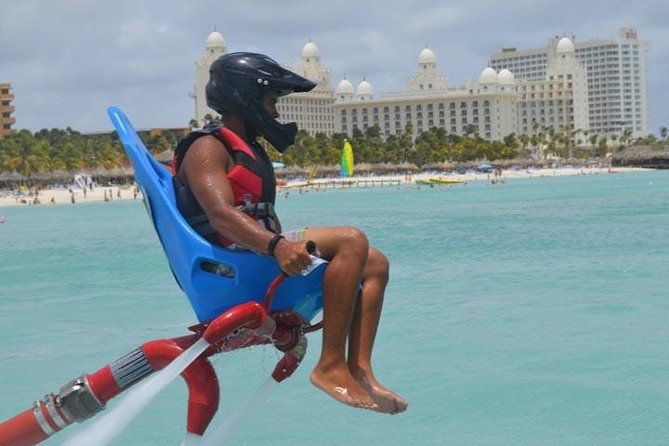
- About 30 minutes total: plan for a quick lesson and a short run of flying and practicing control
- Right on the beach: meet at Delphi Watersports in front of the Hyatt Regency towel hut in Noord
- Coaching included: beginners get instruction, and staff members are often praised by name
- It’s private: only your group participates, so you don’t get rushed or ignored
- Weight limit applies: max 250 lbs / 114 kg
- Weather matters: the experience requires good conditions
Aruba’s beach-to-water setup: why it feels so immediate
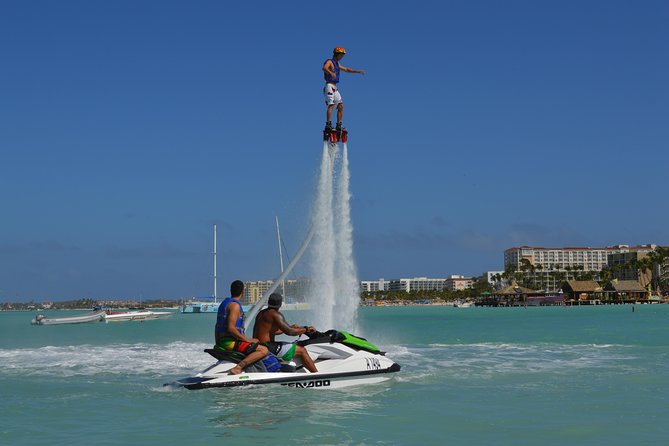
One of the smartest parts of this experience is where it happens. You’re not driving across the island, then transferring to another site, then waiting for a long departure. You’re at the beach, at Delphi Watersports Aruba, in front of the Hyatt Regency towel hut in Noord. That matters because flyboarding is short by design—your value is in the time you’re actually on the board.
You’ll also appreciate how straightforward the meeting point is. The location is described as being on the beach in front of the Hyatt, and the area is said to be near public transportation. If you’re the type who hates “hunt the pickup spot” adventures, this is the kind of activity where you can spend more of your Aruba day on the experience and less of it figuring out logistics.
There’s also a practical side to the format: it’s a mobile ticket activity. That means you’re not scrambling for paper confirmations when you’re already in vacation mode. And because it’s private, your group’s energy stays with you—less waiting, fewer awkward pauses, more time watching your own progress.
You can also read our reviews of more tours and experiences in Aruba.
From quick lesson to flying: what your 30 minutes actually feels like
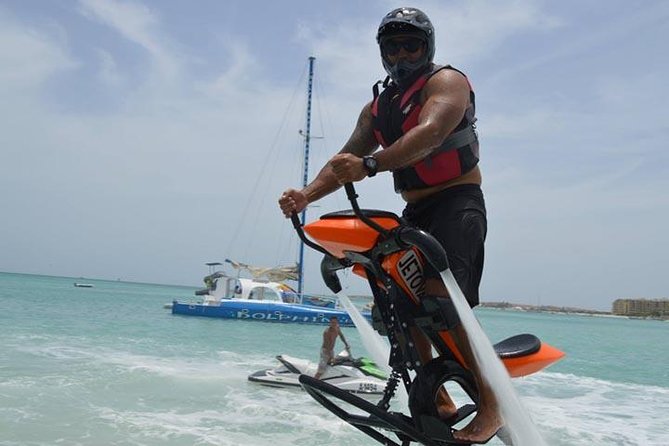
This is an activity that’s built around short bursts of adrenaline. The total duration is listed as about 30 minutes, and you should treat that as lesson + practice time, not a full-scale training course.
The experience starts with instruction on land and at the water’s edge. After a short lesson, you’ll be flying above the Caribbean Sea, hovering while you get used to how the jet thrust changes your balance. Expect a lot of sensation changes quickly: you go from standing to managing posture, timing, and control—all while looking down at water and trying not to overthink it.
Here’s the part I’d plan mentally for: the first moments can feel unstable. One review describes it as extremely hard, with lots of crashing into the water. Another person says they took a second to get it, but once they did, they felt like Iron Man. In other words, the learning curve shows up fast, and the payoff arrives once your body understands the motion.
A helpful detail from the feedback: one person notes that they got airborne independently during the last 10–15 minutes. That’s a strong clue that the session is structured so beginners can improve within the same booking, not just watch while someone else rides. If you show up ready to listen and willing to fall, your odds of finishing with a real sense of accomplishment go up.
Private by design: how the group format changes your pacing
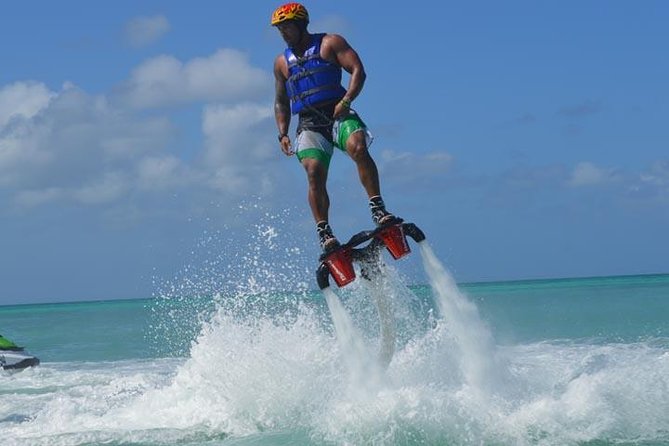
This is listed as a private tour/activity, with only your group participating. That’s more than a buzzword. In a high-adrenaline sport like flyboarding, timing and attention matter. When it’s private, the instructor can focus on your group’s rhythm—how fast someone learns a stance, who needs extra coaching, and how much time you spend repeating the basics before you push toward higher control.
The reviews reflect that kind of hands-on focus. People praise specific staff members for getting them up in the air, helping them out in the water, and sticking with them through the awkward parts of the learning curve. That also lines up with the overall promise: you don’t need prior experience because instruction comes with the activity.
The private format can also help reduce the embarrassment factor. If you’re one of the people who hates feeling clumsy in front of strangers, you’ll likely feel more comfortable learning here. Even if you crash a few times—which can happen—there’s less social pressure and more straightforward coaching.
Meet your team at Delphi Watersports: Jhon, Olga, Brandon, Jay, Kamal, and Oscar
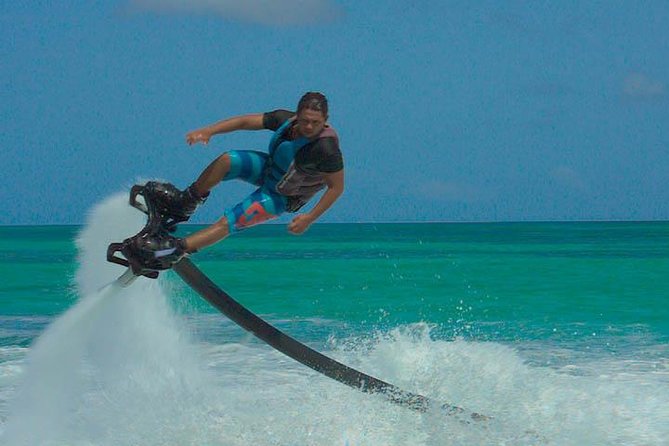
The coaching names matter here because they show up repeatedly in the experience. You’re told to meet at Delphi Watersports, located in front of the Hyatt Regency towel hut, and that Jhon and Olga will be expecting you there. That’s useful if you like knowing who to look for instead of guessing.
Then there’s the in-session support. One review credits Brandon for helping someone get up in the air quickly, calling the experience phenomenal. Another praises Jay for clearly explaining how to do it and helping a 19-year-old catch on fast. If you’re a beginner, that kind of explanation quality is a big deal—flyboarding has enough moving parts that vague coaching can waste precious minutes.
Support in the water gets a spotlight too. One review singles out Kamal for being great and assisting during the ride. Another mentions Oscar, specifically for patience and great videos. Even if you don’t plan to become a filmmaker, this tells you the staff likely focuses on capturing the moment and keeping the tone positive when you’re learning.
One caution from the feedback, balanced: there’s at least one negative experience that says the activity felt more challenging than expected and that assistance wasn’t what they hoped. That doesn’t mean the activity is misrepresented—it means your comfort with skill-based sports matters. If you arrive expecting effortless flying, you may feel disappointed. If you arrive ready for coaching and splashes, it can be the kind of story you bring back to your group chat.
Entering the session: what to expect right from check-in
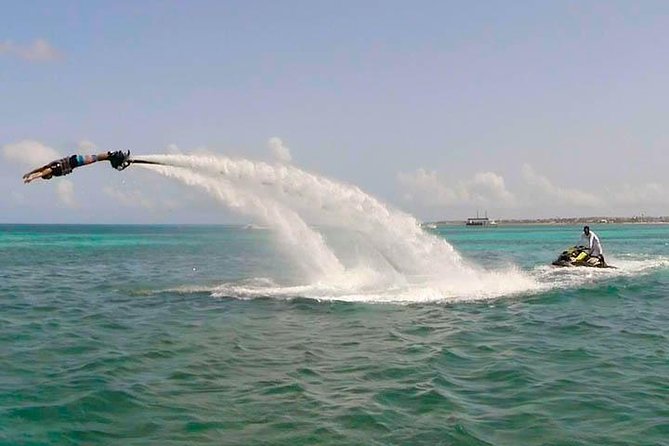
The experience ends back at the same meeting point, so everything is concentrated around Delphi Watersports. That means your session has a clean beginning and end: you meet, you learn, you ride, and you’re back near where you started.
Check-in has one detail that’s worth respecting. It requires that the credit card holder be present at check-in and bring a picture ID (or a copy of an ID card, driver’s license, or passport). It’s the kind of requirement that can derail a trip if you assume it’s optional. If you’re traveling as a couple or group, make sure the person who booked with the credit card can handle that step.
You’ll also want to remember that snacks aren’t included. For a quick 30-minute thrill, you can still plan around hydration and timing on your own. If you’re pairing this with beach time or a day of sightseeing, keep the snack gap in mind so you’re not hungry right before you’re trying to focus on balance.
Finally, this is listed as most travelers can participate, but it still has constraints. The big one is the weight limit, and it’s not a soft guideline.
Price and value: does $150 buy enough adrenaline?
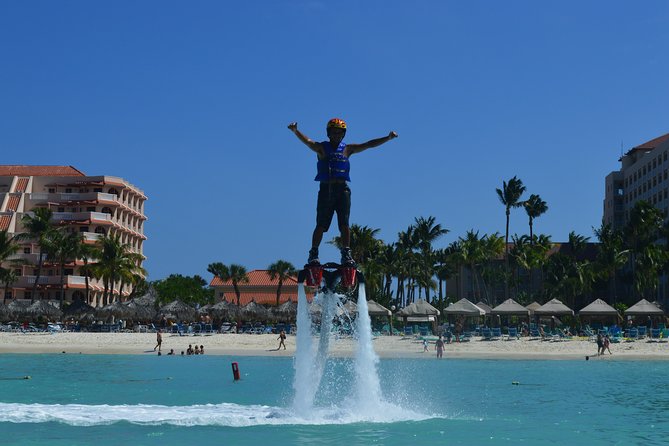
At $150 per person, you’re paying for three things at once: access to the equipment and staff, a structured beginner lesson, and time in the air. This isn’t a low-cost add-on. But with flyboarding, you’re not buying a long outing—you’re buying an intense burst that’s hard to replicate with any other standard beach activity.
Here’s how I’d judge the value:
- Instruction is included, so you’re not stuck figuring it out alone. That’s part of what makes it worth paying rather than just renting gear and hoping for the best.
- Private time means your group’s effort is more likely to translate into actual flying time, not just waiting your turn.
- The session is about 30 minutes, which keeps the total commitment manageable on a vacation schedule.
The quality signals support that price point. The rating is listed as 4.7 with 64 reviews, and 92% of reviews recommend the experience. That’s a strong indicator that most people find the adrenaline-to-effort ratio worth it.
Still, the value depends on your expectations. If you want a low-splash, low-skill ride with immediate comfort, flyboarding might feel expensive because the first part of the learning curve is awkward. If you want that Ironman-style thrill and you’re okay with a learning phase, $150 starts to look reasonable for a one-time “only in Aruba” moment.
Weather, weight limit, and who should book (and who might want a backup plan)
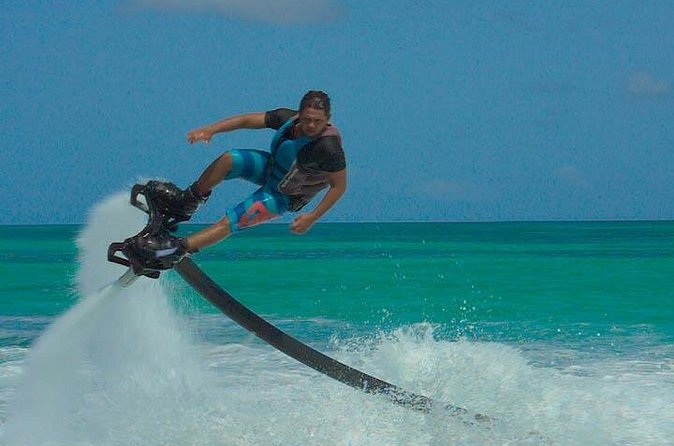
This activity requires good weather. If conditions aren’t right, it can be canceled and you’ll be offered a different date or a full refund. Since this is on open water and depends on safe operating conditions, weather sensitivity is part of the deal.
Then there’s the weight limit: max 250 lbs / 114 kg. It’s clearly stated, and it’s the kind of constraint you should treat seriously. If you’re near the limit, don’t assume you can push it. The board and safety rules come first.
Finally, think about your tolerance for challenge. The reviews show a wide spread in how people experience the difficulty. Many people describe it as hard but worth it, including those who kept crashing yet wanted to do it again. That suggests persistence is rewarded. But there’s at least one negative review that says the instructor provided very little assistance and the experience felt like it took forever in the water. That’s the risk side of skill sports: if you’re not ready to practice and learn, you might feel like you’re paying to struggle.
Who should book?
- Active adults and teens who like hands-on learning
- People who enjoy adrenaline and don’t mind getting splashed
- Anyone who’s comfortable following directions and trying again
Who might hesitate?
- If you need instant success and hate feeling out of control
- If you’re very sensitive to physical challenge or frustration
- If you want a calm, sit-and-enjoy water activity instead of skill training
Should you book Aruba Flyboarding & Jetovator? My decision guide
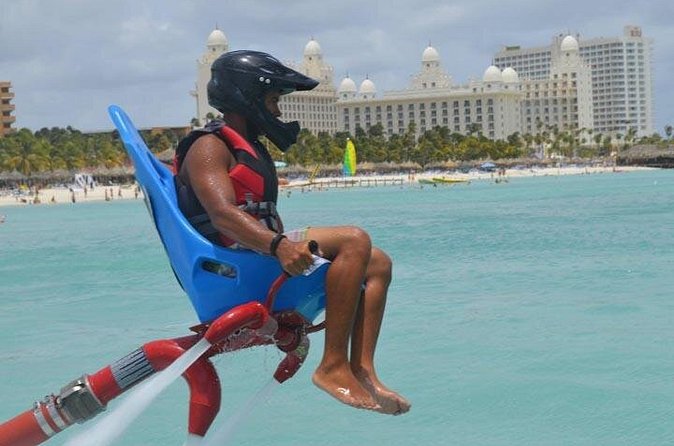
Book it if you want a memorable Aruba break from the usual beach routine and you’re excited by the idea of being lifted above the water after a quick lesson. The combination of on-beach convenience, beginner instruction, and staff support makes this one of the more efficient ways to try something dramatic without needing prior experience.
Skip it or book with caution if your top priority is comfort and ease. Flyboarding is physically demanding and you might crash before you feel in control. If you want a gentler water option, you might prefer something more forgiving—one person even compared it to tubing after a rough first experience.
If you do book, I’d go in with the right mindset: this is a short, intense lesson where progress matters, not perfection. If you give it a fair try and listen closely—especially during those first minutes when balance is everything—you’re far more likely to walk away with that wow feeling people describe: flying like a bird, then dropping and popping back over the water with confidence.
FAQ
FAQ
How long is the Flyboarding & Jetovator experience in Aruba?
The experience duration is listed as about 30 minutes.
Where is the meeting point?
You’ll meet at Delphi Watersports Aruba, on the beach in front of the Hyatt Regency towel hut in Noord, Aruba. The activity ends back at the same meeting point.
Is instruction included for beginners?
Yes. You receive a short lesson, and the experience is designed so you can participate even if you’ve never tried flyboarding before.
What is the weight limit?
The maximum weight limit is 250 lbs / 114 kg.
Are snacks included?
No. Snacks are not included.
Does weather affect the experience?
Yes. The experience requires good weather. If it’s canceled due to poor weather, you’ll be offered a different date or a full refund.