REVIEW · LAGOS
Dolphin Watching from Lagos with Marine Biologists
Book on Viator →Operated by Bluefleet - Boat Trips and Tours · Bookable on Viator
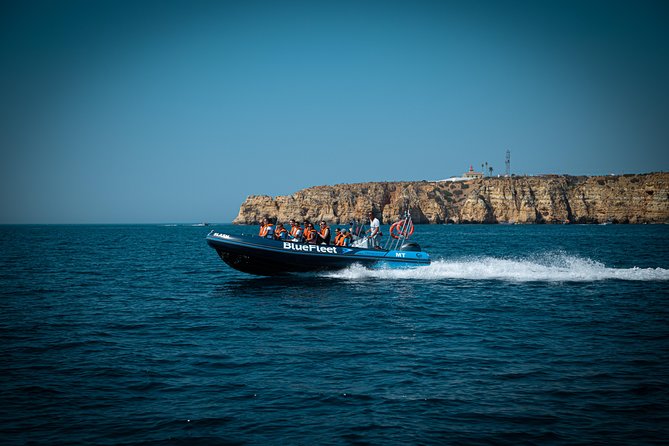
Dolphins close to the RIB feel unreal. From Lagos, Bluefleet runs a 90-minute ride with marine biologists that mixes a real search with live commentary and sweeping Algarve-coast viewpoints.
What I love most is the combo of a small boat and hands-on guide work. You sit low and close, so the action feels immediate, and the crew helps you pinpoint where to look—especially once a pod shows up.
One thing to plan around: this trip really depends on good weather. If conditions are rough, the operator may offer a different date or a full refund.
In This Review
- Key things to know before you go
- Meeting Bluefleet at Lagos Train Station (and why it matters)
- Your RIB ride: what that 90 minutes feels like
- The dolphin search: live guidance, not guesswork
- Learning on board: marine biology explained in real time
- The close encounter factor (and what to expect when pods appear)
- Algarve coast views on the way out and back
- Price and value: is $48.39 worth it?
- Best for who? Who should consider another option
- What to bring for comfort (and fewer “why didn’t I…” moments)
- The bottom line: should you book this Bluefleet dolphin trip?
- FAQ
- Where does this tour start and end?
- How long is the dolphin watching trip?
- How much does it cost?
- What’s included on board?
- What is not included?
- What language is the tour offered in?
- Is there an age limit?
- How big is the group?
- What happens if weather is bad?
- Can I cancel for free?
Key things to know before you go
- Small RIB, better sightlines: The boat’s size helps you spot behavior up close.
- Marine biologists on board: You get live commentary that actually explains what you’re seeing.
- Guides actively help you locate dolphins: You’re not just staring into waves hoping.
- Dolphins can be very close: Multiple encounters, including baby dolphins, are part of the promise.
- Bonus wildlife may happen: In addition to dolphins, a loggerhead turtle has been spotted on some outings.
- The Algarve coast is part of the deal: The ride includes big coastal views, not just ocean time.
Meeting Bluefleet at Lagos Train Station (and why it matters)
I like meeting points that are easy to find when I’m on vacation. This one is inside Lagos Train Station, at the Bluefleet office on Estr. de São Roque. Because it’s near public transportation, you can skip the stress of hunting down parking or coordinating pickup.
You’ll check in and get a quick briefing about weather and sea conditions before you go out. That matters because dolphin watching is one of those activities where the sea state changes everything—comfort, sighting angles, and even how long you can safely stay with a pod. The briefing helps you set expectations early, instead of guessing once you’re already on the pier.
Also: there’s no hotel pickup or drop-off. So if you’re staying out of the center, plan your route to the station ahead of time. The good news is that the meeting point is simple and direct.
You can also read our reviews of more tours and experiences in Lagos.

Your RIB ride: what that 90 minutes feels like
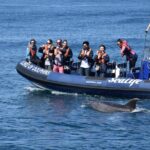
This trip is about 1 hour 30 minutes on the water and you return to the same meeting point. The time passes quickly, and not just because you’re moving fast on a RIB. The search has rhythm: scan, reposition, look again. When dolphins show up, everything speeds up in a good way.
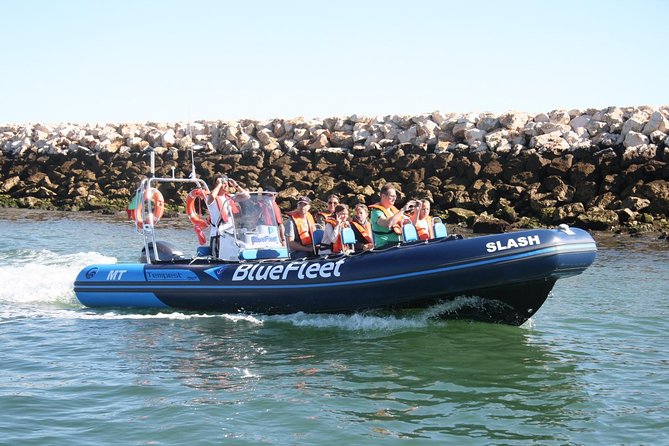
A big detail you should know is how you sit. People describe the ride as feeling like you’re riding a bike—upright, engaged, and ready to look. That’s not a bad thing on this route. It keeps you alert during the scanning phase, and it helps you react quickly when the crew points out movement.
Group size is capped at 18 travelers, which I consider a comfort plus. You’re close enough for guidance to be practical, but not so packed that you spend the trip blocked by shoulders or fishing for a view.
The boat isn’t just for transport. It’s a viewing platform. From what I’ve seen in the way the crew runs the boat, you’ll likely get the best angles from the front seats, but there’s a view all around—important when pods change direction.
The dolphin search: live guidance, not guesswork
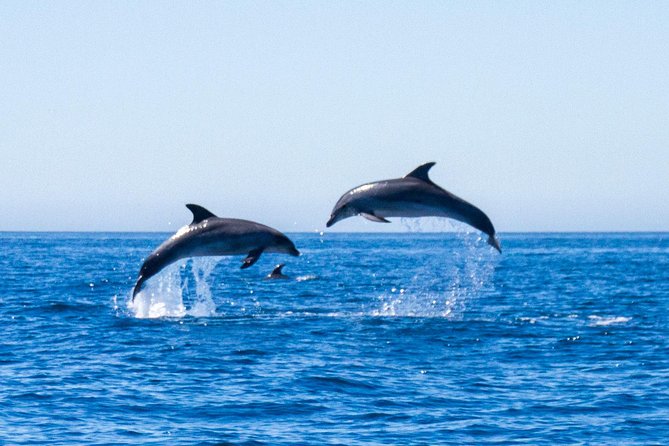
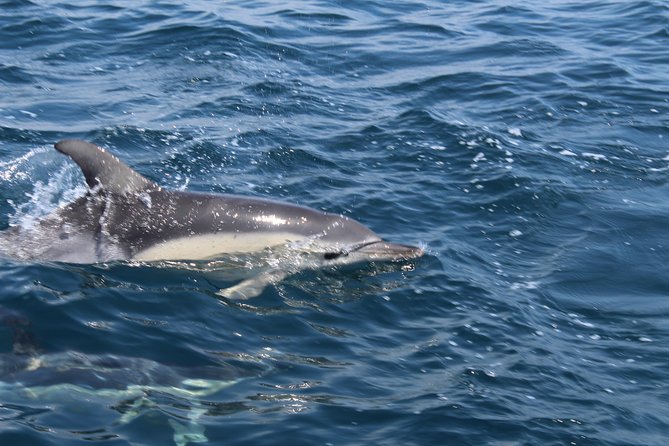
The core of this experience is searching for common and bottlenose dolphins in their natural habitat. In plain terms: you’re out there to find them, watch their behavior, and learn what you’re seeing as the day unfolds.
The marine biologist or on-board guide doesn’t just provide facts. They help with spotting. On multiple outings, the crew is able to locate dolphins in a short window, and then you follow for a while rather than doing a quick drive-by. Some groups have reported sightings after about 20 minutes, with follow-time around half an hour when conditions allow.
One reason I think this approach works well is that dolphin sightings often depend on small cues—surface movement, quick changes in direction, or the telltale pattern of surfacing. If you’ve ever tried to find dolphins from shore, you know how hard it can be. On this boat, you’re not left alone with your binoculars and hope.
You may even be asked to help look once the search starts. That sounds silly, but it’s actually smart: more eyes improve the odds, and it keeps you involved rather than bored while the ocean does its thing.
Learning on board: marine biology explained in real time
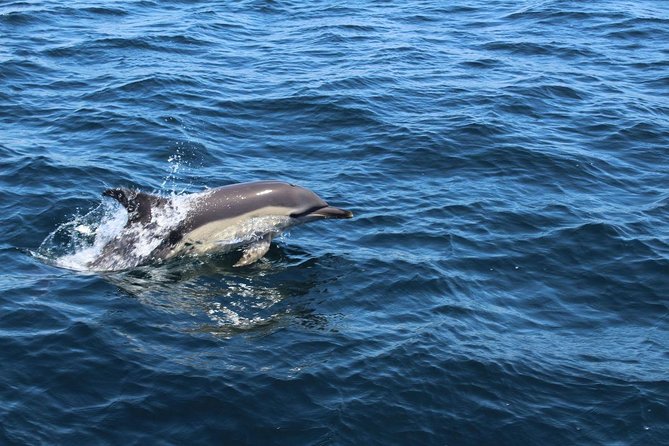
Here’s where the tour earns its value. You get live commentary and on-board interpretation from guides and marine biologists, in English. That means the trip doesn’t stop at sighting. You learn how the dolphins behave—how they travel, how they react to the boat, and what signals indicate different activity.
Common and bottlenose dolphins can look different in motion, and the crew uses that to help you understand what you’re looking at instead of just clocking a fin. People have also mentioned identifying species on the spot, which is exactly what you want when you’re trying to tell one dolphin group from another.
I also like that the crew’s job is not to force close encounters. The best experiences feel respectful—watching dolphins do dolphin things, with the boat positioned to observe rather than chase. Several accounts highlight that the crew stays attentive to dolphin safety, and that shows in how the encounters tend to feel calm and focused rather than frantic.
The close encounter factor (and what to expect when pods appear)
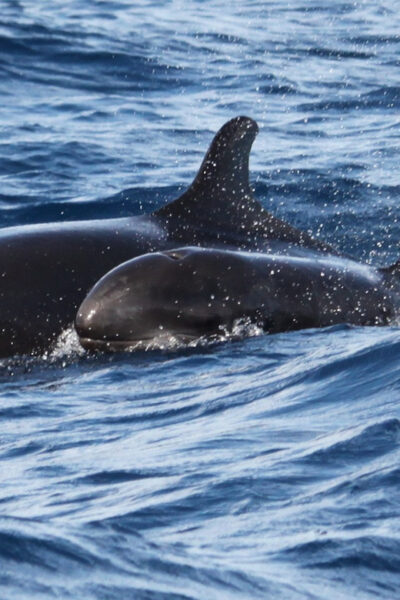
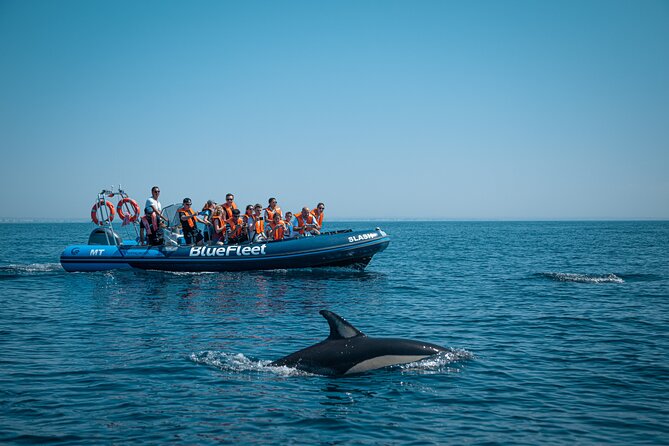
When dolphins come close, it can feel almost unfair—in the best way. People have described pods swimming alongside the RIB, passing under the boat, and showing more active behavior like jumping and spinning around the vessel.
A standout theme in the feedback is how close you can get without feeling like you’re pushing them. A small RIB helps, because you’re physically nearer and you don’t need to lean around tall railings or peer over other boats.
Baby dolphins are also part of the story. If you’re lucky (and you often are with this operator’s search efforts), you may see groups that include calves. That changes the mood instantly, because you’re not only seeing adult behavior but also the energy and movement that comes with younger animals.
One practical note: you might see other boats in the same area. In shared search zones, multiple operators can converge when sightings happen. That doesn’t automatically ruin the experience, but it does mean you may feel like the water turns into a little dolphin traffic circle before things calm down.
Algarve coast views on the way out and back
Dolphins grab the headlines, but the ride itself is part of why I’d consider this tour even on a day when you’re not sure you’ll see them.
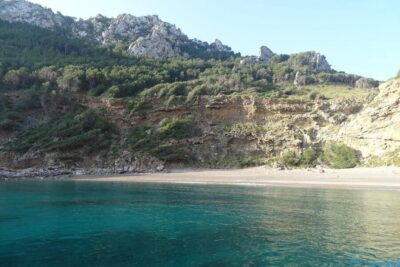
From the RIB, you get sweeping views of the Algarve coastline. You’re traveling fast enough that the scenery keeps changing, but not so fast that you can’t look up and enjoy it. This is a “camera comes out, then you forget to take photos because the dolphins are moving” kind of trip.
On the return, some groups have also talked about passing by Ponta de Piedade, a dramatic coastal area near Lagos. I can’t promise it every single time from the information provided, but it’s clearly part of the coastal route on some outings and adds a nice contrast to the open-water scanning.
Price and value: is $48.39 worth it?
At $48.39 per person for roughly 90 minutes, this isn’t a bargain-safari price, but it also doesn’t feel like a luxury splurge. It sits in the mid-range for dolphin watching, and the value hinges on two things:
- Guidance quality. When you’re helped to locate dolphins and understand what you’re seeing, you get more than a chance encounter. You get learning and better odds.
- Sighting intensity. Multiple reports describe lots of dolphins, including close passes and longer follow time when conditions are right. If you get a pod that’s active and nearby, this trip feels like the kind of experience you’ll remember for years.
I also like that the operator keeps the group small (max 18). A smaller boat usually means a better viewing experience. It also typically means the guides can manage the group and keep attention where it should be—on the water.
Best for who? Who should consider another option
This is built for most adults and families who can handle a boat ride and follow instructions during a moving search. The company notes it’s not recommended for children under 4. If you’re traveling with younger kids, you’ll want to choose something calmer or age-appropriate instead.
It also helps if you enjoy active sightseeing. This isn’t a sit-and-forget cruise where the crew reads facts while you float. You’ll be scanning and watching for movement. If you like being involved, you’ll likely enjoy this more.
If you’re the kind of traveler who gets motion sick easily, think carefully. The trip is on a RIB and people describe it as a lively ride. That doesn’t mean it’s unsafe or chaotic, but it does mean your comfort level matters.
What to bring for comfort (and fewer “why didn’t I…” moments)
You’ll be out on open water, so dress for wind as much as for temperature. Even in nicer weather, sea air can make you feel colder than you expected while you’re waiting for the next sighting.
Bring sunglasses and sunscreen if you’ll burn easily. On dolphin trips, you often spend time looking in bright water. A hat helps too.
Also, since the meeting point is Lagos Train Station and the tour starts from there, you’ll want to arrive with time to park or route yourself. You’ll get your weather/sea briefing before departure, so don’t show up last-minute if you can avoid it.
Finally, a little mindset helps: dolphins don’t follow schedules. The crew’s job is to search efficiently, but your best experience comes when you’re ready for a bit of waiting between moments of excitement.
The bottom line: should you book this Bluefleet dolphin trip?
I’d book this if your main goal is dolphins you can actually see, with on-board marine guidance that helps you understand behavior as it happens. The small RIB, the live commentary in English, and the crew’s active spotting approach are the reasons this doesn’t feel like a hit-or-miss boat ride.
I’d hesitate if you’re only going for a relaxed cruise. This is a working search, and it can feel like a bit of focused scanning. And if weather is unstable during your dates, have a plan B mindset because sea conditions matter here.
If you can line it up on a day with decent weather and you’re ready to look along with the crew, this is one of the more satisfying dolphin-watching formats from Lagos.
FAQ
Where does this tour start and end?
The tour starts at the Bluefleet office inside Lagos Train Station, Estr. de São Roque, 8600-318 Lagos, Portugal, and it ends back at the same meeting point.
How long is the dolphin watching trip?
The duration is about 1 hour 30 minutes.
How much does it cost?
It costs $48.39 per person.
What’s included on board?
The tour includes live commentary on board, a local guide, and a professional guide.
What is not included?
Hotel pickup and drop-off are not included.
What language is the tour offered in?
The tour is offered in English.
Is there an age limit?
It is not recommended for children under 4 years old.
How big is the group?
The tour has a maximum of 18 travelers.
What happens if weather is bad?
This experience requires good weather. If it’s canceled due to poor weather, you’ll be offered a different date or a full refund.
Can I cancel for free?
Yes. You can cancel up to 24 hours in advance for a full refund.