REVIEW · FAIAL ISLAND
Horta: University Startup Whale and Dolphin RIB Boat Trip
Book on GetYourGuide →Operated by NATURALIST - SCIENCE & TOURISM · Bookable on GetYourGuide
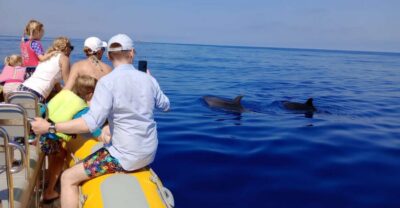
Whales feel close in the Azores. On this 3-hour RIB outing from Horta, you go from land-based whale spotting to a boat trip led by a University marine biologist, with up-to-date information as you scan for whales, dolphins, turtles, and seabirds.
What I like most is the mix of wildlife time and actual science. A researcher aboard (from the University of Lisbon and the Azores) collects data and gives clear, current context on what’s moving through the waters. Second, the crew plans for success in a grounded way: they look actively, keep a respectful distance, and are willing to reposition if conditions or sightings don’t line up.
One thing to consider: this is a semi-rigid RIB, and it can get rough. If you have severe back issues or you’re pregnant, it’s not recommended. Even without medical issues, you should expect spray on choppy days.
In This Review
- Key things that make this trip worth your time
- Why Faial and Pico are such good places to see whales
- What you’re really buying: a guided wildlife chase with a University biologist
- The RIB experience: fast, semi-rigid, and not for everyone
- From briefing to first sightings: how the tour flows in real time
- What marine life you should expect to see (and what overlap means)
- The whale highlights: species you might spot around Horta
- Sperm whales
- Blue and fin whales
- Humpback and sei (and other overlaps)
- Birds, turtles, and the surprise wildlife you might notice too
- The 3-hour timing: enough for action, short enough to stay flexible
- Waterproof clothes, warmth, and the small comfort wins
- Price and value: why $101 can make sense here
- Who should book this, and who should sit this one out
- Should you book this Horta whale and dolphin RIB trip
- FAQ
- How long is the whale and dolphin trip?
- When do tours depart from Horta?
- Where do I meet the group?
- What species can I expect to see?
- Are waterproof clothes provided?
- Is hotel pickup included?
Key things that make this trip worth your time
- University research on board so the trip feels more than just a drive-and-hope outing
- Land spotters first for smarter searching around Faial and Pico
- You usually see multiple species since different whales and dolphins overlap in the region
- Dolphins up close, not just in the distance when pods are feeding and traveling
- Seabirds as a built-in bonus (shearwaters, terns, and Cory’s shearwater are regular)
- Wet-weather gear included to help you stay comfortable during ocean time
Why Faial and Pico are such good places to see whales
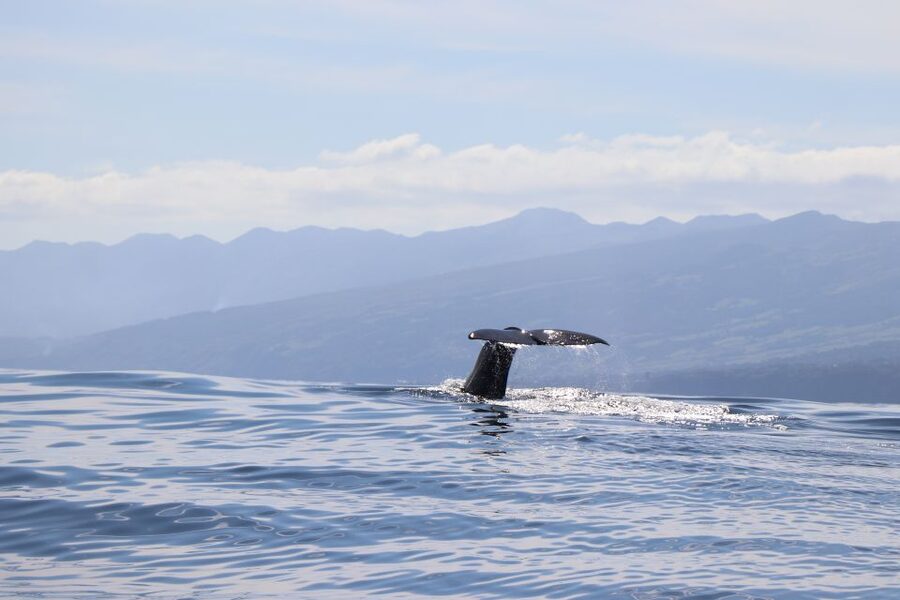
This area of the Azores works like a natural funnel for marine life. Faial and Pico aren’t just pretty backdrops; they’re meeting points where resident species stick around and migratory animals pass through. That matters because whale watching is never a guarantee. It becomes a game of timing, and this trip is built around local spotting from land.
Here’s the practical part for you: the expedition is designed around what the waters typically offer—and what’s happening at that moment. That blend is why you’re likely to see more than one kind of cetacean on the same outing. The operator also shares information about which species are possible before each tour, so you’re not guessing blindly once you’re at sea.
What you’re really buying: a guided wildlife chase with a University biologist
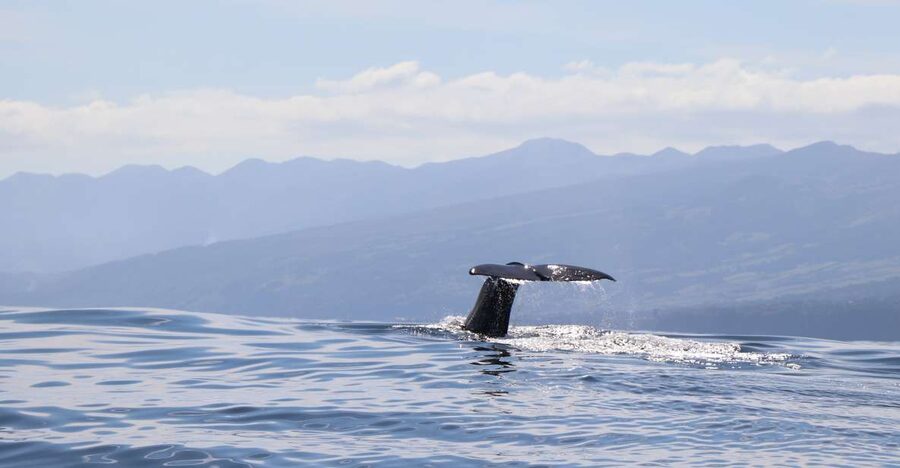
Most whale trips sell you a boat ride. This one sells you the chance to understand what you’re seeing while you’re still seeing it.
A marine researcher/biologist from the University of Lisbon and the Azores is on board to collect data and provide up-to-date information on the cetaceans in the area. That means your guide isn’t just repeating facts from a brochure. You get explanations tied to the region and to what’s being observed during your trip.
In the field, that can change how you watch. Instead of just scanning for a whale’s spout, you start noticing feeding behavior, how dolphins move, and why certain birds cluster. It turns the outing into a living classroom while you’re still chasing wildlife.
You’ll also likely get strong guiding from the crew. Some departures have featured marine biologists such as Anna and Cristiana, and their presentations are described as very informative and detailed. Even if you don’t catch the same biologist, the format stays focused on marine life, not fluff.
The RIB experience: fast, semi-rigid, and not for everyone
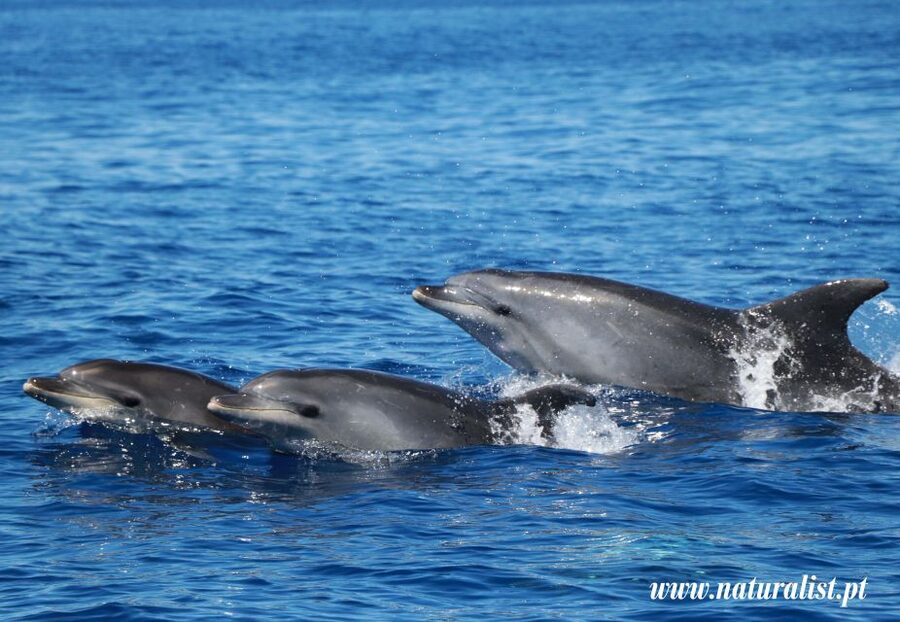
You’re in a 16-person semi-rigid RIB, and that shapes everything: speed, maneuvering, and how close you can get to feeding zones when it’s safe.
The trip starts with a short safety briefing (about 10 minutes). This is where you’ll learn how the crew handles the boat around wildlife and what to expect if conditions change. A few key realities of RIB life:
- you may get wet, especially if you sit toward the front
- you’ll feel movement more than on a big ferry
- weather can steer the timing and the route
One more consideration: the operator says it’s not recommended if you have severe back problems or if you’re pregnant. That’s a clear line, so if you’re on the fence medically, take it seriously.
From briefing to first sightings: how the tour flows in real time
You meet at the marina and board at a set departure time—there are morning and afternoon tours (departures listed as 09:00 and 14:00). Arrive about 15 minutes early so you’re not stressed when it’s time to gear up.
Once underway, the trip follows a pattern that’s practical for whale watching:
- A quick orientation and safety check
- A guided on-water phase with scenic viewing while you search
- Photo stop and wildlife viewing as sightings happen
That “photo stop” isn’t just a nice pause. It’s the moment when the crew positions you so you can actually see behavior clearly and capture the moment. Then the guiding shifts toward what you’re spotting—dolphins feeding, whales surfacing, birds riding the same current.
Also, the crew’s approach shows up in the results. On at least one trip, when the first waiting period didn’t produce the kind of close viewing people hoped for, the captain repositioned to another area, and the sightings followed. That sort of persistence is what you want in a short, 3-hour window.
What marine life you should expect to see (and what overlap means)
The Azores can host a lot of cetaceans, and this trip is set up for that. With over 25 cetacean species in the region, you typically see two to three different cetacean types per outing.
Here’s the season logic the operator uses:
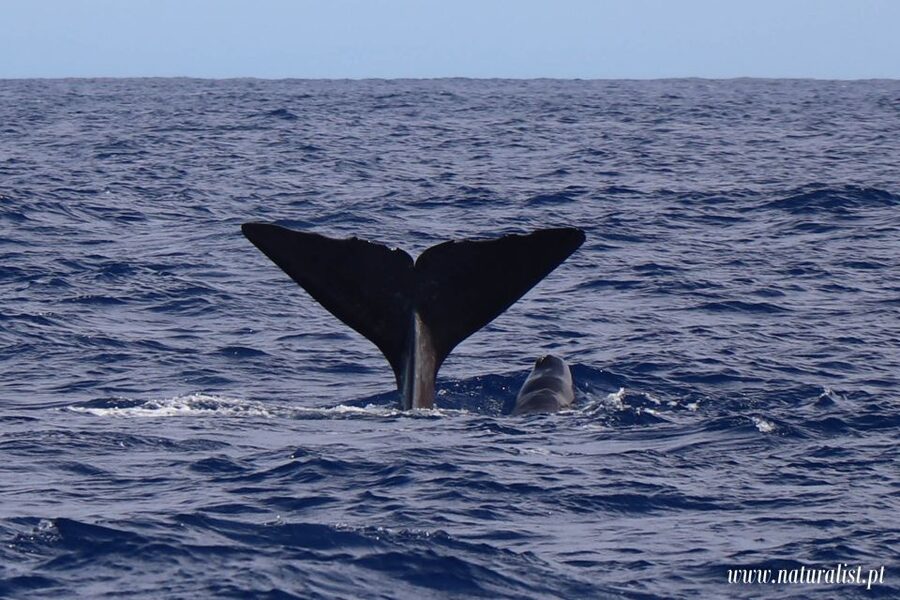
- Sperm whales are present year-round
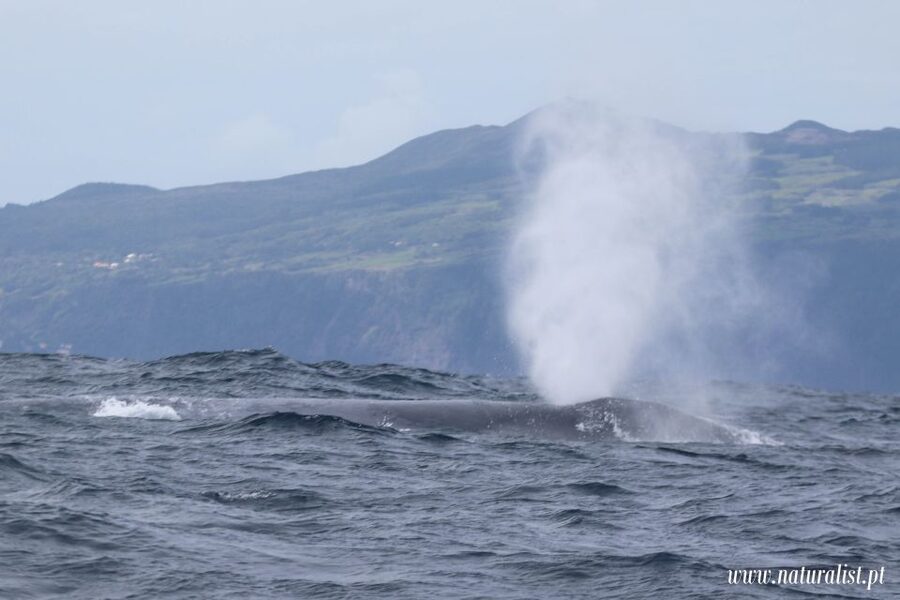
- Blue and fin whales are more likely in spring
- Other species like Sei and Bryde’s whales can show up in summer
- Multiple dolphin species can be present, including resident types
Dolphins are often the “confidence builder.” They’re active and easier to track than whales that surface less frequently. The region supports bottlenose dolphins as well as Risso’s and common dolphins, plus migratory species that move through.
Also, don’t treat turtles as a rumor. The Azores host loggerhead and green turtles, and you might see leatherback and Kemp’s ridley too, depending on conditions and timing.
The whale highlights: species you might spot around Horta
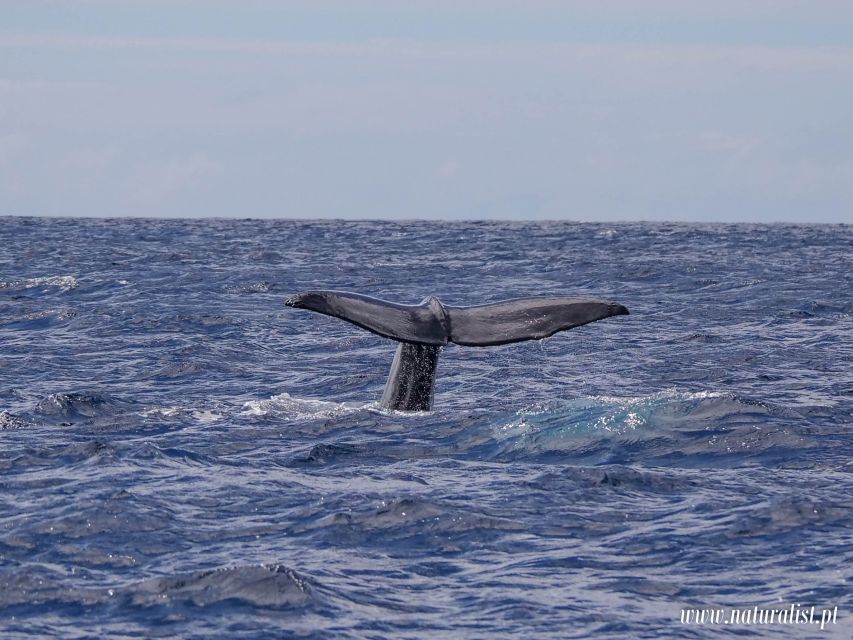
If you’re going for the signature mammals, this is what you’re most likely scanning for.
Sperm whales
Sperm whales are the steady option. They’re described as resident year-round, so they’re a top target even when the day feels uncertain.
Blue and fin whales
These tend to be more seasonal, with spring offering stronger odds. When these show up, it’s typically as part of a broader feeding mix—so you may also catch dolphins and birds in the same area.
Humpback and sei (and other overlaps)
Humpbacks and sei whales can appear, and the operator notes that several other whales may show depending on the season. The value here is that you’re not committed to one species. You’re watching a system.
In plain terms: the Azores often reward the mindset of variety over single-target hunting.
Birds, turtles, and the surprise wildlife you might notice too
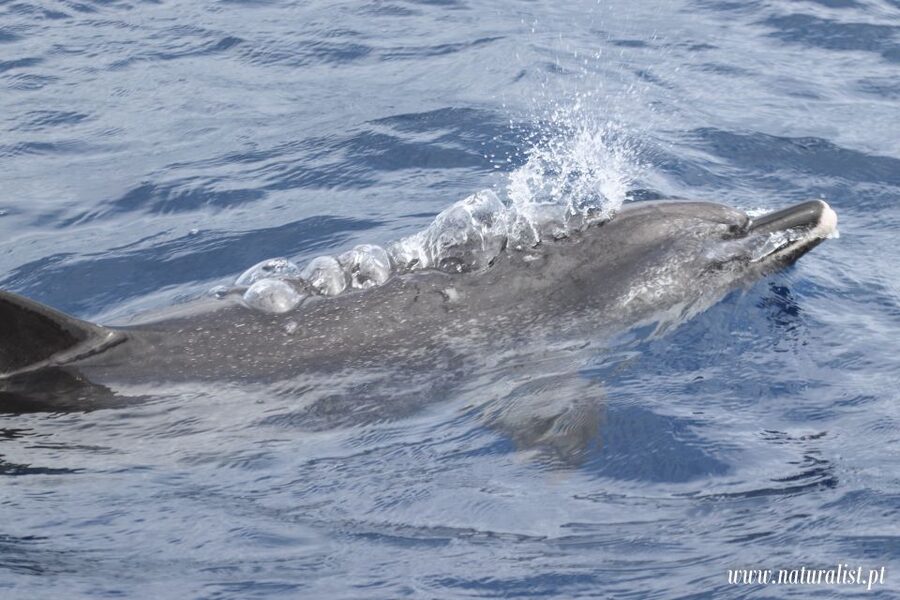
Whale watching often turns into seabird watching in disguise. Birds react fast to what’s happening under the surface, and that gives you another visual cue.
You could see Cory’s shearwaters, great shearwaters, and manx shearwaters, plus common and roseate terns. When you’re scanning for whales and dolphins, these birds can tell you where the food is.
Beyond birds, other marine animals may pop into view: flying fish, squid, octopus, and even larger predators like hammerhead and blue sharks have been reported. Sunfish can also appear. In other words, you’re not only watching whales. You’re watching a whole ecosystem move.
The 3-hour timing: enough for action, short enough to stay flexible
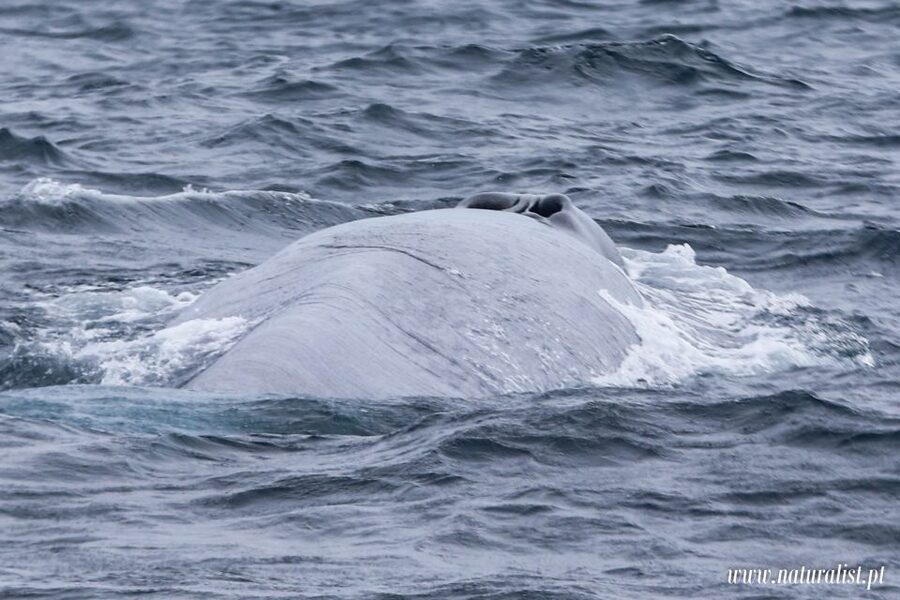
A 3-hour expedition is a good length. Long enough to search meaningfully, but short enough that the crew can pivot if the sea state changes.
The time also helps you plan your day in Faial or Pico. You get a set departure in the morning or mid-afternoon, and then the rest of your trip can stay open for other local experiences—walking viewpoints, small museums, or simply enjoying harbor life.
One practical benefit: the operator provides information about the likely presence of species before each tour. That matters because it focuses your attention when you’re out there. When you know what you’re hunting, the spotting work feels easier, and you notice surfacing patterns and feeding behavior sooner.
Waterproof clothes, warmth, and the small comfort wins
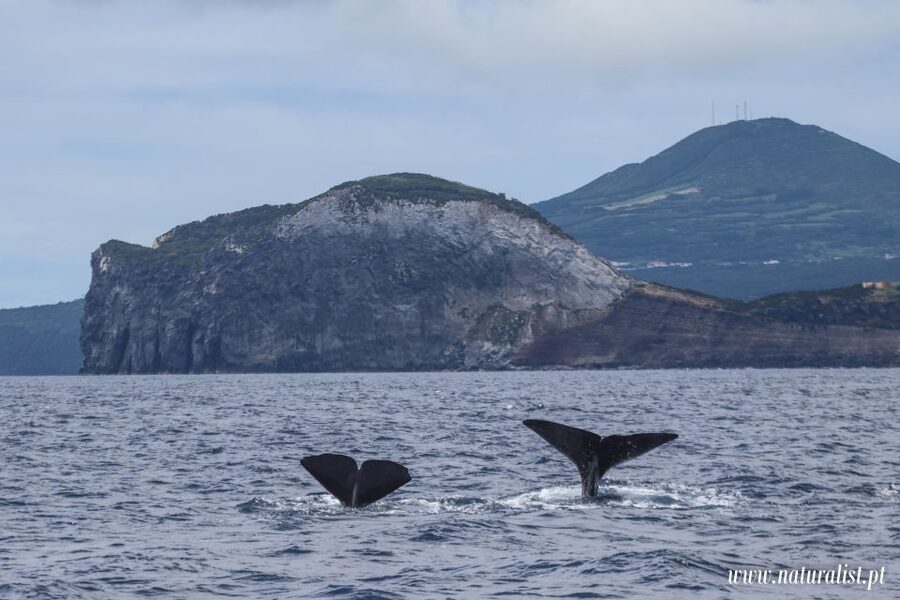
They provide waterproof clothes. That’s a big deal for RIB trips because ocean spray and wind chill can hit fast. One review also mentioned hot tea and lemon cookies after a cold ride, which is the kind of simple comfort that makes the whole day feel complete rather than just efficient.
What you should still bring (based on common sense for wet-sea tours): shoes that can handle spray and dry quickly. If you wear anything that traps water, you’ll feel it later.
Price and value: why $101 can make sense here
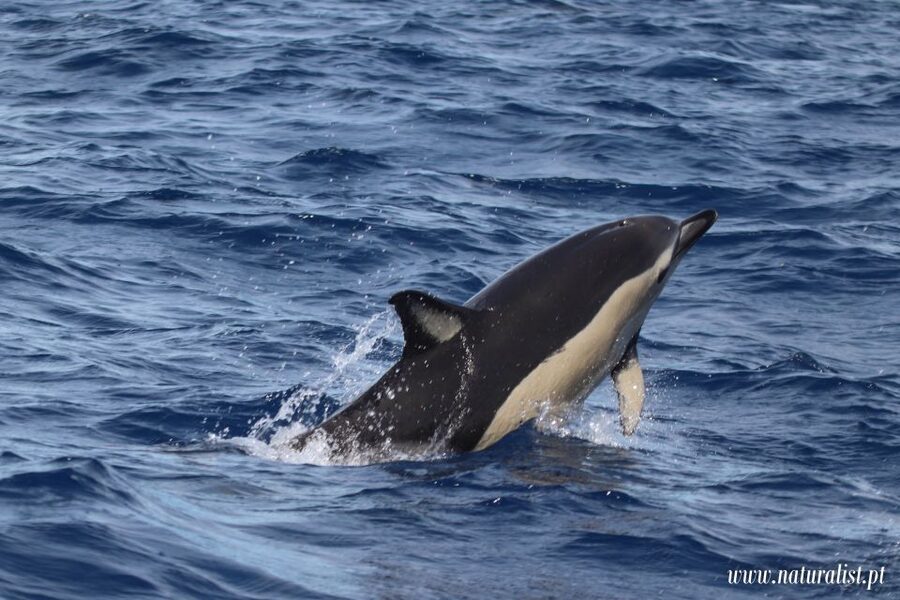
At $101 per person for about three hours, the price is easiest to justify when you look at what’s included:
- a marine researcher/biologist from a University on board
- briefing about the marine biodiversity and cetaceans occurring in the region
- safety insurance
- waterproof clothing
- guided wildlife viewing with the chance to see multiple species
You’re paying for more than the boat. You’re paying for the science angle, the structured search, and the safety systems that come with a crew experienced in handling wildlife viewing from a small platform.
Is it still dependent on weather and animals being present? Yes. But that’s the nature of the game. What you can control is choosing a tour that doesn’t treat wildlife like a lucky add-on—and this one is clearly built to maximize learning and responsible watching.
Who should book this, and who should sit this one out
This trip fits best if you:
- want whale and dolphin watching with real education attached
- enjoy active outdoor tours and don’t mind wind and spray
- are open to seeing a mix of species (not just one target)
It may be a poor fit if you:
- have severe back problems
- are pregnant
- plan to bring very young children (it’s not suitable for children under 5)
Also consider your expectations. You’re on a RIB and you’re dealing with ocean conditions. If you want a smooth, comfy ride above all else, you might prefer a different style of boat tour.
Should you book this Horta whale and dolphin RIB trip
If your priority is whales and dolphins plus on-the-water science, I’d book it. The University biologist element genuinely changes how you experience the outing, and the emphasis on local spotting around Faial and Pico gives you a better shot at multiple species in a short time.
I’d especially recommend it if you like the idea of learning what you’re seeing while you’re seeing it—why birds gather, how dolphins behave around feeding zones, and what those whale sightings mean in the bigger picture of Azores marine life.
If you’re sensitive to rough conditions or you fall into the medical cautions for back problems or pregnancy, skip it and look for a different format.
FAQ
How long is the whale and dolphin trip?
The expedition lasts about 3 hours.
When do tours depart from Horta?
Tours run in the morning at 09:00 and in the afternoon at 14:00.
Where do I meet the group?
Meet at Naturalist – Science & Tourism Whale Watching in the marina. Arrive about 15 minutes before departure.
What species can I expect to see?
Sperm whales are resident year-round, and other whales like blue and fin are more likely in spring. Dolphins are also common, and turtles (loggerhead, green, and possibly others) and seabirds can appear.
Are waterproof clothes provided?
Yes. Waterproof clothes are included.
Is hotel pickup included?
No. Pick up from the hotel is not included.