REVIEW · CATANIA
boat tour exploring and searching for dolphins in Acitrezza
Book on GetYourGuide →Operated by Navigando per trezza · Bookable on GetYourGuide
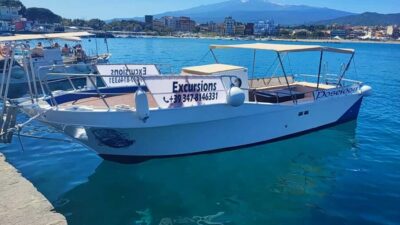
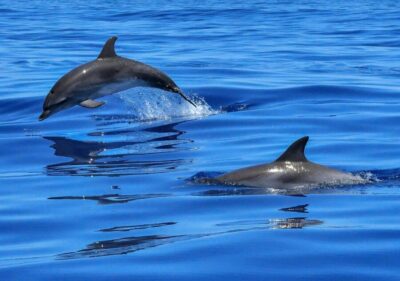
Cyclops rocks and dolphin watchings start at dusk. On this 2-hour outing from Aci Trezza, you head out into protected waters to search for dolphins (and you might also spot turtles and local fish). The trip is run by a crew with 10+ years in the sector, with staff who speak English, Spanish, and Italian.
What I like most is how practical and respectful the experience is. You get a real briefing, plus binoculars and cetacean ID cards, and the crew focuses on flora and fauna rather than chasing for spectacle. The one drawback to keep in mind: wildlife watching is never guaranteed, and the tour only runs in favorable weather.
In This Review
- Key highlights you’ll care about
- Aci Trezza at sunset: why this dolphin search works
- Getting on board: meeting point, small group feel, and the briefing
- Stop 1: Lachea Island and the Cyclops archipelago edge
- Stop 2: The Faraglioni stacks and the Cyclops story
- Stop 3: The dolphin marine protected area where the watch starts
- Stop 4 (the practical part): visitor center flow, boarding time, and the clock
- What you might spot: dolphins, turtles, and Sicilian fish
- The swim break and what to bring for comfort
- Price and value: is $67.97 worth it?
- Who this tour suits best (and who should think twice)
- What the crew does right (and why it affects your sightings)
- Should you book this Aci Trezza dolphin tour?
- FAQ
- How long is the boat tour?
- What time does the tour start?
- How much does it cost?
- Where do I meet the tour?
- What languages are spoken during the tour?
- What animals are you searching for?
- Do I get binoculars or identification help?
- Can I swim during the tour?
- Is the tour dependent on weather?
- Final check: book or pass
Key highlights you’ll care about
- Small group (max 8) means you’re more likely to actually see what the crew spots.
- Sunset timing gives you prime light for watching dolphins and sea life in the protected marine area.
- Binoculars + cetacean ID cards help you identify what you’re seeing instead of just guessing.
- Cyclops scenery on the route: Lachea Island and the Faraglioni stacks shape the whole experience.
- Chance to swim during the stages in the Sicilian Ionian sea.
- Multiple languages onboard (English, Spanish, Italian), so the briefing lands clearly.
Aci Trezza at sunset: why this dolphin search works
Aci Trezza is one of those Sicilian places where the scenery sets the mood fast. From Via Lungomare dei Ciclopi, the Cyclops rocks and stacks already make you feel like you’re sailing in a myth. Then the tour leans into that setting with a very specific goal: search for cetaceans, mainly dolphins, in the area known for wildlife activity.
The timing matters. This tour starts at 6:30pm, when the light gets softer and the sea often feels calmer visually, even if it is still moving. You’re not just taking a boat ride. You’re doing a sunset-style watch, with a guided approach that explains what to look for and where the best chances tend to be.
And yes, it’s geared toward real nature appreciation. The emphasis is on professionalism and respect for the flora and fauna, which is exactly what you want when you’re trying to observe dolphins without turning the outing into something noisy and chaotic.
Getting on board: meeting point, small group feel, and the briefing
You meet at Bazar del Mare (on Via Lungomare dei Ciclopi, 177). This matters because it keeps things simple: you’re not bouncing around to a distant dock and you can arrive, get oriented, and stay focused on the actual tour.
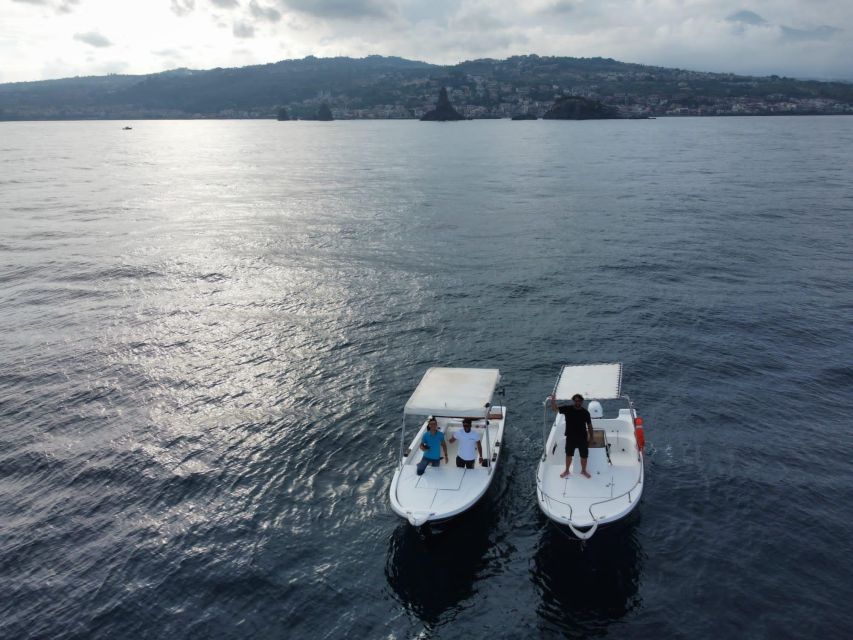
The group is limited to just 8 participants. That’s a big deal for dolphin watching because space and sightlines matter. With fewer people, the guide can keep the group close enough to spot blows, movement patterns, and changes on the water surface without everyone trying to look from different directions.
Included in the price is a skipper and guide (Italian and English), plus briefing materials: binoculars and cetacean identification cards. I like this setup because it turns dolphin watching from guesswork into a skill. Even if dolphins only show up for a short window, you’ll be able to check what you’re seeing and follow the guide’s explanations about the monitored area.
You also get a visitor center stop with a guided component before you’re out searching. That’s practical: it helps you understand what the crew is monitoring, rather than jumping straight to boat speed and hoping you’ll catch the action.
Stop 1: Lachea Island and the Cyclops archipelago edge
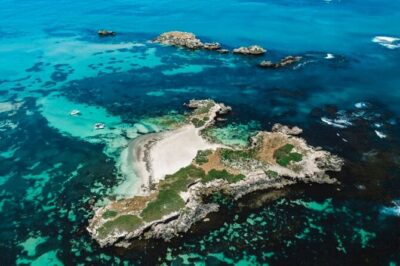
The route starts with Lachea Island, a small but important part of the Cyclops archipelago. This island is part of a protected nature reserve (integral Lachea Island and Cyclops stacks) established by the Sicilian Region in 1998. Knowing it’s protected changes your mindset a bit. You’re not treating the coastline like a backdrop. You’re operating in a living system with rules.
There’s also a geology lesson baked into the experience. Lachea is of subvolcanic origin, formed by the intrusion of magma into older seabed rocks. You’ll likely hear that while you’re close enough to look and understand why these rocks exist in the first place, not just how they look.
What’s the payoff for you? Two things. First, the scenery is distinct. Second, the protected status supports the tour’s focus on responsible viewing. You’re more likely to understand the why behind the crew’s decisions about pacing and where the boat goes next.
A small consideration: because Lachea is an island and the tour is focused on wildlife, your time here is about orientation and route position, not a long onshore stop. If you want a long island visit, this isn’t that type of outing.
Stop 2: The Faraglioni stacks and the Cyclops story
Next up are the Faraglioni and the stacks—rock formations that people connect to the tale of Cyclops Polyphemus and Ulysses. The story goes that Polyphemus, blinded and angry, threw rocks toward the sea to stop Ulysses from escaping. Myth aside, these formations are the real show: wind and rain carved them over thousands of years, and they sit within a protected marine area made up of Lachea, the stacks, and other rocks arranged in an arc.
Why I think this stop is valuable even on a dolphin tour: it gives your eyes something meaningful to track besides the water surface. When you’re searching for dolphins, there are moments of calm. The stacks fill those moments with context, so the tour doesn’t feel like waiting around. It feels like you’re traveling through a specific protected seascape.
One practical note: rock stops are scenic and atmospheric, but you should expect most of your “wait and watch” time to still center on the dolphin search farther out.
Stop 3: The dolphin marine protected area where the watch starts
This is the reason you book. The crew heads toward a dolphin marine protected area around Catania, often at sunset when conditions can be ideal for observing movement and behavior.
The tour explicitly mentions that the boat moves away from the coast for about 3 nautical miles, roughly 5 km. That matters because dolphins often hang out in zones where the water conditions and food sources support them, not right along the shore. If you’ve ever watched from a beach, you’ll know the difference: from land you’re stuck with limited angles. Out here, the guide can position the boat to improve your chances.
Also included: the binoculars and cetacean ID cards. This is where they shine. Dolphins are small and fast, and what looks like a quick fin slice can be hard to interpret. With the cards and the briefing, you can follow along as the crew spots patterns on the water.
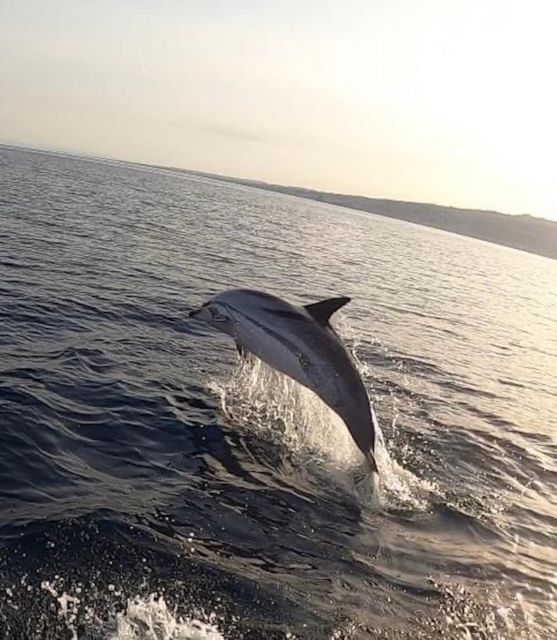
When dolphins do show up, you may get a focused viewing window. One past participant described about 20 minutes of close activity once dolphins were spotted. That’s not a promise, but it’s a good indicator that the crew doesn’t just point and move on. They aim to put you in the right place long enough to actually enjoy the moment.
Stop 4 (the practical part): visitor center flow, boarding time, and the clock
The schedule is built around a smooth rhythm: you meet at the port area, connect with the visitor center for a guided component, then move into boat cruise time for dolphin watching. The tour is listed as 2 hours total, so everything happens with a sense of timing.
Because the trip length is fixed, you’ll want to be mentally ready for a compact experience. There is no half-day wandering. Instead, it’s a tight, guided search, with scenery stops that support the wildlife focus.
The tour also notes that in the Sicilian Ionian sea you can stop for a swim during the stages of the boat tour. That’s a nice add-on because it breaks up the “watching only” feeling. Still, treat it as optional fun rather than a guaranteed swim every time. It depends on sea conditions and how the search unfolds.
What you might spot: dolphins, turtles, and Sicilian fish
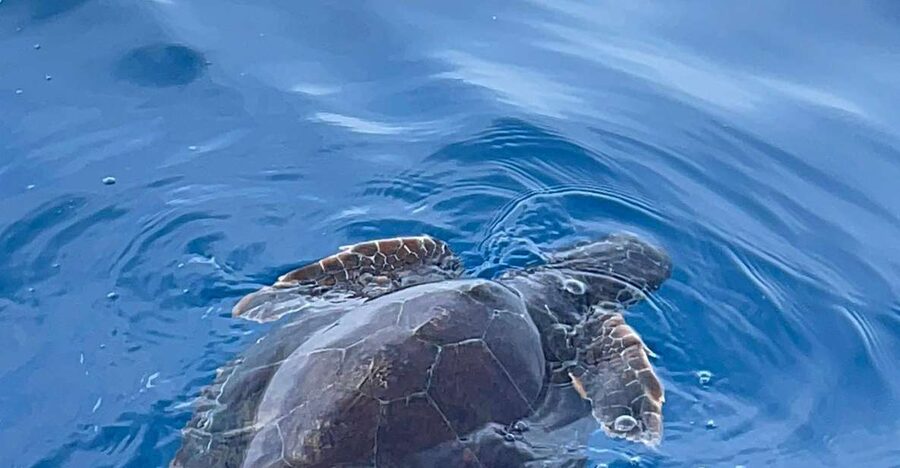
The main target is cetaceans—mainly dolphins. The experience also calls out turtles and typical Sicilian fish such as bluefin tuna. In practice, dolphins are the star attraction because they’re more visible and respond in noticeable ways. Still, it’s smart that the tour sets expectations beyond dolphins, because sea life is interconnected. If the water conditions and food supply are right, you might get more than one kind of sighting.
You’ll also hear explanations about the monitored area. Even without turning the tour into a science class, that context helps you understand why the crew is heading where it’s heading. You’re not just chasing sightings. You’re learning how the area is observed and why certain locations are tracked.
Here’s the honest part: you can go looking and still leave without dolphins. That’s the nature of wildlife tours. But the guided approach, the binoculars, and the fact that the crew has deep local experience (10+ years) all tilt the odds toward a rewarding outing rather than a random cruise.
The swim break and what to bring for comfort
A nice detail is that the tour mentions a chance to stop for a swim during the stages of the boat tour in the Sicilian Ionian sea. If you’re traveling in the evening, this can feel refreshing, like a break from straight-on sightseeing.
For what to bring, stick to the essentials listed:
- sunglasses
- sunscreen
- water
- jacket
- waterproof bag
I’d treat the jacket as non-negotiable. Evening on the water can get cooler than you expect, and a light layer helps you stay comfortable while you’re watching.
Also, even though binoculars are provided, sunglasses are still worth it. You’ll be looking at reflective water and quick surface changes, and you’ll enjoy the experience more if your eyes aren’t battling glare.
Price and value: is $67.97 worth it?
At $67.97 per person for a 2-hour boat tour, this sits in the “mid-range, but not cheap” category. The value comes from what’s included and what you’re paying for.
You’re not paying just for a ride. The price includes:
- skipper and guide (Italian and English)
- civil liability insurance
- binoculars and cetacean identification cards
- information briefing about cetaceans and the monitored area
You’re also getting a small group size (max 8), which can be a quiet luxury on a boat. If you’ve ever been stuck in a crowded tour where everyone takes turns looking, you know why that matters.
So the best way to judge value is like this: you’re paying for guided wildlife searching in a specific protected area, with equipment and interpretation. If dolphins show up, this can feel like a bargain because you’ll get a memorable, educational wildlife moment. If wildlife activity is slower that day, you’ll still have scenery and a guided briefing, but the “best-case excitement” may not happen.
Who this tour suits best (and who should think twice)
This is a great fit if you:
- want a guided dolphin and turtle search near Catania’s marine protected areas
- like structured wildlife watching (binoculars, ID cards, briefing)
- enjoy myth-and-scenery routes like the Cyclops stacks
- want a compact evening plan that doesn’t eat your whole day
It’s not for everyone. The tour data says it’s not suitable for people with heart problems or other serious illnesses. It’s also not wheelchair accessible. On the positive side, it is stroller accessible, and service animals are allowed.
One more practical fit check: the tour runs only in favorable weather conditions. That means if conditions are rough, you’re more likely to see changes rather than stubbornly forcing the outing.
What the crew does right (and why it affects your sightings)
Even though dolphin spotting is nature-driven, the crew still shapes your experience a lot.
You’re promised respect for flora and fauna, which usually translates into calmer boat behavior and attention to where animals are without crowding them. The crew also has 10+ years of sector experience, and that typically shows up as better positioning and better timing.
The most praised part in real-world experiences is how the search turns into actual dolphin sightings when conditions allow. One person specifically thanked Andrea and highlighted that the group got good time once dolphins were found. Another noted the excursion delivered memorable dolphins. That tells me two things to watch for when you book: pay attention to the crew’s instructions, and be ready for a concentrated watch once they spot activity.
Should you book this Aci Trezza dolphin tour?
If you’re in Sicily and want something more interesting than another coastal cruise, I’d seriously consider it. The combination of sunset timing, protected waters, and guided wildlife searching makes this a smart choice for people who care about seeing real sea life, not just taking photos from the dock.
Book it if:
- you can make the 6:30pm start
- you’re comfortable with a 2-hour, targeted plan
- you want dolphin watching with binoculars, ID cards, and a briefing
Skip it if:
- you need a guaranteed wildlife outcome
- you have heart concerns or need wheelchair access
- you’re looking for a long, onshore island visit rather than a boat-and-watch experience
If you want a practical rule: treat it as a guided wildlife hunt with excellent scenery and good interpretation. When dolphins cooperate, this tour is the kind of evening you remember on repeat.
FAQ
How long is the boat tour?
The duration is 2 hours.
What time does the tour start?
The tour lists a single start time: 6:30pm.
How much does it cost?
The price is $67.97 per person.
Where do I meet the tour?
The start meeting point is Bazar del Mare, and the activity ends back at the meeting point. The route also references Via Lungomare dei Ciclopi, 177.
What languages are spoken during the tour?
The guide and skipper speak Italian, English, and Spanish.
What animals are you searching for?
The tour aims to find cetaceans, mainly dolphins. It also mentions turtles and typical Sicilian fish such as bluefin tuna.
Do I get binoculars or identification help?
Yes. Binoculars and cetacean identification cards are included, along with an information briefing.
Can I swim during the tour?
Yes. You can stop for a swim during the stages of the boat tour in the Sicilian Ionian sea.
Is the tour dependent on weather?
Yes. The experience only takes place in favorable weather conditions, and if it’s canceled due to bad weather, you can choose another date or receive a full refund.
Final check: book or pass
If you want an evening that mixes Cyclops sea scenery with a real attempt at spotting dolphins, this is a strong Sicily option. Just go in with the right mindset: you’re watching wildlife, not ordering certainty.