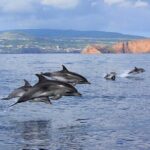
Atlantic spray is a good sign. This Terceira whale and dolphin tour puts you on the water for about 2 to 2.5 hours, timed for encounters and paired with live commentary from marine guides. You get that rare mix of real wildlife spotting and straight-to-the-point explanations that help you understand what you’re seeing.
I like that you start with a proper safety briefing, then step into the sea wearing raincoats and life vests so you’re not stressing about basics. The boat runs with a small group size (up to 24), which makes it easier to listen, move, and spot animals without feeling packed in.
One catch: this experience depends on weather. If conditions are poor, the operator may cancel and offer another date or a refund—so keep the rest of your schedule flexible.
In This Review
- Key things to know before you go
- Whale and Dolphin Watching Off Terceira: Why This Trip Feels Different
- Getting Ready at Angra do Heroísmo: Safety First, Species Second
- The Search: How the Crew Finds Whales and Dolphins Near the South Coast
- What the 2–3 Hours Looks Like on the Water
- Live Marine Commentary You Can Actually Use
- Small Group Size: Why Up to 24 People Matters
- Value Check: Price at $71.90 and What You’re Really Paying For
- Practical Tips That Make the Difference
- Who Should Book This Tour (And Who Should Rethink It)
- Quick Notes on Meeting and Getting There
- Should You Book This Whale and Dolphin Tour on Terceira?
- FAQ
- How long is the whale and dolphin watching tour?
- Where do we meet, and where does the tour end?
- What safety gear is provided?
- Is the tour offered in English?
- What is the maximum group size?
- What’s included in the ticket price?
- What is not included?
- Are children allowed?
- What happens if weather is poor?
Key things to know before you go
- Up to 24 people: easier animal viewing and better guide interaction
- Rain gear and life vests are included for a more comfortable outing
- Lookout-based searching uses strategic spotting points along the south coast
- Live marine guide commentary helps you identify species at sea
- Professional spotting effort aims for whales, dolphins, and other wildlife like turtles
Whale and Dolphin Watching Off Terceira: Why This Trip Feels Different
Terceira’s coast has a serious advantage for wildlife watching: you’re going out into the Atlantic with guidance. This is not a “go look and hope” outing. Before you even set off, you get a safety rundown and a quick primer on the kinds of cetaceans you might see.
What really makes this tour click is the combination of scouting and education. You’re guided to the right ocean areas using lookout technique on the south coast. Then, once you meet whales or dolphins, the onboard team helps you track movement, behavior, and species differences while you’re still watching them—so it’s more than just a checklist.
You can also read our reviews of more tours and experiences in Terceira.
Getting Ready at Angra do Heroísmo: Safety First, Species Second
The experience begins around Angra do Heroísmo, starting from the marina area near Porto das Pipas (Marina d’Angra, Porto das Pipas, 9700-154 Angra do Heroísmo, Portugal). You’ll get a short briefing with practical safety rules, plus context on what to watch for.
This part matters more than you might think. Watching whales and dolphins is mostly about reading small cues: how a group is moving, where surfacing happens, and what direction animals travel. When the guide sets expectations early, you’ll spend less time guessing and more time actually seeing.
Then the crew provides the gear you need right away—raincoats and life vests (including waterproof jackets and life jackets). That means you’re not scrambling for suitable clothing or worrying about comfort during a 2–3 hour stretch on the water.
The Search: How the Crew Finds Whales and Dolphins Near the South Coast
Once the boat heads out, the experience becomes equal parts adventure and science talk. The guides use lookouts placed strategically along the South coast of the island to calculate where the best viewing opportunities are. That “where, when, and why” approach changes everything for you as a passenger.
Instead of simply driving out and waiting, the crew is actively working to locate animals. You feel it in the pacing—moving with purpose, adjusting as conditions and sightings develop. And when you finally spot wildlife, it’s not random. The guides help you understand what you’re seeing, so you can make sense of the behavior: feeding, traveling, and the patterns that dolphins and whales show when they’re active.
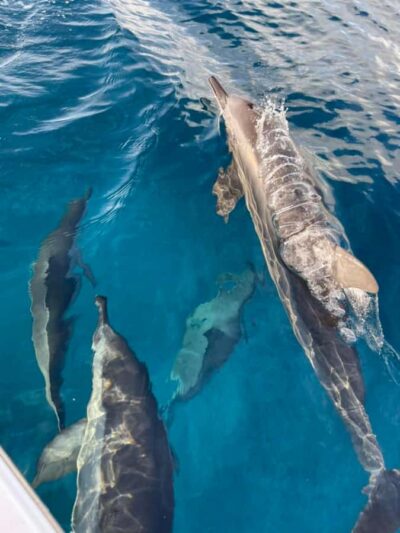
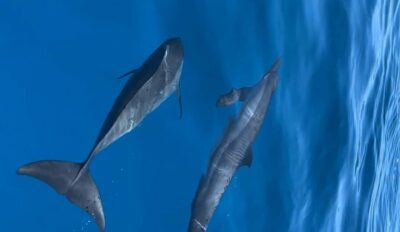
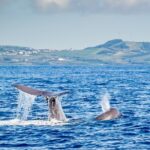
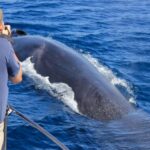
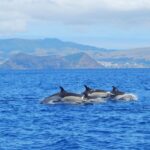
On some departures, sightings can be especially strong. People have reported seeing multiple whale species and very large groups of dolphins, and one account even noted a sea turtle while out at sea. Obviously, sightings aren’t guaranteed every time. But the effort to find animals is clear in how the trip runs.
What the 2–3 Hours Looks Like on the Water
Expect a cruise-style format with movement. The total time on the water is roughly 2 to 3 hours, depending on how the sightings and route play out. The overall feel is active: you’re not stuck in one place for the whole trip, and you’re also not constantly running around. It’s paced for spotting.
You’ll likely spend time:
- traveling outward toward possible sightings
- slowing down or repositioning once animals are identified
- watching and tracking during surfacing events
- returning to the starting area at the end
The ride itself can be part of the fun. One reason this tour gets such high marks is that people enjoy the Atlantic crossing experience, not just the moment they first see whales.
Live Marine Commentary You Can Actually Use
The onboard team provides live commentary, delivered in English for this offering (and it may be multi-lingual depending on the departure). You’re not just hearing background facts. The guides tie explanations to what you’re currently seeing.
This is where names from past trips matter, because it signals how the operator hires and supports the guides. In accounts of standout tours, guides including Francis and John were mentioned for being friendly, competent, and careful about animal welfare. That’s a big deal on a marine wildlife outing. You want people who understand how to get you good views without pushing the animals.
The commentary also helps you move from “I saw something” to “I understand what that was.” Even if you don’t know marine biology, the guide talks in a way that makes species recognition feel achievable during real-time watching.
Small Group Size: Why Up to 24 People Matters
Let’s talk comfort. With a maximum of 24 travelers, this tour avoids that slow, crowded, everyone is talking at once vibe. You get more chances to:
- hear instructions clearly
- shift position to see better when animals surface
- ask questions without waiting forever
It also makes the experience more personal. When the guide can read the group and adjust where they focus your viewing, it helps sightings feel more satisfying. In other words, the small group isn’t just a feel-good detail. It improves how well the guide can run the viewing experience.
Value Check: Price at $71.90 and What You’re Really Paying For
At $71.90 per person, this tour sits in the mid-range territory for marine wildlife experiences. The value comes from what’s built in:
- guided search effort (lookout-based positioning)
- live onboard commentary
- local marine guides
- rain gear and life vests for comfort and safety
What you’re not paying for is also clear. Food and drinks are not included, and there’s no hotel pickup or drop-off. So plan to grab snacks before you go and bring what you like for the water—within your own comfort needs.
If you’re trying to decide whether it’s worth it, use this simple test:
- If you want a guided, structured spotting experience with real interpretation, this is a strong pick.
- If you’re mainly chasing the cheapest boat ride with no guidance, look around—because guidance and equipment are part of what you’re paying for here.
Practical Tips That Make the Difference
A few habits will help you enjoy the tour even more:
Bring layers. Even when the air feels fine, ocean wind can change the temperature fast. Rain gear is provided, but you’ll still want warm clothing underneath.
Wear shoes you can stand in. You’ll be moving and positioning for viewing. Solid grip matters on a boat.
Keep your camera ready. You don’t control when animals surface. When you hear the guide start describing an area, be ready to look up and focus right then.
Listen for direction, not just sighting words. The guide often explains what to watch for next—direction of travel, surfacing patterns, and behavior. That kind of info helps you see more during the same sightings window.
Expect an outcomes range. Some trips can be spectacular with multiple whale species and huge dolphin herds. Other days might be calmer. The point is that the crew works the search actively, and the onboard commentary helps you make the most of whatever the ocean offers that day.
Who Should Book This Tour (And Who Should Rethink It)
This is a great fit if you:
- enjoy wildlife watching with interpretation
- want a guided search rather than drifting around randomly
- like the idea of small-group touring up to 24 people
- are comfortable spending a couple hours on open water
It’s also ideal for first-time visitors to the Azores who want a memorable “marine life” experience without turning it into a full science class. The guide explains what’s happening in real time.
Consider another plan if:
- you hate being on the water when weather turns rough (the tour requires good conditions)
- you’re hoping for a guaranteed sighting every time, no matter what
Quick Notes on Meeting and Getting There
The tour starts at the Marina d’Angra / Porto das Pipas area in Angra do Heroísmo. It ends back at the same meeting point. It’s also described as near public transportation, so you’re not locked into a private transfer.
If you’re coming on a cruise, you’ll need to provide details at booking time like your ship name and docking and re-boarding times. That helps the operator coordinate timing with shore logistics.
Should You Book This Whale and Dolphin Tour on Terceira?
I’d book it if you want a guided, structured whale and dolphin experience rather than a casual boat outing. The biggest reasons are the lookout-based search approach, the live marine commentary, and the fact that you’re provided with rain gear and life vests—so you start comfortable and you spend your attention where it matters: spotting animals.
Book with confidence, too, because the overall rating is very high and the recommendation rate is strong. Just keep one practical mindset: weather rules the day in the Atlantic. If your schedule is flexible, you’re in the best position to benefit from the best conditions and get a top-tier wildlife outing.
If you want, tell me your travel month and whether you’re coming from a hotel near Angra or from a cruise day. I can suggest how to time this so you have the best weather odds.
FAQ
How long is the whale and dolphin watching tour?
It runs for about 2 hours to 2 hours 30 minutes (with a typical range of about 2 to 3 hours on the water).
Where do we meet, and where does the tour end?
You meet at Marina d’Angra / Porto das Pipas, 9700-154 Angra do Heroísmo, Portugal, and the tour ends back at the same meeting point.
What safety gear is provided?
You’re provided with raincoats and life vests (including waterproof jackets and life jackets) as part of the tour.
Is the tour offered in English?
Yes. This experience is offered in English, though a multi-lingual guide may operate depending on the departure.
What is the maximum group size?
The tour has a maximum of 24 travelers.
What’s included in the ticket price?
The ticket includes live commentary on board and a local guide.
What is not included?
Food and drinks are not included, and there’s no hotel pickup and drop-off.
Are children allowed?
Children must be accompanied by an adult.
What happens if weather is poor?
The tour requires good weather. If it’s canceled due to poor weather, you’ll be offered a different date or a full refund.