REVIEW · SICILY
Dolphin Watching & Conservation – Dolphins in the Gulf of Catania
Book on Viator →Operated by Marecamp · Bookable on Viator
Dolphins on the horizon beat any screen. This Marecamp outing in Sicily’s Gulf of Catania pairs an eco-sustainable approach with help from a marine biologist so you spend more time understanding what you see and less time guessing. The big trade-off: nature is nature, and there’s a realistic chance you’ll spend your sailing time searching without a sighting.
I like that this isn’t just a boat ride. You get tools for better dolphin spotting (binoculars and recognition cards) and you follow a structured code of good conduct to keep disturbance low. The other practical note: the boat is open and low on shade, so you’ll want sunscreen and a hat, and if you’re bringing kids, double-check life jacket fit before you leave shore.
In This Review
- Quick hits for your dolphin day
- Why the Gulf of Catania works for a real wildlife trip
- How Marecamp keeps dolphin watching low-impact
- Meet the marine biologist: you’re not just a passenger
- Your day on the water: scanning for dolphins, then moving at the right speed
- The route and stops: what each place adds to the experience
- Aci Trezza: classic seascape and strong dolphin-search potential
- Aci Castello: another coastal cue while you stay out searching
- Mount Etna views: the calm background that makes the trip feel Sicilian
- Catania coast: the big-city edge of a wildlife outing
- Why route variability can be a plus
- Equipment and comfort: binoculars, open decks, and small practical tips
- The dolphin moment: what “good conduct” feels like
- Value for $84.48: what you’re really paying for
- Who should book this (and who should skip it)
- Should you book Marecamp Dolphin Watching in the Gulf of Catania?
- FAQ
- What language is the dolphin watching tour offered in?
- How long is the experience, and what time does it start?
- What’s the group size like?
- What’s included for viewing dolphins?
- Do I need to arrange transportation to the meeting point?
- Is this tour dependent on good weather?
Quick hits for your dolphin day
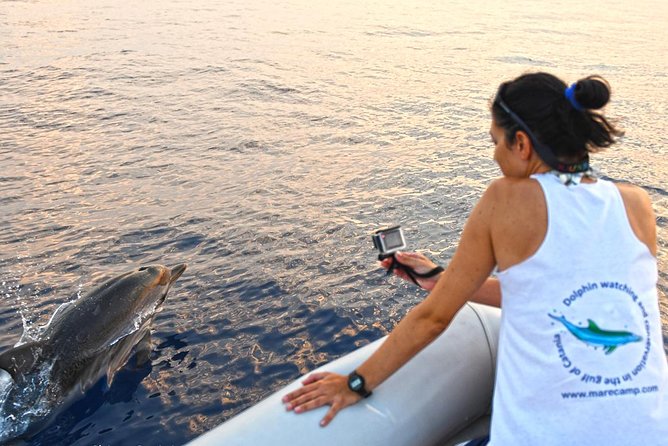
- A marine biologist helps you ID dolphins by name, with recognition cards to match what you’re seeing.
- An ACCOBAMS whale-watching mark is part of their on-water approach, with an international code of conduct during sightings.
- About an 80% chance of a cetacean sighting, after scanning at low cruising speed.
- Binoculars and briefing materials are included, so you can track behavior instead of just reacting to splashes.
- Small groups (max 10 travelers) make it easier to listen, learn, and move with the flow of the search.
- Etna dominates the backdrop, so even the travel between possible dolphin zones feels like scenery with purpose.
Why the Gulf of Catania works for a real wildlife trip
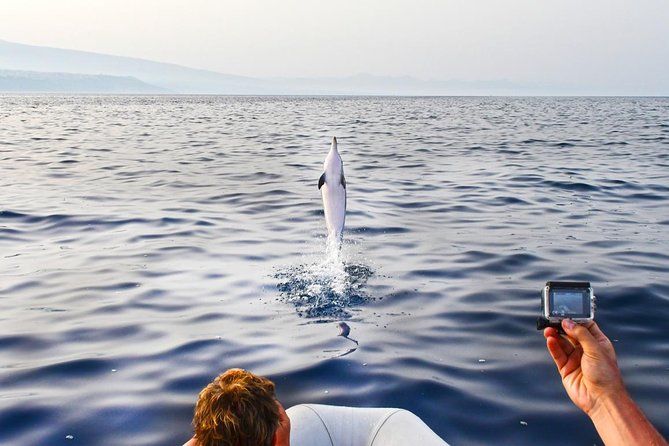
This area around Catania has the kind of “out there” feeling that makes wildlife watching worth it. You’re not tucked into a theme-park bay. You’re out on open water, scanning for free-ranging dolphins in the Gulf of Catania while Mount Etna keeps showing up in the distance like a landmark that refuses to be ignored.
What I find smart here is the way the day is built around patience and observation. You sail at low speed, keep scanning, and only push the pace once the team has reason to think cetaceans are nearby. That matters because dolphins are busy animals. If you treat them like a checklist item, you miss the behaviors that make the experience special.
The group size also helps. With a maximum of 10 travelers, you’re not fighting for a view, and the guide can spend real time talking through what you’re seeing and how to recognize it.
You can also read our reviews of more tours and experiences in Sicily.

How Marecamp keeps dolphin watching low-impact
If you care about dolphins (and if you’re booking this, you probably do), the key question is: do they respect the animals or just chase action? Marecamp states that they use an international code of good conduct during sightings, specifically aimed at minimizing disturbance.
They also highlight that they own a high-quality whale watching mark released by ACCOBAMS. In plain terms, that’s a signal they’re trying to run the activity under stricter rules than a casual “go closer for photos” approach.
You’ll feel this in the way sightings are handled. The goal isn’t to crowd the dolphins or interrupt their patterns. It’s to observe them as they do their thing, and then move away once the moment has passed. That “watch, don’t boss” mindset makes the whole outing more ethical, and it usually makes the animals more likely to behave naturally while you’re there.
Meet the marine biologist: you’re not just a passenger
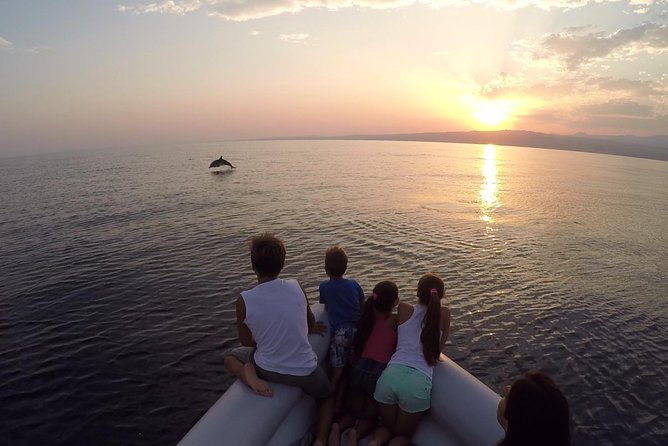
This tour leans educational, and not in a boring classroom way. You get a dolphin briefing and recognition cards, and you’ll have a marine biologist (plus a skipper) guiding what to look for.
Here’s what you can realistically expect to do with that help:
- You’ll learn how to identify local cetaceans from visible cues.
- You’ll get context about why they surface, how they travel, and the kinds of aerial behaviors you might spot.
- You’re given a framework for noticing rather than just staring.
One of the strongest perks from the experience is how the guides introduce dolphins by name to the cataloged animals. That sounds small, but it changes your brain during the sighting. Instead of thinking, That’s a dolphin, you start thinking, That’s the dolphin type and behavior we talked about. It turns photos into observations.
And yes, you’re likely to be told exactly when to pick up binoculars and when to watch with the naked eye. That rhythm makes it easier for everyone to see something, not just the person standing in the best spot the whole time.
Your day on the water: scanning for dolphins, then moving at the right speed
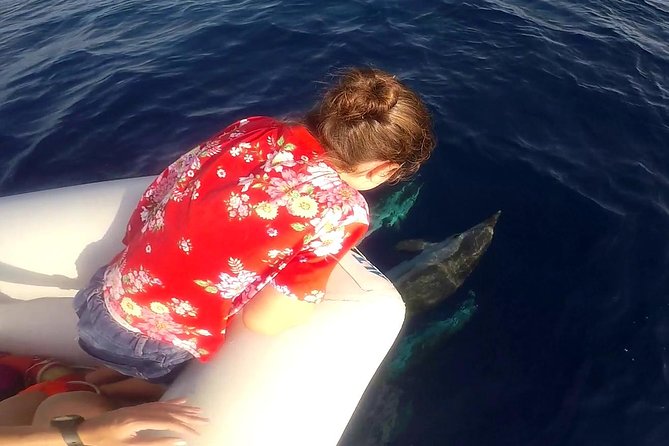
The structure is straightforward:
1) You head out at low cruising speed across the Gulf of Catania.
2) The team scans the horizon for free dolphins.
3) When cetaceans are spotted, you observe, photograph/video as you like, and contribute to the day’s data collection.
4) After leaving the pack, you return to port.
The operator says the chance of spotting cetaceans is about 80%. That’s a great number to know up front. It’s also a reminder not to plan the rest of your day with only one possible outcome.
In the search phase, the boat doesn’t treat time like wasted time. Guides provide information while you’re moving through possible areas. You’ll be alert, but it won’t feel like frantic searching. The vibe is closer to fieldwork with a view—especially with Etna in the background.
Some outings include extra sensory tools. One review mentioned using a hydrophone to listen to dolphin communication. That’s not guaranteed based only on the essentials, but it’s a good sign you’re dealing with a team that likes more than just sight lines.
The route and stops: what each place adds to the experience
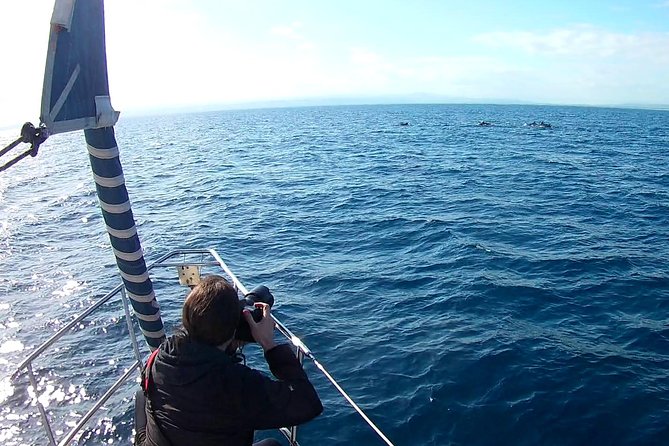
The coastal route can vary depending on the day, but you’ll be in the Catania coast zone, with Etna staying in view. On many departures, you’ll include places like Aci Trezza, Aci Castello, and then points along the Catania shoreline. The operator also notes you might go as far as Brucoli, Ognina, Santa Tecla, Santa Maria La Scala, Stazzo, Riposto, or even Taormina depending on the day’s plan.
Here’s how to think about what those stops are doing for you:
Aci Trezza: classic seascape and strong dolphin-search potential
Aci Trezza is the kind of coastal setting that feels made for marine watching. Even before a dolphin appears, the coast gives you something to orient to while the team plots where to look next.
If dolphins show up near this zone, you’ll likely enjoy that “sudden life” effect—one minute it’s horizon and waves, the next minute the dolphins are suddenly in your world.
Aci Castello: another coastal cue while you stay out searching
Aci Castello adds variety without changing the main mission. This is still about scanning the Gulf, but different coastlines can connect to different travel routes for marine life. From your seat, it mostly means the scenery shifts while your guides keep their eyes on the water.
It’s a nice way to keep the trip from feeling repetitive, especially if your dolphins take time to show.
Mount Etna views: the calm background that makes the trip feel Sicilian
Mount Etna isn’t just a photo backdrop here. Because it’s always visible, it becomes your steady reference point while the team moves the boat and adjusts search patterns.
When you’re out there for a few hours, that matters. It helps you stay grounded, especially if you’re used to coastal trips where the scenery is either too flat or too crowded with buildings.
Catania coast: the big-city edge of a wildlife outing
You’ll also pass by or operate near the Catania area. That’s interesting in its own way, because it frames the reality that wildlife is living close to human activity—so the low-impact behavior rules matter even more.
If you want to see Sicily beyond cathedrals and buses, this is a good “in between” experience: part nature, part region identity.
Why route variability can be a plus
The fact that the exact coastal points can change might sound like a downside if you’re hoping for one fixed itinerary. But for dolphin watching, flexibility is often how you improve odds. The Gulf isn’t one uniform “dolphin zone.” The team adapts, and you go with the flow.
Equipment and comfort: binoculars, open decks, and small practical tips
You get binoculars and cetacean recognition cards included. That’s a real value add. Dolphins can be hard to spot at first, and a little magnification plus the right identification cues makes a difference fast.
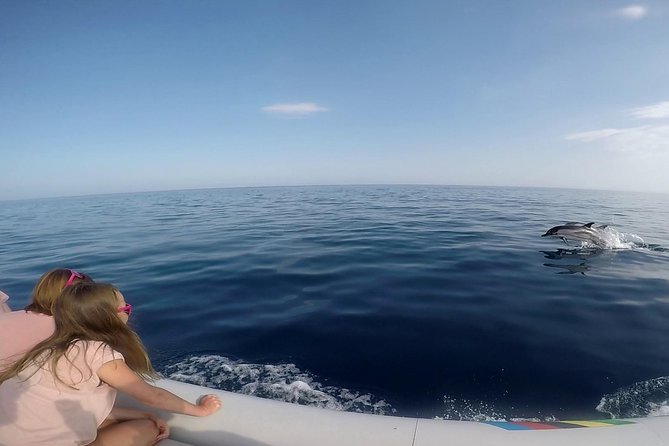
One practical thing to note: the boat experience can be open and low on shade. A review specifically described it as a zodiac, meaning you’ll want to pack like it’s a sunny sea day. Think sunscreen, hat, and a cover-up that doesn’t annoy you when you’re moving.
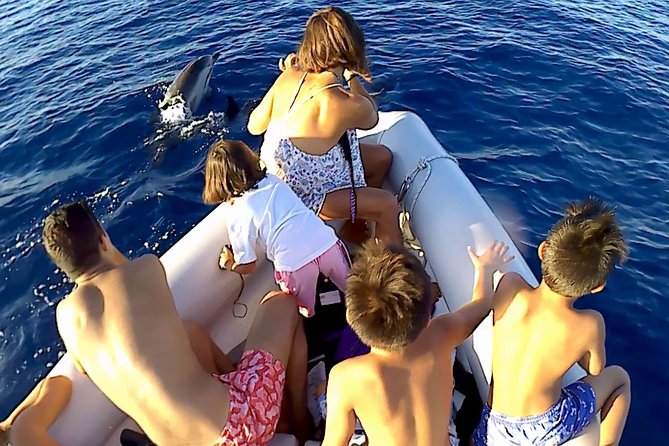
Life jackets and safety equipment are included. If you’re traveling with children, take a close look at fit. One family review mentioned the available lifejackets for children weren’t suitable for their kids, though conditions were calm enough that they felt comfortable. That’s not something you should assume will be true for every departure—just plan to check.
Also: don’t forget the “before you leave shore” rule. One review mentioned making sure kids use the loo before departure. It’s the kind of detail people only remember after they’ve already sailed.
The dolphin moment: what “good conduct” feels like
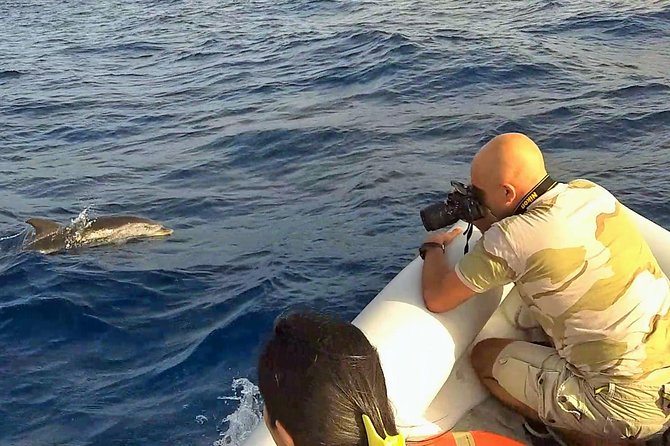
When dolphins are present, the best trips make you feel like you’re watching behavior, not forcing a performance. Marecamp’s stated rules aim to keep disturbance low, and that shows in the experience goal: watch, observe, and then move away.
Guides will point out inevitable aerial behaviors when they happen, so you can be ready with photos and video without constantly losing the animals to the wrong focus. You’ll also be told how to get better views—where to look, when to pause, and how to track movement.
And when dolphins move away from you, you’re not left scrambling for meaning. The process is built around returning after leaving the pack, so the day has closure rather than ending with frustration.
Value for $84.48: what you’re really paying for
$84.48 for about 3 hours is not “cheap,” but it doesn’t feel random either. You’re paying for a few concrete things:
- A small group setup (max 10).
- Guide time from a skipper plus a marine biologist.
- Dolphin-specific materials: binoculars and recognition cards.
- A conservation-minded operation that supports research.
- Fuel and the boat rental (7.20 m or 11 m depending on passenger count).
If you’re comparing this kind of wildlife outing to more generic boat tours, the value comes down to one point: you’re not just paying to sit on water. You’re paying to learn what you’re seeing and to participate in data collection during sightings.
You should still accept the inherent uncertainty of wildlife. Even with strong odds (80% chance), there will be days with no luck. The best way to treat the money is as a bet on education plus the chance to encounter dolphins—rather than a guaranteed dolphin guarantee.
Who should book this (and who should skip it)
This is ideal if you:
- Want dolphins in a natural setting without aggressive behavior.
- Like learning tools you can actually use (cards and binoculars).
- Appreciate conservation work that ties your outing to research.
It might not be the best fit if you:
- Need a guaranteed sighting for kids or a tightly timed schedule.
- Prefer fully shaded boats for a hot-weather day.
- Get stressed by “we’re searching” time—even though the team keeps it informative and focused.
If you’re flexible, you’ll likely get more out of it. If you’re treating it like a must-see show, you’ll feel the risk harder.
Should you book Marecamp Dolphin Watching in the Gulf of Catania?
I’d book it if you want a dolphin encounter with guardrails—clear eco conduct, actual identification help, and a team that treats the animals like wildlife, not attractions. The odds (80%) are solid for a sea search, and the small group size makes it easier to follow what the guides are seeing.
I’d think twice if your travel schedule can’t handle a “no sightings” day. The trip is designed for conservation and observation, not control.
If you do book, pack for sun and check life jacket fit for children. And bring the mindset that the Gulf is the star—because even when dolphins are shy, the learning and the coastline + Etna view can still make it feel like a real Sicilian nature outing.
FAQ
What language is the dolphin watching tour offered in?
The tour is offered in English.
How long is the experience, and what time does it start?
It lasts about 3 hours and typically starts at 9:00 am.
What’s the group size like?
The tour has a maximum of 10 travelers.
What’s included for viewing dolphins?
You get binoculars and cetacean recognition cards, plus a skipper and guide on board and an informative briefing on cetaceans and the monitored area. Boat fuel is also included.
Do I need to arrange transportation to the meeting point?
Shuttle service is not included. The meeting point is near public transportation.
Is this tour dependent on good weather?
Yes. It requires good weather. If it’s canceled due to poor weather, you’ll be offered a different date or a full refund.