REVIEW · NAPLES FLORIDA
Naples, FL: Manatee, Dolphin, 10,000 Islands Beach Eco Tour
Book on GetYourGuide →Operated by Manatee Sightseeing & Wildlife Adventure · Bookable on GetYourGuide
Wildlife shows up fast on this Everglades-to–Ten Thousand Islands boat ride. You’ll cruise past mangroves in search of manatees, alligators, and dolphins, then step onto Whitehorse Key for shelling and a swim. One thing to keep in mind: wildlife sightings aren’t guaranteed the way a theme park is, so patience (and good weather) really matters.
What I like most is how hands-on the experience feels. You’re not stuck staring at a screen—you’re out on the water with a live guide, using polarized gear to cut glare and make animals easier to spot. My second favorite part is the pacing: 3 hours gives you enough time to look for wildlife and still enjoy real beach time without rushing.
In This Review
- Key Points You Should Know Before You Go
- From Port of the Islands to Ten Thousand Islands Waters
- How the Tour’s Wildlife Scanning Actually Works
- Manatees and Alligators: Patience Pays Off
- Dolphins in Motion: Watch the Wake
- Birds Overhead: The Easy Win Most People Forget
- Whitehorse Key Beach Stop: Shelling and a Real Swim
- Gear That Actually Helps: Polarized Sunglasses and Phone Lenses
- Captains and Guides: Why the Best Tours Feel Fun, Not Stiff
- Price and Value: What You’re Really Paying For
- Timing, Weather, and Wildlife Odds
- Who Should Book This (and Who Might Not Love It)
- Should You Book the Manatee, Dolphin, 10,000 Islands Beach Eco Tour?
- FAQ
- How long is the Naples Manatee and 10,000 Islands beach eco tour?
- What’s included in the tour price?
- Is food and drink provided?
- Can I bring alcohol?
- What do I do at Whitehorse Key?
- What happens if the weather is bad?
Key Points You Should Know Before You Go
- Manatee, dolphin, and alligator spotting is the main event, with mangroves and boat wakes as your clues
- Whitehorse Key beach time includes a stroll on white sand plus free time to shell and swim
- Polarized sunglasses and polarized phone lenses are provided, so you can actually see what’s in the water
- You sail through harbor and bay areas first, then shift into mangrove waterways for animal-spotting
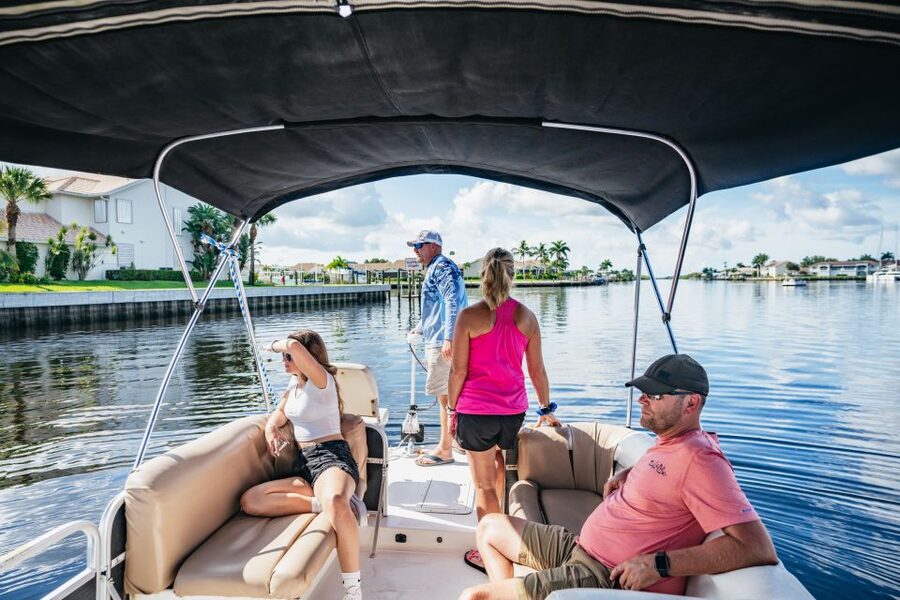
- Small-group vibe and shade-covered seating make the ride more comfortable than long cattle-car boats
- Guide energy matters, and the trip is driven by captains/guides who mix info with humor
From Port of the Islands to Ten Thousand Islands Waters
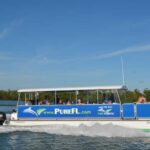
This tour starts at the Port of the Islands Marina, where you meet your guide and settle in before heading out. The boat has covered seating, which is a big deal in South Florida. You’ll be able to relax while the captain positions the boat for the next stretch of water—and that matters because wildlife spotting works best when you’re ready to look immediately.
Once you push off, the vibe is part sightseeing and part wildlife mission. You’ll cruise over the sparkling waters of the harbor and bay, which is great for photos. Then, as you move toward the mangrove areas, the focus shifts from views to scanning. Expect the guide to keep you oriented and help you understand what you’re looking at—especially the places where animals tend to show up.
The whole structure is simple: get you out on the water, slow down for sightings, then reward you with a beach stop. It’s a format that works well if you don’t want a full-day outing but still want that real “on the water” feeling.
You can also read our reviews of more tours and experiences in Naples Florida.
How the Tour’s Wildlife Scanning Actually Works
A lot of boat tours say “keep your eyes open.” This one gives you tools and a plan.
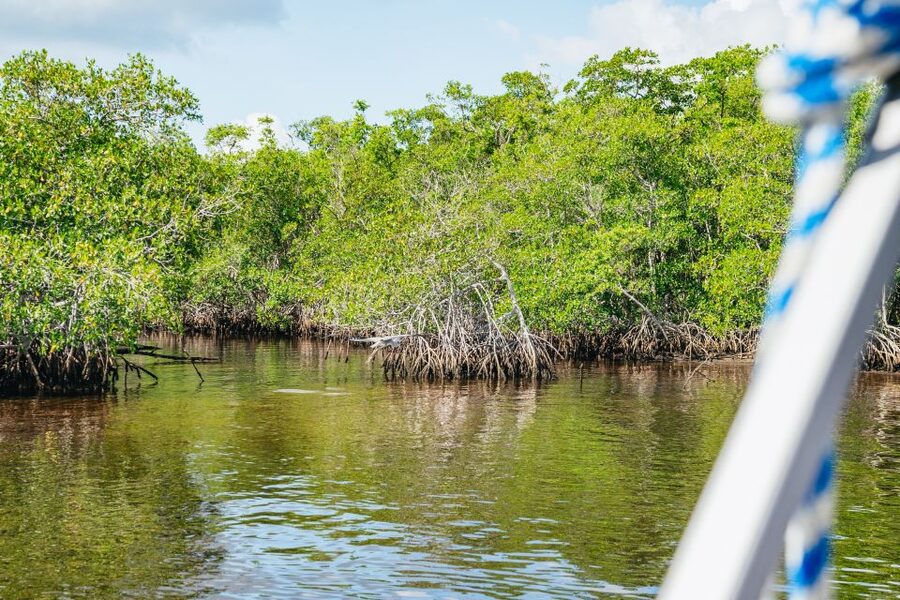
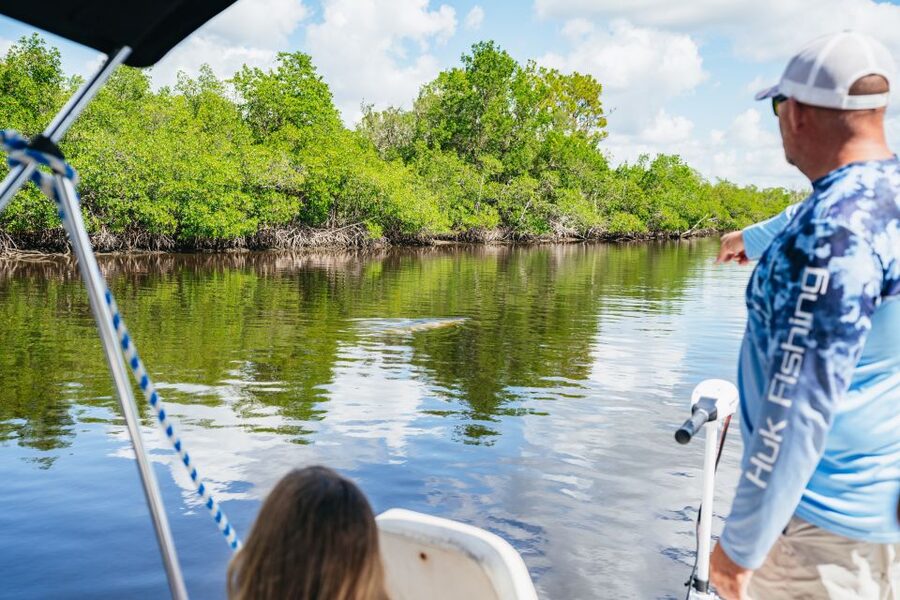
You’ll head through mangrove forest waterways while your guide looks for manatees and alligators. Mangroves are tricky to view from a boat because branches and roots can hide what’s beneath the surface. That’s why the tour provides high-tech polarized water sunglasses and polarized phone camera lenses. Polarization reduces glare off the water, so your eyes (and your phone) aren’t fighting the sun.
While you’re scanning, pay attention to two things:
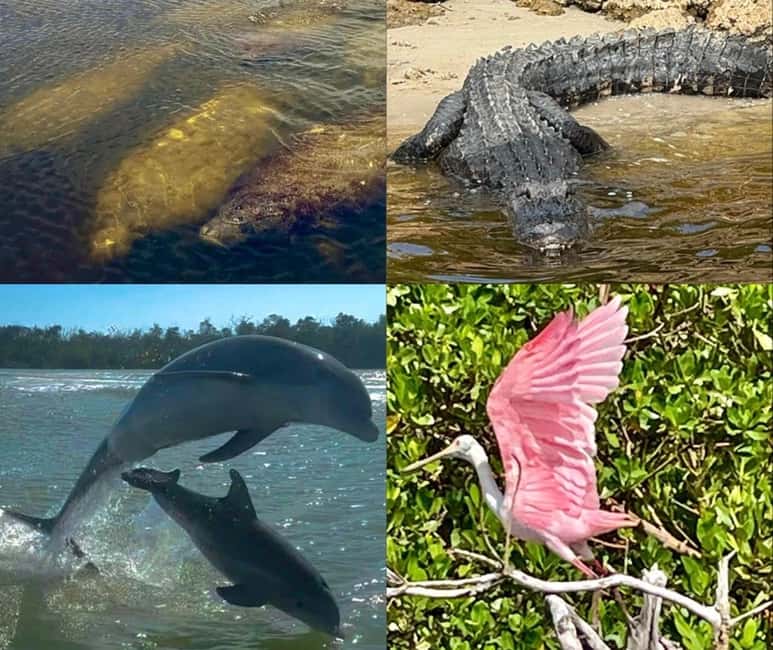
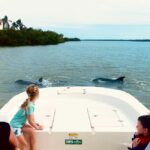
- Where the boat wake moves through the water. Dolphins often use the wake and splash around where conditions make swimming easier and movement looks fun.
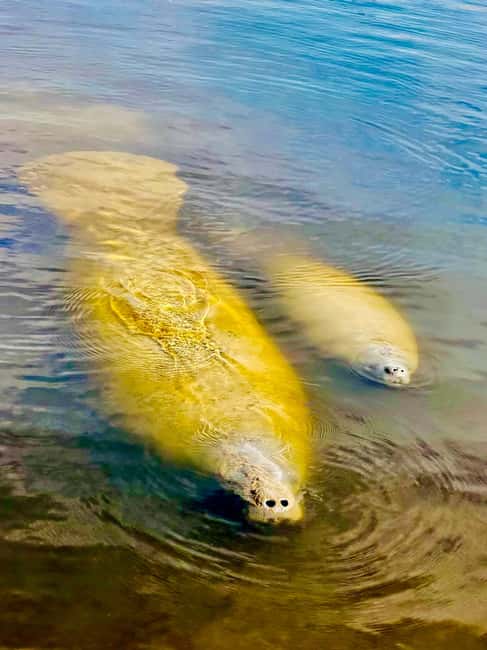
- The quieter margins near mangrove edges. Manatees and alligators can be difficult to spot at first. Sometimes you’ll notice a flash, a shape, or movement rather than a full, obvious animal.
There’s a balance here. You’ll likely see wildlife if conditions line up, but you’re not in control of animal behavior. One review highlighted that they only caught the flash of a dolphin fin and that manatees were harder to spot. That’s not a bad sign—it’s just a reality of wildlife viewing. The good news: even when sightings are brief, a skilled guide can help you understand what you did see and where to focus next.
Manatees and Alligators: Patience Pays Off
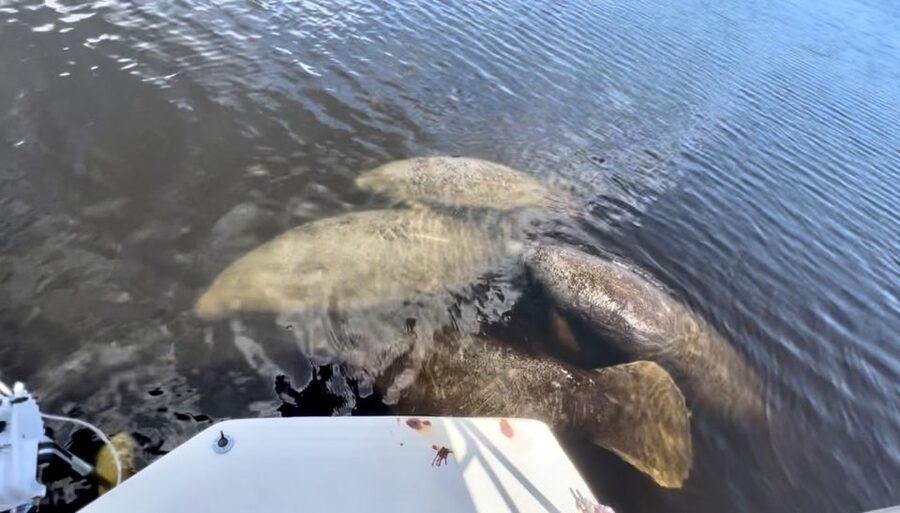
This is the part you’ll be thinking about from the moment you sit down on the boat. The tour focuses on spotting manatees and alligators in mangrove waterways, and the guide’s job is to turn your “maybe I’ll see something” into “here’s what to watch for.”
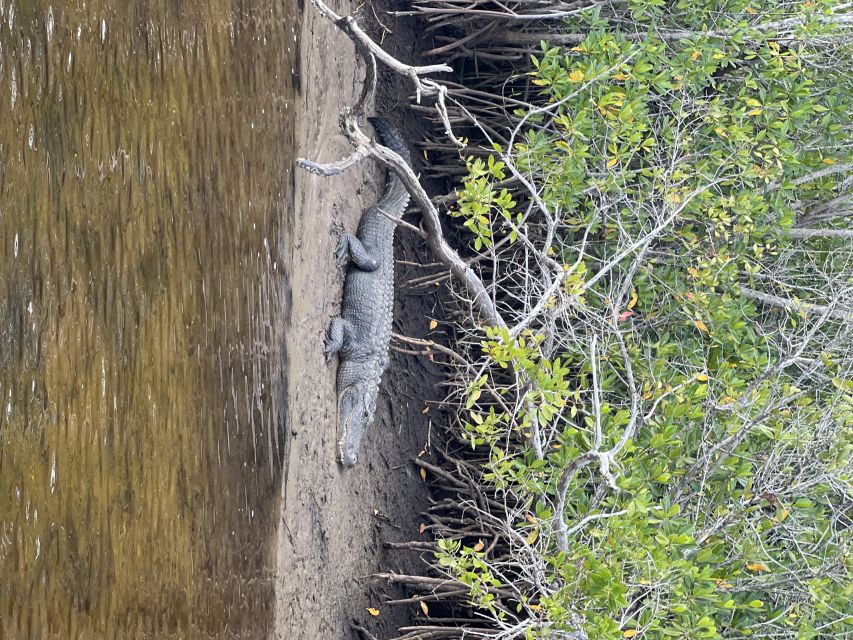
Manatees can surface in small windows—enough to confirm they’re there, not enough to keep you staring all day. Alligators can also be hard to spot if they’re tucked near roots or partially hidden by shallow water. That means your best strategy is to stay mentally ready even when the boat is cruising quietly.
Your guide will help you read the environment and point things out as they happen. Captains/guides from the past trips I’m referencing were praised for strong wildlife knowledge and light humor, including Captains John and Ed by name. If your guide is calling out what to look for, listen closely during the quiet moments. Those are often when the first clues show up.
Also, don’t underestimate the role of conditions. Clear weather makes it easier to see animals and also helps you enjoy the rest of the outing. If weather isn’t good, the experience can be changed or refunded, so it’s worth checking your day before you assume you’ll get the exact plan.
Dolphins in Motion: Watch the Wake
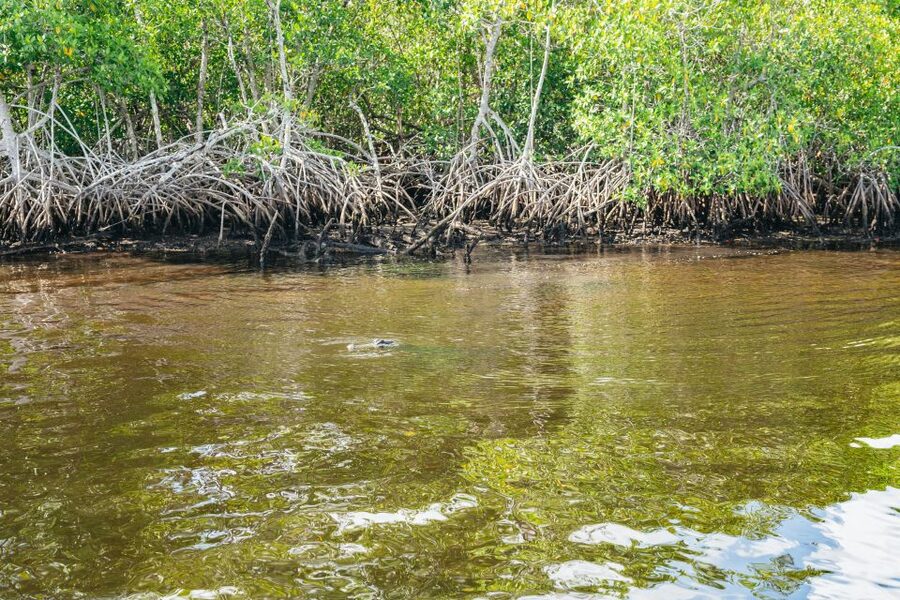
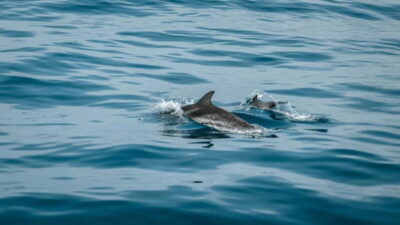
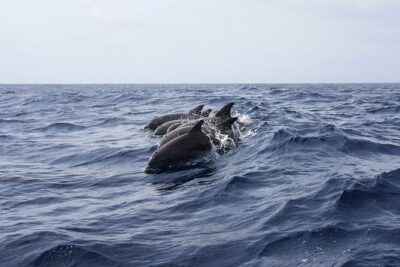
If manatees and alligators are the slow-and-steady targets, dolphins are the speed reward. During the tour, keep an eye on the wake of the boat. That’s where playful dolphins may come close and do their little show—sometimes it’s a quick splash, sometimes it’s a more extended burst of activity around the moving water.
From the reviews, the wildlife viewing quality is a strong point, and some guests saw a manatee followed by multiple dolphins after the boat launched. That chain of sightings is exactly why the timing and patience matter on this kind of cruise: you’re not just looking once, you’re scanning repeatedly as the captain navigates the right stretches.
If you only spot a fin or a brief surface, don’t panic about the rest of your trip. In wildlife terms, a quick confirmation can still be a win, and the guide can usually help you understand whether you’re seeing the same animal again or something new.
Birds Overhead: The Easy Win Most People Forget
One of the underrated parts of this itinerary is how often the tour pulls your gaze upward. As you cruise through mangrove areas and waterways, you may see brightly colored birds in the sky.
This is the “easy win” because birds are often more visible than what’s happening underwater. You can get good photos just by keeping your phone ready and turning your attention up for a few seconds at a time, especially when the guide pauses the boat. Birds also help break up the focus on scanning the water. It keeps the outing from turning into a nonstop squint-fest.
Whitehorse Key Beach Stop: Shelling and a Real Swim
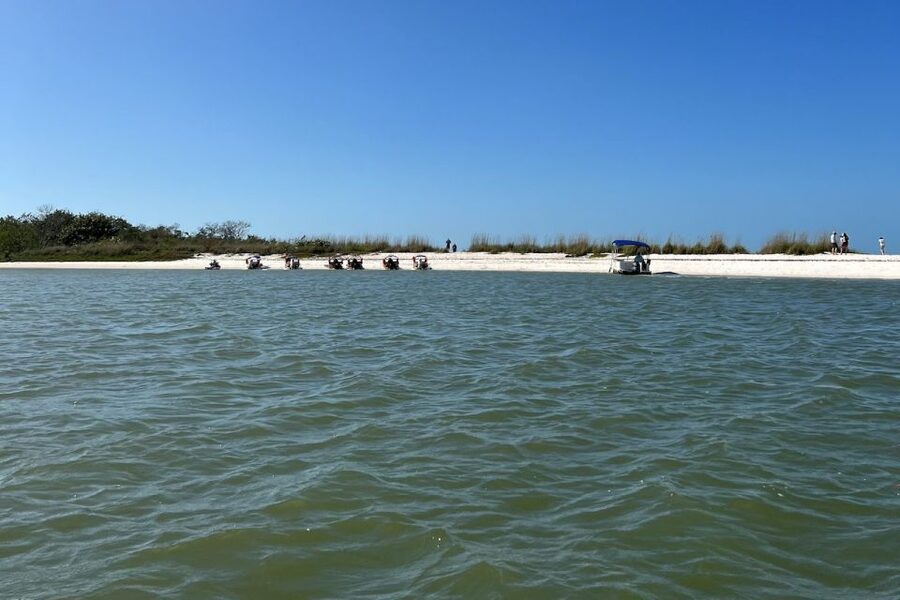
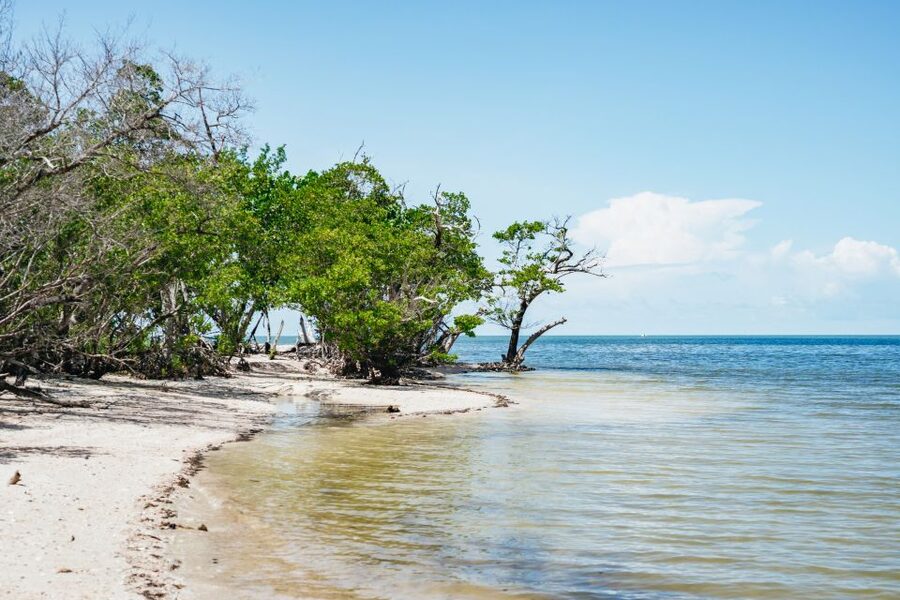
Then comes the reward. You’ll disembark at Whitehorse Island (often called Whitehorse Key) for free time on the beach. The sand is described as white and soft, and the water is sea green—exactly the kind of contrast you want after hours of mangrove scenery and water scanning.
This is your stretch of unhurried time. You can take a stroll along the shoreline, look for shells, and cool off with a swim if conditions feel good. It’s not a scripted beach show—it’s more like the tour giving you a place to reset.
A quick practical note: bring a towel, and think about water shoes if you prefer not to go barefoot. The tour doesn’t list gear like that, so you’ll want to pack based on how sensitive your feet are around sand.
Also, since food and drinks aren’t included, plan what you’ll eat and drink before you get to the beach. A lot of people like to bring snacks for this part so they don’t have to race back to the boat hungry.
Whitehorse Key is the moment where the trip becomes more than wildlife spotting. It becomes a Florida coastal break—beach + shells + a water dip—without needing a full separate beach day.
Gear That Actually Helps: Polarized Sunglasses and Phone Lenses
You’re not just handed a boat and told to look. The tour includes polarized sunglasses and polarized phone camera lenses. That matters because Florida glare can be intense, and wildlife can be difficult to spot if the water is reflecting the sky.
Here’s what that means for you in real terms:
- With polarized sunglasses, your eyes can see through surface glare more easily.
- With a polarized phone lens, you can reduce glare for pictures, which makes your photos more likely to show shapes or movement instead of a reflective mirror.
Even if you’re not a photo person, this gear helps you enjoy the tour. When you can actually see what the guide is pointing out, the whole experience feels more satisfying. And if you’re doing wildlife photos, you’ll appreciate having the tools without having to buy your own.
Captains and Guides: Why the Best Tours Feel Fun, Not Stiff
This outing lives or dies by the captain and guide. The included guide is English-speaking, and the experience is designed around someone being willing to help you spot animals and answer questions.
Some tours feel like a lecture. Others feel like a friendly search party. Based on what stood out in the best feedback, the captains brought knowledge plus jokes and a light mood. Captains John and Ed were both singled out, which points to a theme: you’ll get more than directions. You’ll get a guide who helps you make sense of what you’re seeing.
If you want to maximize your odds, your role is simple: ask questions during natural pauses. When the guide can explain what to look for—like where wildlife might surface or how dolphins behave around wakes—you’ll start noticing patterns rather than just “hoping for the best.”
Price and Value: What You’re Really Paying For
At $127 per person for about 3 hours, this tour sits in a mid-range spot for Everglades wildlife cruising plus a beach stop. The value isn’t only the boat ride. It’s the combo: water navigation through mangrove areas, a realistic shot at seeing manatees/dolphins/alligators, and then a real beach block at Whitehorse Key.
You also get equipment that improves the experience: polarized sunglasses and polarized phone lenses. That reduces the “guessing” factor that many sightseeing tours have. If you’ve ever gone on a boat trip and felt like you were staring at glare instead of animals, you’ll understand why this matters.
Parking is also noted as included across the street from the firehouse, which makes the start and end smoother. One more value point: alcohol is permitted. That’s a nice touch for a relaxed outing—just remember the rule about no glass bottles.
Food and drinks aren’t included, so you should factor in a small additional budget for snacks and hydration. But bringing your own lets you tailor it to what you actually like.
Overall, if you want a wildlife-and-beach day without spending most of your vacation in the car, this price usually feels fair for the time you get.
Timing, Weather, and Wildlife Odds
This experience needs good weather. If conditions are poor, you’ll be offered a different date or a full refund. That’s important, because on-the-water wildlife viewing is less about control and more about visibility and safety.
Your best move: plan to go into this with a flexible attitude. Even with the right captain and gear, animals decide when they show up. That said, a skilled guide can still make the trip worthwhile by pointing out environmental clues and keeping you focused on likely spots.
Also, the tour runs for about 3 hours, and that duration is practical. It’s long enough to feel like a real excursion, but short enough that you won’t be exhausted by the time you reach the beach. Based on feedback, 3 hours hits the sweet spot: you get time to scan the water, plus time to actually enjoy Whitehorse Key.
Who Should Book This (and Who Might Not Love It)
This tour is a great fit if you:
- Want an Everglades wildlife experience without committing to a full day
- Like the idea of guided wildlife spotting (not just a casual boat cruise)
- Want a beach stop with shelling and a swim
- Prefer a small-group setup and shade-covered comfort on the water
You might hesitate if:
- You’re the type who needs guaranteed, constant animal sightings
- You dislike being outdoors in sun and glare (even with polarized gear, it’s still Florida)
That dolphin-fin or hard-to-spot moment doesn’t ruin the tour if you’re there for the whole experience: the mangroves, the guided scanning, and the Whitehorse Key break.
Should You Book the Manatee, Dolphin, 10,000 Islands Beach Eco Tour?
If you’re trying to pick one trip that blends Everglades wildlife with real time on a Florida beach, I’d lean yes. The included polarized gear improves visibility and photos, the route targets the right habitats (mangroves for manatees/alligators, wakes for dolphins), and the Whitehorse Key stop gives you a satisfying finish beyond animal-spotting.
Book this if you can go when the weather cooperates and you’re okay with wildlife being wildlife. The best version of the day is when the captain reads the water and keeps you engaged—captains like John and Ed were praised for exactly that kind of energy—while you enjoy a beach intermission where you can actually relax.
If you want a predictable zoo-style experience, this probably won’t match your expectations. But if you want a genuine Florida nature outing with a good chance at great sightings and a solid beach payoff, this is a strong choice.
FAQ
How long is the Naples Manatee and 10,000 Islands beach eco tour?
It lasts about 3 hours. Starting times depend on availability.
What’s included in the tour price?
You get a guide, the boat tour, and polarized sunglasses plus polarized phone camera lenses. There’s also free parking across the street from the firehouse.
Is food and drink provided?
No. You should bring your own food and drinks.
Can I bring alcohol?
Alcohol is permitted, but the tour asks you not to bring glass bottles.
What do I do at Whitehorse Key?
You disembark for free time on the white sand beach. You can stroll, look for shells, and swim.
What happens if the weather is bad?
The experience requires good weather. If it’s canceled due to poor weather, you’ll be offered a different date or a full refund.