REVIEW · PUERTO VALLARTA
Whale and Dolphin Watching with a Biologist in Puerto Vallarta
Book on Viator →Operated by Wildlife Connection · Bookable on Viator
One of the best ways to meet Puerto Vallarta’s winter ocean crowd. A biologist-led team takes you out in search of humpback whales (plus dolphins and more), with hands-on education and a real research participation angle.
I especially like the small-group feel—maximum 20 people—because it helps you watch whale behavior without craning your neck. The other big win for me is the chance to learn from cetacean biologists who explain what you’re seeing, including underwater singing via hydrophone. A consideration: sightings depend on the sea, so if conditions aren’t great, timing can slow down and the experience can feel more like a patient search than a guaranteed instant show.
In This Review
- Key things I’d circle before you go
- Whale Season in Puerto Vallarta: Why This 4-Hour Trip Works
- Getting Oriented at Opequimar Centro Marino Before the Boat Leaves
- Out on the Water With a Biologist: What You’ll Actually Do
- Humpback Whales Up Close: Mothers, Calves, Breaches, and Singing
- Dolphin Watching Bonus: A Mix of Species You Can Learn to Spot
- The Full Wildlife Checklist: Turtles, Giant Mantas, and More
- Citizen Science on a Whale Research Mission: Why Your Participation Matters
- Boat Comfort, Crew Skills, and the Small-Group Advantage
- Price and Value: How $105 Stacks Up for a Biologist-Led Tour
- Who Should Book This Tour (and Who Might Want to Skip It)
- Tips to Make Your Whale and Dolphin Time Go Smoothly
- Should You Book This Biologist-Led Whale and Dolphin Tour in Puerto Vallarta?
- FAQ
- What is the price and duration of the tour?
- Where does the tour meet in Puerto Vallarta?
- What language is the tour offered in?
- How many people are on the maximum group size?
- What animals can I expect to see?
- Are orcas or false orcas possible?
- Do you provide any kind of educational briefing before you go out?
- Is there a bathroom on the boat?
- Is service animals allowed?
- What is the cancellation policy if weather affects the trip?
Key things I’d circle before you go
- Biologist-guided, cetacean-focused instruction (Masters-level marine ecology and science communication)
- Max 20 people for better viewing positions and a calmer, safer boat vibe
- Winter humpback season makes mothers, calves, and dramatic surface behavior much more likely
- Hydrophone whale-song listening adds a layer you don’t get on casual boat tours
- Citizen science participation ties your time on the water to ongoing whale and dolphin work
- A covered boat and snack break help you stay comfortable during the search
Whale Season in Puerto Vallarta: Why This 4-Hour Trip Works
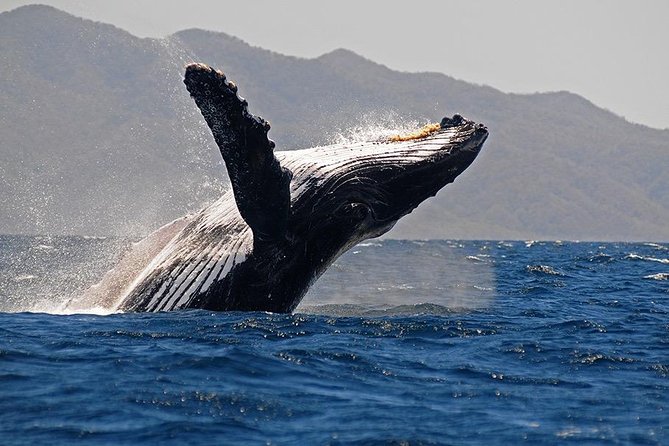
Puerto Vallarta is one of those places where “the ocean has a schedule” in the best way. During winter, humpback whales arrive to mate and give birth, so your odds jump compared with going at random times of the year. When the weather cooperates, it’s the kind of wildlife trip where you’re not just hoping—you’re listening, watching, and being guided to understand what’s happening.
What makes this tour click is that it’s not only about seeing whales. You’re also getting a biologist’s lens on the behavior: why whales surface when they do, how mothers interact with calves, and what different groups are doing out in the bay. That turns a good wildlife sighting into a memorable story you can actually explain back on land.
One more reason to care: it’s built around a real research effort. You’re not simply consuming nature—you’re participating in the type of citizen science work that helps marine teams track whales and dolphins over time.
You can also read our reviews of more tours and experiences in Puerto Vallarta.
Getting Oriented at Opequimar Centro Marino Before the Boat Leaves
Your departure point is Opequimar Centro Marino, at Av. Paseo de la Marina Sur 214, Marina Vallarta. The tour uses a land briefing first, which matters more than you might think. A short educational session helps you recognize what you’re looking at once you’re out on the water, instead of spending the first half hour guessing.
On some departures, the briefing includes very tactile, visual education—like the chance to touch whale parts such as baleen and view whale vertebrae for scale. Even if your day’s session isn’t identical, expect a guided explanation that sets you up to spot key behaviors quickly.
Then you’ll head toward the boats. From what’s been shared by past guests, crews are used to making boarding easy and getting you life-jacketed without drama. If you’re the type who hates “rushed tourism,” this part tends to feel more like a mini briefing than a scramble.
Out on the Water With a Biologist: What You’ll Actually Do
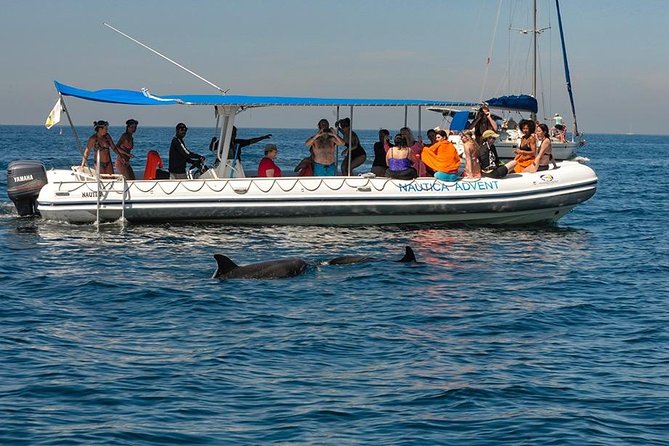
This is a 4-hour whale and dolphin excursion, and the pacing is built around searching. That means you’ll move to different sighting areas rather than staying fixed in one spot. You’re watching for behavior patterns, not just bodies on the surface, and that’s where the biologist leadership is a real advantage.
Expect explanations as you go. Past departures highlight biologists like Jemma, Camilla/Camila, and Jama leading the interpretation, with captains such as Jorge and Cesar/Caesar focused on safely positioning the boat for better sighting angles. You’ll often get context right before something happens—like when whales are about to surface, or what a specific body movement can mean.
A standout detail is hydrophone listening. When the crew brings it in, you can hear whale vocalizations that you would otherwise miss completely. It adds a “wait, that’s real?” moment because the underwater sounds feel like they’re coming from a different world—and then you look up and see the whales making it happen.
Humpback Whales Up Close: Mothers, Calves, Breaches, and Singing
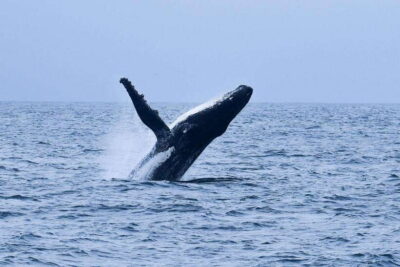
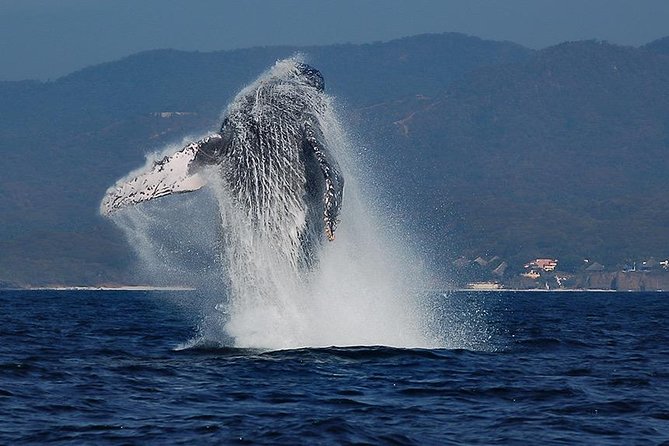
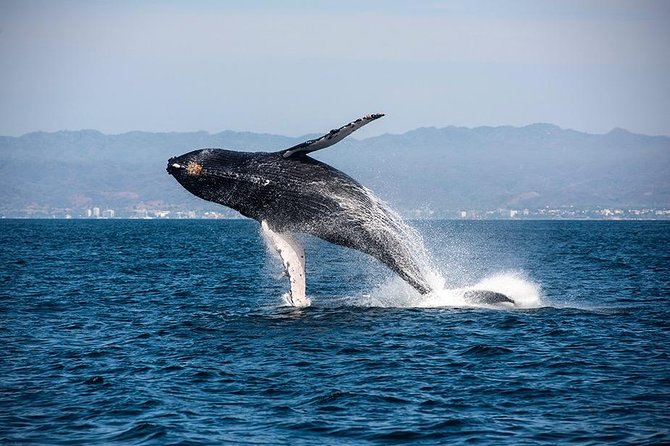
The humpbacks are the headline, and for good reason. In winter, you’re more likely to see mothers, calves, and males displaying or competing. The tour is designed to put you where those interactions are more visible, so you’re not stuck at the edge of the action.
What I love about the humpback focus here is the range of behavior you can potentially catch:
- Mothers with calves, including playful, close-up moments
- Male behavior, sometimes linked to competition and surface displays
- Breaching and tail movement, which can happen in sequences rather than random single events
- Underwater singing, which gives you a fuller picture than surface-only viewing
Even when a trip starts slow, the structure matters. Several departures described that the first hour might be quiet, then sightings can come quickly in waves. A biologist team helps you handle that waiting time with meaning—so it doesn’t feel like you paid to do nothing.
And yes, the boat can get close enough for you to feel the scale. You’re not walking into a theme park. You’re in the middle of winter whale habitat.
Dolphin Watching Bonus: A Mix of Species You Can Learn to Spot
On this tour, dolphins aren’t a vague add-on. They’re part of the plan, and winter humpback activity often overlaps with dolphin presence in the same waters.
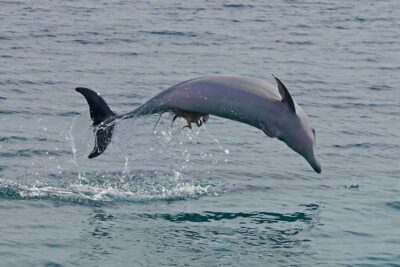
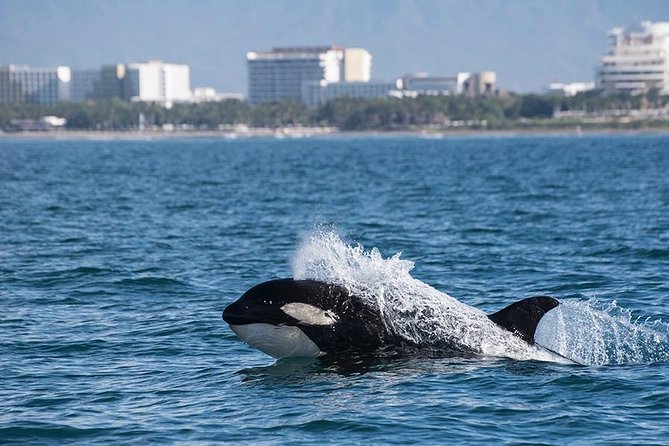
You might see different dolphin types such as bottlenose dolphins, spotted dolphins, spinner dolphins, and rough-toothed dolphins. With luck, the mix can be even spicier, including possible sightings of orcas or false orcas.
The practical upside is that the biologist can help you connect the dots in real time. Instead of dolphins being just “fins in the distance,” you’re getting a quick guide to how to tell groups apart and what their movement patterns can mean.
If you’re traveling with people who get restless on wildlife tours, this dolphin layer is a nice energy shift—often faster, bouncier, and easier to track visually while whales are doing their slower, deliberate routines.
The Full Wildlife Checklist: Turtles, Giant Mantas, and More
This experience isn’t only whales and dolphins. The tour also mentions the possibility of spotting marine turtles and giant mantas. Those are the kind of sightings that make a “standard” whale trip feel like it turned into a full ecosystem encounter.
One extra perk that has popped up on past days: seabirds. Blue-footed boobies have been noted as an added bonus in some departures, which is a fun reminder that you’re not only watching marine life—you’re looking at a whole coastal food web in action.
How should you think about this? Like this: the whales are the anchor. The rest are likely extras. If you get one bonus species, it feels like you “won.” If you get several, it feels like the ocean stacked the deck.
Citizen Science on a Whale Research Mission: Why Your Participation Matters
The tour is designed as more than sightseeing. It involves participation in a whale and dolphin research effort, and the people running the program describe your involvement as part of what makes their research possible.
Here’s what that means for you as a guest: you’ll probably spend more attention on what you’re seeing and less time just taking photos. You’re learning how to observe behavior, timing, and patterns—things that matter to researchers. The biologist team shares what they’re tracking and explains the reason behind it, not just the facts.
There’s also a bold claim in the tour approach: they describe a guarantee tied to finding animals if conditions and research participation line up. I’d take that as the operator doing its best to deliver—not a magic spell. In the real world, sea state and animal movement affect everything. But the mindset is clear: they want you to leave having seen meaningful wildlife.
Boat Comfort, Crew Skills, and the Small-Group Advantage
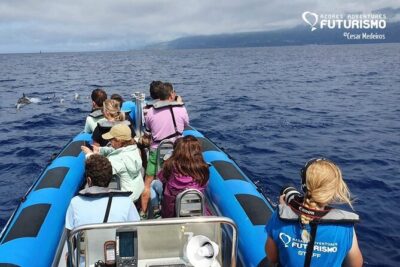
The tour’s max group size is 20 travelers, and that’s a sweet spot. On bigger boats, whale watching can turn into a lesson in standing on toes. Here, the smaller scale helps you move a bit and get better angles.
Comfort details also come up in past feedback:
- A covered boat is a win when sun or wind ramps up
- Life-jacket boarding is handled with care
- Crews focus on safe maneuvering so you can watch without the trip turning into a roller coaster
One practical downside to know ahead of time: there’s no bathroom on the boat. So if you’re prone to long waits, plan for that before you leave the harbor.
If you’re someone who gets seasick easily, you’ll want to take extra precautions, because the open water movement can still be real. The tour doesn’t claim to be a calm-lake experience; it’s an active search at sea.
Price and Value: How $105 Stacks Up for a Biologist-Led Tour
At $105 per person for about 4 hours, this isn’t the cheapest boat ride in town. It does land in the value zone if you care about two things: (1) expert interpretation and (2) a better chance at meaningful sightings.
Here’s why it feels fair:
- You’re paying for a biologist-led experience, not just a captain and a narrator
- The small-group cap helps viewing quality stay high
- The underwater component (hydrophone whale singing) is rare on standard tours
- You may also get a wider wildlife mix—dolphins, turtles, mantas—depending on the day
If your goal is strictly “see a whale, get a photo, move on,” there are cheaper options. If your goal is a guided, science-minded wildlife day that teaches you what you’re looking at, the price makes more sense.
Who Should Book This Tour (and Who Might Want to Skip It)
This tour fits best if you’re any of the following:
- A first-time whale watcher who wants to understand behavior instead of just spotting spouts
- A science-curious traveler who likes the idea of citizen science
- A couple or small group that wants a calmer boat experience and space for viewing
- A family with kids who are old enough to enjoy real explanations and watch for behavior
It may not be the right choice if you’re more than 7 months pregnant, since the tour notes it’s not recommended for people in that situation. If that applies to you, ask about alternatives with less movement and more accessibility to seating.
Also, if you’re the type who can’t handle waiting, know that wildlife can be unpredictable. The day might start slow, then pick up fast. That’s not a flaw—it’s how whale country works.
Tips to Make Your Whale and Dolphin Time Go Smoothly
A few small choices can make a big difference on a boat day:
- Bring sun protection even if the boat is covered. You’ll still be under open sky for hours.
- Wear shoes that grip. The deck can be wet, and you’ll move around when whales surface.
- Pack patience. When whales are out of sight, the biologist and captain are still working the water.
- Plan for no bathroom on board.
- If you’re picky about photos, give yourself space. The small-group size helps, but you still need a clear stance when something breaches.
One more practical note from the overall tour feel: it’s a mobile-ticket experience in English, and confirmation is handled after booking when availability is confirmed.
Should You Book This Biologist-Led Whale and Dolphin Tour in Puerto Vallarta?
If you want a whale-watching day that feels like learning as much as watching, I’d say yes. The combination of cetacean biologist guidance, a small-group cap, and the chance to hear whale songs through a hydrophone makes it a step up from typical wildlife cruises.
The main reason not to book is simple: if you’re looking for guaranteed wildlife on a tight schedule, marine life won’t promise that. If you can handle weather-driven changes and a bit of ocean searching, you’ll likely walk away with the kind of memories that stick—mothers and calves, breaching behavior, fast dolphin moments, and an explanation you can actually repeat.
FAQ
What is the price and duration of the tour?
The tour costs $105.00 per person and runs for about 4 hours.
Where does the tour meet in Puerto Vallarta?
The tour starts at Opequimar Centro Marino, Av. Paseo de la Marina Sur 214, Marina Vallarta, 48450 Puerto Vallarta, Jal., Mexico. It ends back at the same meeting point.
What language is the tour offered in?
The tour is offered in English.
How many people are on the maximum group size?
The tour has a maximum of 20 travelers.
What animals can I expect to see?
The tour focuses on humpback whales and also may include dolphins, marine turtles, and giant mantas. Dolphins species mentioned include bottlenose, spotted, spinner, and rough-toothed.
Are orcas or false orcas possible?
The tour information says that with luck you can find orcas or false orcas.
Do you provide any kind of educational briefing before you go out?
Yes. The experience includes biologist-led education before or at the start of the tour.
Is there a bathroom on the boat?
No bathroom is available on the boat.
Is service animals allowed?
Yes, service animals are allowed.
What is the cancellation policy if weather affects the trip?
You can cancel up to 24 hours in advance for a full refund. If the experience is canceled due to poor weather, you’ll be offered another date or a full refund.