REVIEW · SAO MIGUEL ISLAND
Azores: Swim with Dolphins Atlantic Experience
Book on GetYourGuide →Operated by Azores Whale Watching TERRA AZUL · Bookable on GetYourGuide
Wild dolphins change the whole pace. Off São Miguel, you get a guided dolphin swim in real ocean conditions, plus expert talk about local marine life and rules that keep things responsible. I love the focus on safety and conservation—from the careful approach to the strict in-water behavior rules. One thing to plan for: dolphin sightings and swim time aren’t guaranteed, and conditions decide whether you’ll get in as often as you hope.
The tour is built around people power, not crowds. It runs with a small group (limited to 10), uses a specialized Zodiac RIB boat, and alternates swimmers in the water so you’re ready for short, real opportunities. I also like that you’re not just chasing animals—you’re learning what you’re seeing. The possible drawback is simple: you may only get a couple of swims (and sometimes fewer), because the dolphins set the schedule and the time in the water is limited.
In This Review
- Key Points That Matter Before You Book
- Where Vila Franca do Campo Fits Into Your Azores Trip
- The 3-Hour Flow: Briefing, Search, Swim Turns, Then Snorkel Time
- The swim section: readiness over rushing
- After the dolphins: the islet photo stop and snorkeling
- What the Guides Actually Do With You (Not Just Where They Take You)
- Why that briefing changes the experience
- The Dolphin Odds: Seasons, Species, and Realistic Expectations
- Snorkeling Afterward: Seeing the Sea Bed Like a Local
- Price and Value: Is $136 a Fair Trade for Cold-Water Dolphin Time?
- Who This Swim Works For (And Who Should Skip It)
- What to Pack: The Simple List That Prevents a Miserable Ride
- Small Group Matters: Why Max 10 Feels Different
- Should You Book This Dolphin Swim?
- FAQ
- Where is the meeting point for the dolphin swim?
- Is pickup available from Ponta Delgada hotels?
- What’s included in the tour price?
- What should I bring for the swim and snorkeling?
- Can non-swimmers join?
- When can you swim with dolphins, and how warm is the water?
- Who isn’t allowed to participate?
Key Points That Matter Before You Book
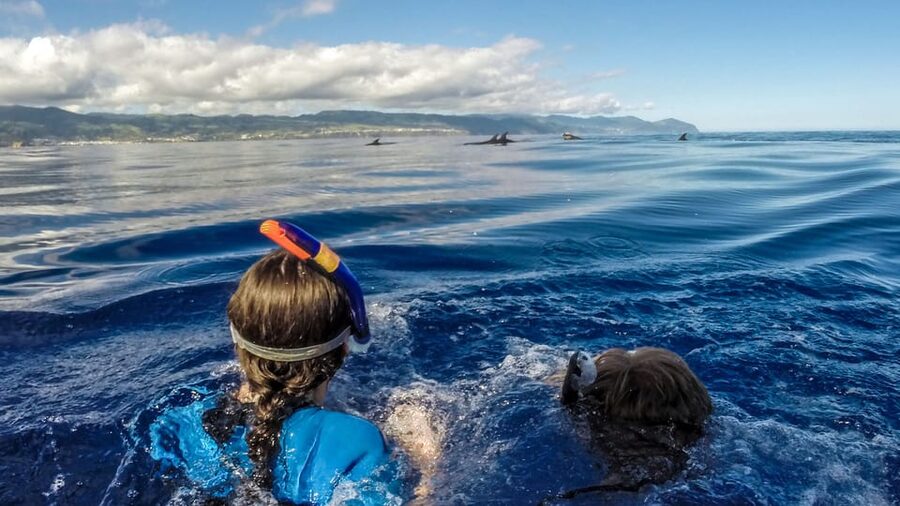
- Two swimmers at a time, limited water windows so you’re ready to go when conditions are right
- Biologist or naturalist-led guidance focused on marine wildlife and responsible behavior
- Careful approach first, swim only if conditions allow (they evaluate before going in)
- Four possible dolphin species depending on season and behavior
- Neoprene gear plus poncho/windguard to make cooler Atlantic water more manageable
- Snorkeling on the sea bed after dolphin time, to see the island’s underwater ecosystem
Where Vila Franca do Campo Fits Into Your Azores Trip
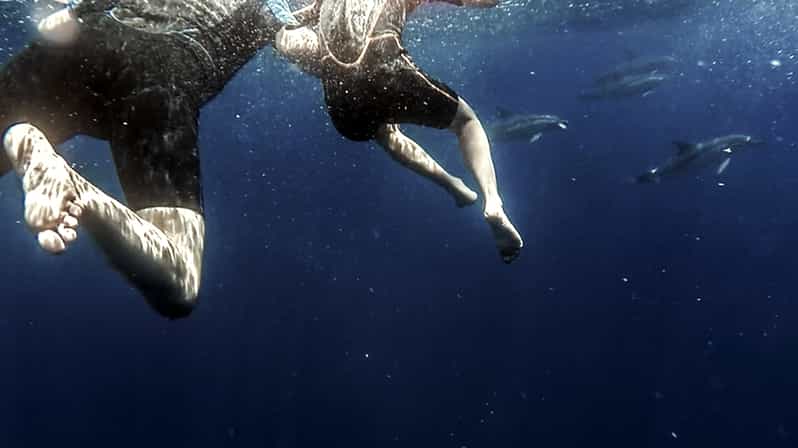
If you want the Azores to feel like the ocean is the main character, this is a great match. Vila Franca do Campo is a classic São Miguel base for marine wildlife outings, and it keeps the day focused: fewer transfers, more time on the water. The meeting point is the marina area at Marina de Vila Franca do Campo, with easy directions from Ponta Delgada along the coast and free street parking once you’re there.
If you choose optional pickup, you’ll meet at the carport in front of your hotel and need to be there early. Either way, the goal is the same: get you equipped, briefed, and positioned for the first boat leg without wasting daylight.
You can also read our reviews of more tours and experiences in Sao Miguel Island.


The 3-Hour Flow: Briefing, Search, Swim Turns, Then Snorkel Time
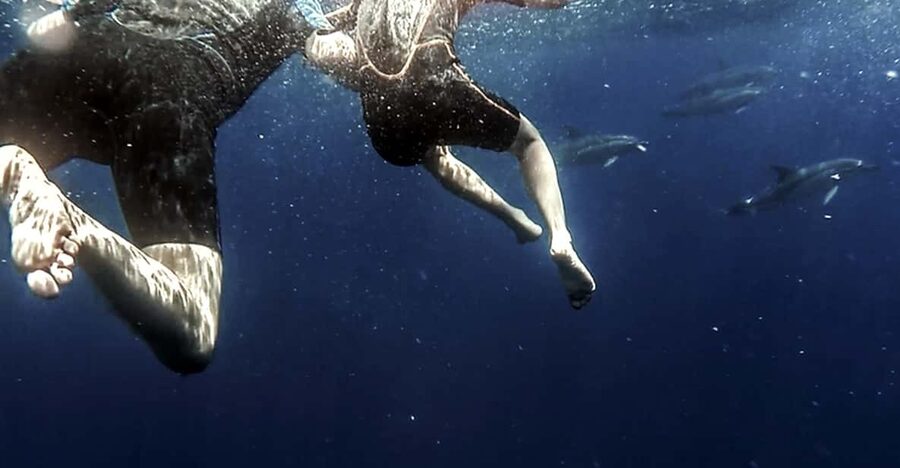
The whole experience is designed around short bursts of action, with lots of preparation between them.
First comes check-in, then the equipment fitting—you get neoprene gear, plus a poncho and windguard for after the swim. Then the team runs a briefing covering local species you might observe, tour rules, and basic onboard safety and equipment use. This matters because the ocean is not a classroom. They want you moving correctly and calmly once dolphins are near.
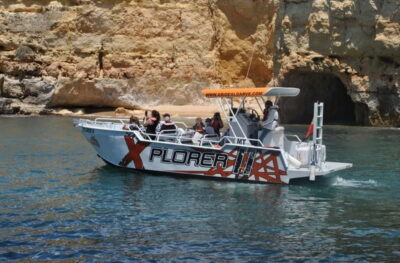
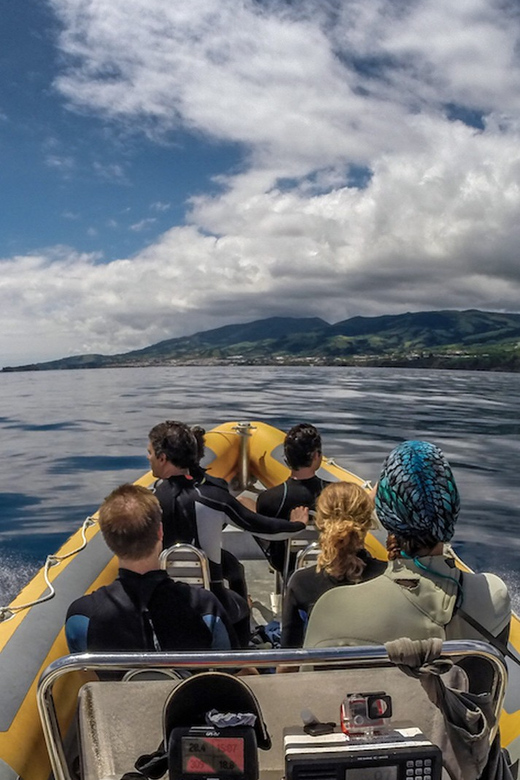
Next you board a specialized Zodiac RIB. The boat heads out at speed, with the team using lookouts inland and VHF radio directions to locate the animals. That’s how you go from “we’re offshore” to “we’re actually in the zone,” without aimless wandering.
The swim section: readiness over rushing
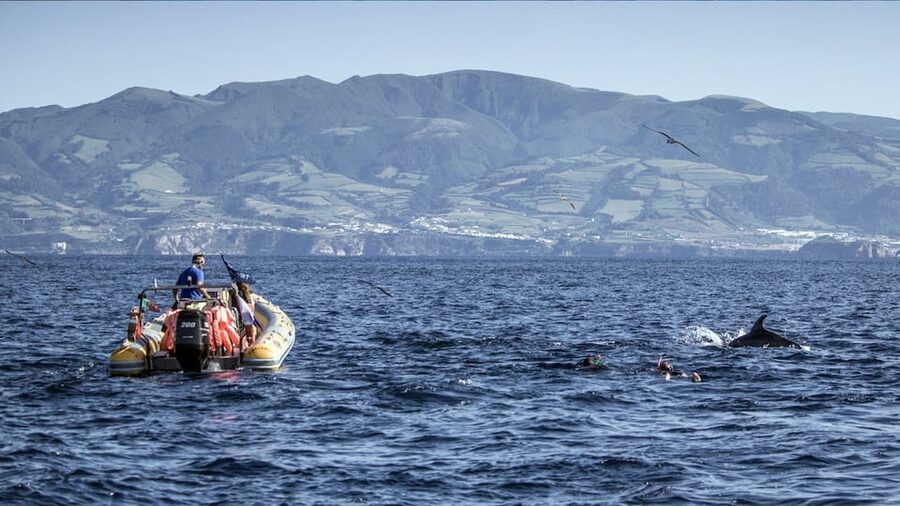
When dolphins are spotted, the guide evaluates whether conditions are favorable. That’s a key part of the experience: they don’t treat proximity as the win—they treat the dolphin situation as the decision-maker.
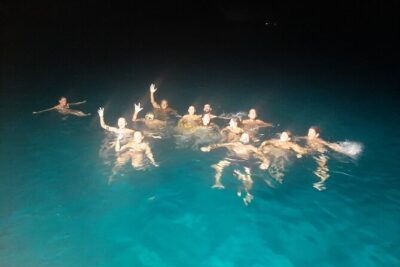
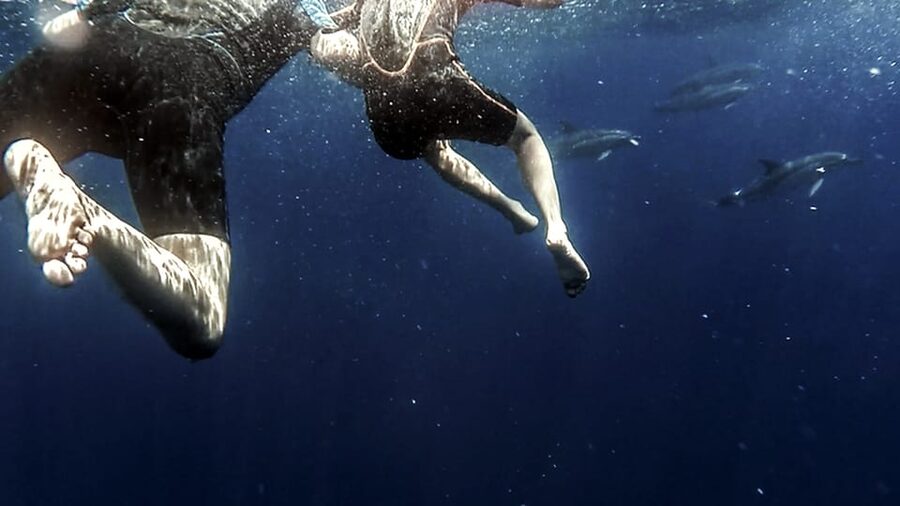
Swimmers alternate. Two people at a time go into the water at a safe distance, and the time in the water is limited to those windows when dolphins choose to come closer. The guides keep you ready because the opportunity can show up fast and vanish just as quickly.
If you’re new to cold-water swimming, don’t underestimate the mental part. Your body will cooperate more if you follow instructions closely and keep movements controlled. Also, if you bring fins, forget it—fins aren’t allowed, and you’ll be told to swim without gear that could alter how you move near wildlife.
After the dolphins: the islet photo stop and snorkeling
After dolphin time, the boat continues to a coastal location for snorkeling. The aim here isn’t spectacle for spectacle’s sake. You’ll be looking at the characteristic marine fauna & flora on the sea bed, which is a nice way to broaden the ocean story beyond what’s visible at the surface.
There’s also a quick islet of Vila Franca do Campo stop for sightseeing and a brief photo moment (short, but useful if you like having a view to pair with what you saw underwater).
The day loops back to the marina, where there’s a bit of free time (including a small shopping window) before returning by road.
What the Guides Actually Do With You (Not Just Where They Take You)
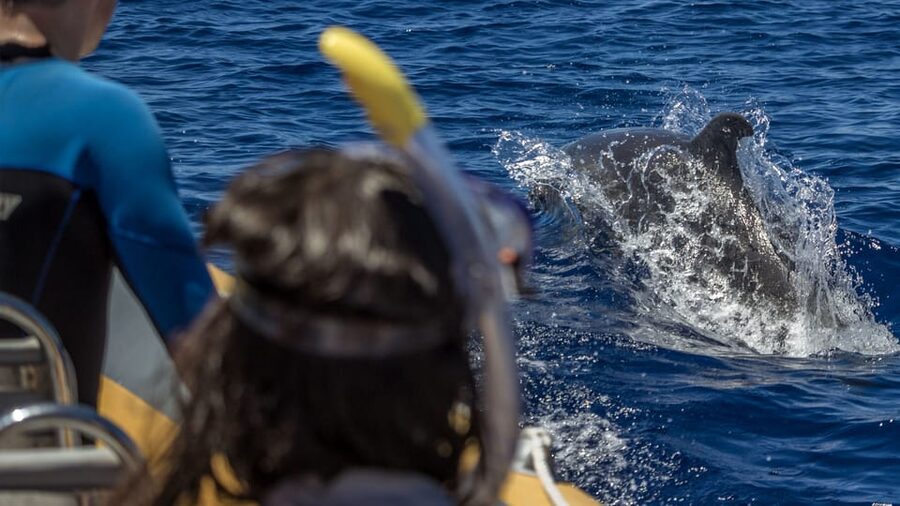
The best part of this outing is how much it leans on educated interpretation, not just “look, dolphins!”
The tour is guided by a biologist or naturalist, and that comes through in the structure: they set expectations early, then reinforce rules once you’re in motion on the water. You learn what species are around in that season and why the dolphins may behave a certain way.
They also stress responsible practice in ways that feel practical, not preachy. You’re told not to touch, feed, or approach aggressively. You’re also instructed not to be too noisy, not to make abrupt movements, and not to swim too fast near the animals. The message is clear: if you want dolphins to choose to come close, you have to behave like the ocean is the main event.
Why that briefing changes the experience
A lot of wildlife tours fail because people arrive thinking they can control the outcome. Here, the briefing is the antidote. Once you understand that animal behavior can’t be managed, you stop hoping for a perfect script and start paying attention to what’s actually happening—surface movement, underwater visibility, and how the dolphins respond to calm swimmers.
And it’s not just about dolphins. When the guide keeps explaining the local marine life as you travel, you’ll feel like you’re reading the sea, not just watching it.
The Dolphin Odds: Seasons, Species, and Realistic Expectations
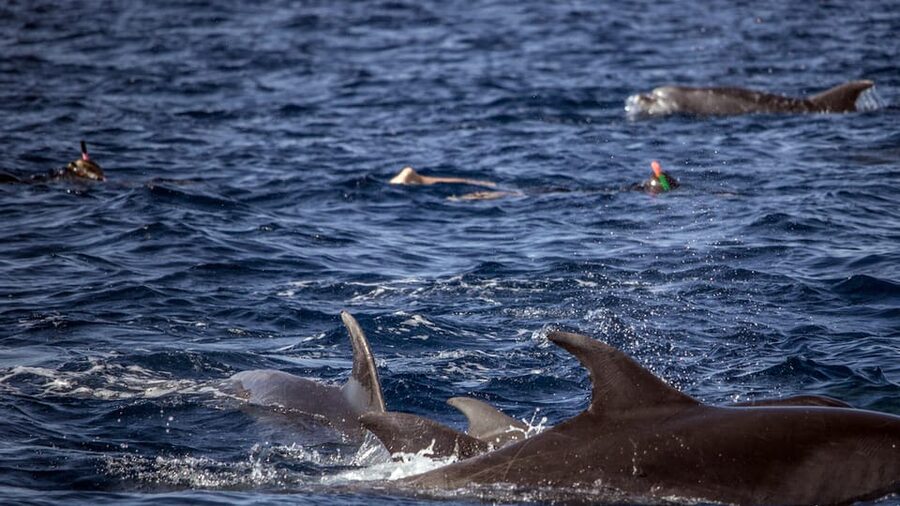
This is one of those tours where the best approach is to plan to be flexible.
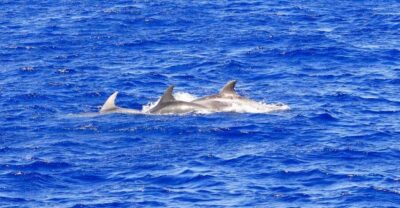
You’ll swim during a defined season window: late Autumn through early Spring, with average water temperatures roughly 16°C to 22°C. Dolphin species depend on conditions and behavior, and the tour notes that you may see any of four types: Common Dolphins, Bottlenose Dolphins, Striped Dolphins, and Risso’s Dolphins.
What you’ll likely feel most strongly, though, is the randomness built into wild wildlife. Dolphins can choose to approach and stay curious—or they might only show up briefly. That’s why the tour uses limited, controlled in-water slots and why they can’t guarantee proximity or interaction.
From the feedback you can take away one useful takeaway: when dolphins do decide to engage, it can be magical—multiple views from the water are possible, and swimmers may get more than one chance depending on conditions. But if you’re only prepared for a long, constant swim session, this won’t match that fantasy.
Snorkeling Afterward: Seeing the Sea Bed Like a Local
The snorkeling portion is the second half of the story. After dolphin time, the boat moves to a coastal area for snorkeling to explore the island’s underwater life.
This is a smart design choice for two reasons. First, it gives you a “plan B” if dolphin time is shorter that day. Second, it helps you understand the food web. Dolphins aren’t just floating around—they’re part of a bigger marine system, and seeing sea bed life is one way to connect the dots.
You don’t need to be an expert snorkeler to enjoy what you might see; the tour is structured around guided wildlife observation and equipment use. Just bring your own comfort level honestly. Cold water can turn even confident swimmers into cautious ones, so follow guide instructions and stay within the group rhythm.
Price and Value: Is $136 a Fair Trade for Cold-Water Dolphin Time?
At $136 per person for about 3 hours, you’re paying for three things: a small group experience, specialist guidance (biologist/naturalist), and the boat time needed to reach dolphins in the wild.
This isn’t “cheap,” but it’s also not priced like a luxury yacht. Where the value lands best is in the quality of the structure:
- Neoprene gear plus poncho/windguard reduces what you’d otherwise need to buy
- A specialized Zodiac RIB gets you to the right area quickly
- A guide and skipper handle safety and dolphin approach decisions
- You get not only dolphin watching but also snorkeling afterward
The one pricing reality check: because water time is limited and animal behavior decides the outcome, this can feel like a “two chances” experience. Some days deliver multiple opportunities. Other days deliver fewer. If you’re the kind of traveler who can enjoy the ocean even when dolphins don’t linger, the price feels more justified.
If your personal must-have is lots of repeated swims no matter what, you’ll want to adjust expectations in advance.
Who This Swim Works For (And Who Should Skip It)
This is a conservation-minded activity with real ocean conditions, so it’s not for everyone.
It isn’t suitable for people who are:
- Pregnant
- Under age 4
- With back problems
- Wheelchair users or people with mobility impairments
- In delicate health conditions
Unaccompanied minors aren’t allowed, and children must be accompanied by at least one adult.
Non-swimmers can still join the tour onboard, with a 50% discount. That’s a smart option if you want the boat cruise, dolphin watching, and the snorkeling segment without getting into the water.
If you’re comfortable with cold water and you can follow instructions calmly, you’ll be set up for a better day. If you’re easily frustrated by short windows and sudden changes, this might test you—wild dolphin tours run on dolphin time.
What to Pack: The Simple List That Prevents a Miserable Ride
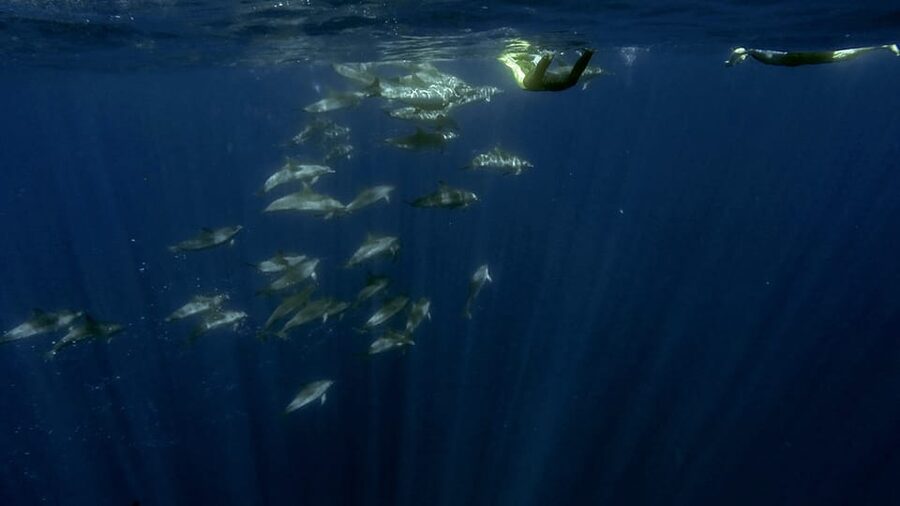
Even with gear provided, your choices matter. Bring:
- Swimwear
- A change of clothes
- Towel
- Camera
- Water
- Biodegradable sunscreen
Plan to dress in layers for the period before and after the swim. You’ll get neoprene and a poncho/windguard, but you’ll still be wet sometimes and the Atlantic can be breezy. If you only pack one towel or forget a dry layer, you’ll feel it fast.
Also note that water isn’t included, so having your own matters.
Small Group Matters: Why Max 10 Feels Different
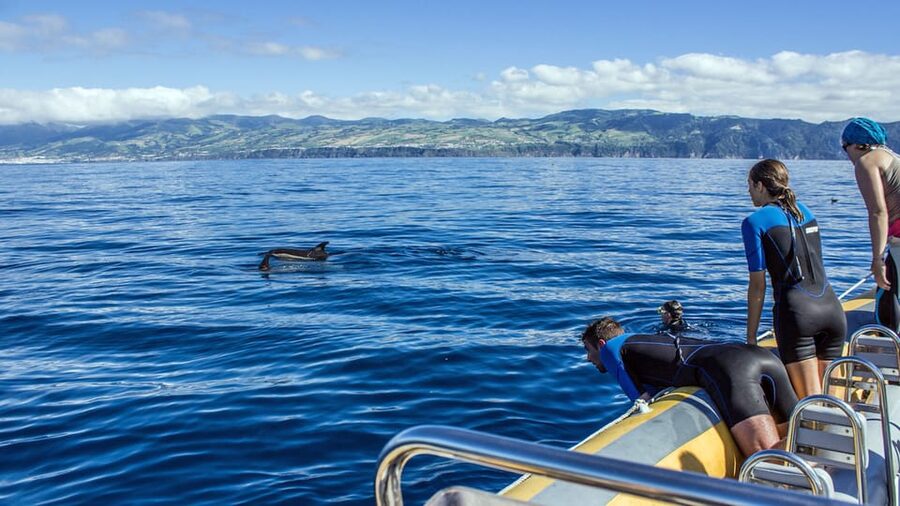
The tour limits the group to 10 participants, which is a real factor when you’re dealing with controlled in-water turns. Fewer people means the guides can manage timing, spacing, and the kind of calm behavior that wildlife responds to.
It also makes the briefing more effective. You can get questions answered in a smaller setting, and it’s easier for the team to keep track of who is ready when dolphins come close.
Language support is solid on paper: guides handle English, German, French, Spanish, Portuguese, Dutch, and Italian. English is officially used, but the crew will do their best to accommodate preferences, even if it’s not guaranteed.
Should You Book This Dolphin Swim?
I’d book it if you want a responsible, guided wildlife encounter rather than a “dolphin show.” The strongest reasons to choose it are the educational approach, the careful safety plan, and the fact that you get more than one ocean activity in the same outing—dolphin watching and snorkeling.
I’d hesitate if your main goal is maximum time in the water. The tour alternates swimmers and limits time, and the dolphins control how long they stay interested. Also, if you’re sensitive to cold water or have health concerns that fall under their restrictions, there are better-fit marine experiences for you.
If you can accept nature as nature—limited windows, changing behavior, and a “win is information and wonder”—this is a very solid Azores choice.
FAQ
Where is the meeting point for the dolphin swim?
Meet at the Marina of Vila Franca do Campo at the scheduled check-in time. If you’re staying in Ponta Delgada, you’ll also find the route signage from town to the marina area.
Is pickup available from Ponta Delgada hotels?
Pickup is optional. If you pick that option, you’ll meet at the carport in front of your hotel and should arrive early.
What’s included in the tour price?
Included: neoprene gear, a poncho and windguard, a guide and skipper, a specialized Zodiac RIB boat, and insurance. Water is not included.
What should I bring for the swim and snorkeling?
Bring swimwear, a change of clothes, a towel, a camera, water, and biodegradable sunscreen.
Can non-swimmers join?
Yes. Non-swimmers can join onboard for a 50% discount. They won’t enter the water for the swim segment.
When can you swim with dolphins, and how warm is the water?
The swim is offered between late Autumn and early Spring, with water temperatures averaging 16°C to 22°C.
Who isn’t allowed to participate?
The activity isn’t suitable for pregnant people, children under 4, wheelchair users, people with back problems or mobility impairments, and those in delicate health conditions. Unaccompanied minors also aren’t allowed.