REVIEW · ACI TREZZA
Catania: Dolphin Monitoring Sailing Experience with Marecamp
Book on GetYourGuide →Operated by Marecamp Association · Bookable on GetYourGuide
Dolphins are better when science drives the day. Marecamp’s Gulf of Catania sail blends cetacean monitoring with responsible watching under the ACCOBAMS code of good conduct, so you’re not just chasing wildlife—you’re supporting how researchers understand local populations.
I also like the setup for real viewing time: low cruising speed, skilled marine biologists, and a search pattern that focuses on the first telltale signs (fins, breaths, jumps, and other surface cues). The one drawback to plan around is simple: sightings are very likely, but not guaranteed, and if you don’t find dolphins your contribution isn’t reimbursed.
Key things to know before you go
- High-Quality Whale Watching label: Marecamp is Sicily’s only accredited provider with this label for high-quality cetacean-watching.
- Monitoring with experts: You sail with skippers plus marine biologists who help run the onboard survey work.
- Designed for dolphins to stay dolphins: Approaches follow ACCOBAMS-style good conduct rules to reduce disturbance.
- Small group = better focus: Limited to 8 participants, so spotting and guidance stay hands-on.
- You scan, you learn, you record: Binoculars, ID cards, and survey sheets are part of the experience.
- Wild sightings, real odds: You’ll aim for dolphins in their natural habitat—whales can appear on lucky days.
In This Review
- Why This Dolphin Monitoring Sail in Catania Feels Different
- A quick reality check
- Marecamp’s Responsible Watching Rules (ACCOBAMS-Style) in Plain Language
- What you should expect from the behavior you see
- The 3.5-Hour Plan: Scanning the Gulf Like a Biologist
- How the spotting actually works
- When dolphins show up
- If dolphins don’t appear
- Boat Types, Safety Gear, and Why Group Size Changes Everything
- A note on what’s allowed onboard
- Where You Meet: Catania Port in Winter vs Aci Castello in Summer
- October 1 to April 30
- May 1 to September 30
- Practical tip that matters
- What You Might See in the Gulf of Catania (No Guarantees, Real Possibilities)
- Why these possibilities are meaningful
- What’s Included (and How It Helps You Actually Watch)
- Photo and video add-on
- What to Bring: Your Comfort Kit for a Sun + Sea Trip
- The Rules List: Small Things That Keep the Trip Smooth
- Price and Value: Is $94 Worth It?
- Should You Book This Dolphin Monitoring Tour from Catania?
- FAQ
- How long is the Marecamp dolphin monitoring experience?
- Where do tours depart from?
- What’s the meeting point area like?
- Is dolphin spotting guaranteed?
- What animals might I see?
- What boat will I be on?
- Who’s on board with me?
- What’s included in the ticket price?
- Can I swim with dolphins?
- What should I bring and what should I avoid?
Why This Dolphin Monitoring Sail in Catania Feels Different
Most dolphin trips in the Mediterranean are built around the simple question: did we see them? Marecamp flips that. The day’s goal is cetacean monitoring—using careful observation to support scientific research for cetacean conservation—while still giving you a fair chance at a close, thrilling encounter from the boat.
That purpose matters because it changes how the day runs. You move slowly, you look methodically, and you treat every sighting like a data point instead of a trophy. I love that this keeps the focus on nature behaving normally and on you learning enough to actually understand what you’re seeing.
The other reason this tour is compelling is quality control. Marecamp is described as the only team in Sicily awarded the High-Quality Whale Watching label. In plain terms: they’re not winging it. There’s an emphasis on specialist observation and on following an international code of good conduct approved through ACCOBAMS (the Agreement on the Conservation of Cetaceans of the Black Sea, the Mediterranean Sea and contiguous Atlantic area).
A quick reality check
Even with expert observers, wildlife is wildlife. Weather matters, and the sea decides what it allows. Your odds are high, but the experience is still not a guaranteed “dolphins for sure” outing.
Marecamp’s Responsible Watching Rules (ACCOBAMS-Style) in Plain Language
When a tour says it follows a code of conduct, it can sound like a marketing line. Here, the rules show up in the way you’ll spend the trip and in what you’re asked not to do.
First, the activity is framed around an international good conduct approach. That means sightings are managed to reduce disturbance. When a pod is found, the boat comes in following the guidance that allows observation of natural behavior with minimal disruption. You’re not going to be rushed closer, shouted at, or encouraged to do anything risky.
Second, the trip avoids the “party tricks” people sometimes expect from wildlife tours. You won’t be offered swimming with dolphins (it’s prohibited). And they also specify they don’t do approaches that involve dropping passengers near wild predators for safety and disturbance reasons.
What you should expect from the behavior you see
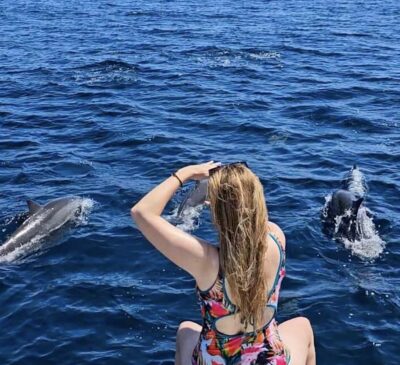
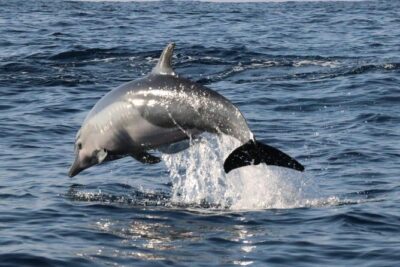
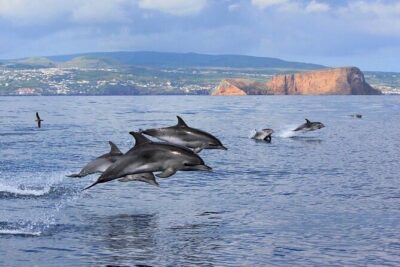
Dolphins are curious and energetic. From the boat, that usually translates to surface events you can actually notice: breaths, fast turns, and the kind of aerial behavior that makes you reach for your phone before you even think. You’ll be ready to photograph and video, but the experience keeps you in the role of observer first.
The 3.5-Hour Plan: Scanning the Gulf Like a Biologist
This is a daily eco-tour with a typical duration around 3.5 hours. Depending on the season and day conditions, you’ll head out from either the Port of Catania or Aci Castello (with the note that during October–April you depart only from Catania).
Once you’re onboard, you’re not just sitting there. You’ll get:
- a briefing on cetaceans and the monitored area
- guidance from the skippers and marine biologists
- tools to look closely (binoculars, plus ID cards and survey sheets)
How the spotting actually works
The hunt isn’t random. You’ll proceed at low cruising speed while you search the horizon. The focus is on quick, specific cues:
- a fin cutting the surface
- a breath in the air
- a jump or sudden change in the water
- and any other meaningful surface clue
That low-speed search method is one of the best parts for you. Faster rides make it hard for you to track what you’re seeing. Slow and steady makes the day feel more “watching” and less “hunting.”
When dolphins show up
Once the first dolphins are spotted, you approach the pod following the good conduct guidelines. This is where small-group structure matters. With fewer people onboard, observers can keep attention coordinated and avoid chaos around the best viewing angles.
Then you switch into “capture mode”—photos and videos—while still being treated as part of the observation process. You’ll help fill out onboard survey forms and collect environmental data. Even if you’re not a scientist, you’re doing real supporting work that fits the day’s conservation purpose.
If dolphins don’t appear
Meeting dolphins in open sea isn’t automatic. If you don’t find them, it’s not a “your time is free” situation. The contribution is not reimbursed, even though you still get time at sea. That’s the key risk to budget emotionally: you’re buying a specialist wildlife trip, not a guaranteed dolphin moment.
Boat Types, Safety Gear, and Why Group Size Changes Everything
You’ll be sailing or motoring on a boat selected for the day. Options include a dinghy or motor/sailing boat in sizes listed as 7.20 m or 14 m, depending on passenger count and season. Life jackets and safety equipment are included for everyone.
The group stays small—limited to 8 participants. That’s not just comfort; it changes how you see wildlife. In a packed boat, people block each other at the rail. In a small group, the biologists can keep everyone oriented, and you’ll spend less time trying to find a gap to look out.
A note on what’s allowed onboard
This is a nature-focused outing with strict behavior expectations. Smoking is not allowed, and so is littering. There’s also a no-no list designed around safety and wildlife respect: no fishing, no feeding animals, no jumping, no swimming, and no diving.
Where You Meet: Catania Port in Winter vs Aci Castello in Summer
Your departure port depends on the season:
October 1 to April 30
You depart only from the Port of Catania. You’ll meet near the floating docks on the left side of the road approach, stopping before the Coast Guard building (the meeting spot described runs past a pink building called Vecchia Dogana-Levante). Parking is small here, but there’s a free lot noted close by.
May 1 to September 30
Depart mainly from the Port of Aci Castello, in via Lungomare Scardamiano 1, in front of the meeting point.
Practical tip that matters
Plan extra time. Parking near ports can be slow and stressful, and the experience runs on the schedule needed to reach favorable conditions at sea.
What You Might See in the Gulf of Catania (No Guarantees, Real Possibilities)
Marecamp notes that they regularly encounter several dolphin species:
- striped dolphin
- bottlenose dolphin
- common dolphin
And on lucky days, you might also encounter:
- sperm whales
- fin whales
Beyond cetaceans, keep your eyes open for other marine life:
- sea turtles
- sunfish
- tuna
- sea birds
- and other species that share the area
Why these possibilities are meaningful
When a tour has multiple species targets, it usually reflects consistent monitoring rather than a one-off luck story. The Gulf of Catania region has enough biodiversity that, with the right observers and time on the water, you may get more than just one type of wildlife.
Still, remember the main truth: this is open sea. You’re not promised specific animals.
What’s Included (and How It Helps You Actually Watch)
You get more than a boat ride. The included items are designed to turn you into a better observer.
Included highlights:
- binoculars
- cetacean identification cards
- survey sheets used onboard
- a skipper and marine biologist on board
- a briefing on cetaceans and the monitored area
- continuous description of observed species
- use of the appropriate boat (dinghy or motor/sailing boat, based on day conditions)
That identification material is a big deal for value. It makes your photos more than random splashes—you can start matching what you see to what’s in the cards.
Photo and video add-on
A photo-video package exists but it’s not included. If you want that, you’ll need to request it and pay extra. Even without it, you’ll have time to photograph and video during the approach and viewing of the pod.
What to Bring: Your Comfort Kit for a Sun + Sea Trip
This is a boat outing, so the basics keep you happy.
Bring:
- a sun hat
- sunscreen
- water
- comfortable clothes
They also add practical rules like no high-heeled shoes. You’ll likely be moving around a bit on deck, so wear something stable.
Not included:
- drinks and food
So plan on staying hydrated with what you bring.
The Rules List: Small Things That Keep the Trip Smooth
The experience comes with a clear do-not-do list. It’s not there to be fussy—it’s to protect safety and reduce disturbance to wildlife and to other passengers.
Not allowed:
- unaccompanied minors
- smoking
- feeding animals
- jumping
- swimming
- fishing
- diving
- alcohol and drugs
- explosive substances
- littering
- making noise
If you’re traveling with kids, double-check that requirement before you book. For everyone else: keep it calm, keep it clean, and follow crew directions quickly.
Price and Value: Is $94 Worth It?
At about $94 per person for a roughly 3.5-hour monitoring sail, you’re paying for three things that many “dolphin watching” trips don’t deliver as clearly:
- Specialists onboard: marine biologists plus an experienced crew running an observation workflow.
- Tools and training: binoculars, identification cards, and survey sheets so you’re not watching blind.
- Responsible operations: the ACCOBAMS good conduct approach plus strict rules (no swimming, no disruptive behavior).
The trade-off is the same trade-off you always make with wildlife: you’re not guaranteed dolphins. And if you miss the sighting, your contribution isn’t reimbursed. For me, that affects value calculation. This is worth it when you want a high-quality, conservation-minded outing and you can accept the ocean outcome.
Should You Book This Dolphin Monitoring Tour from Catania?
Book it if:
- you want a responsible, science-led dolphin experience
- you like the idea of going beyond spotting to learn species ID and observation methods
- you’re okay with nature uncertainty and want a specialist crew to guide your search
- you prefer small groups (up to 8) for better viewing and less chaos at the rail
Skip it (or at least adjust expectations) if:
- you need a guaranteed dolphin sighting
- you’re not comfortable with the fact that a missed sighting means no reimbursement of your contribution
- you’re expecting a swim-with-dolphins style activity (that’s prohibited here)
If you’re doing a Sicily trip and want one coastal activity that feels both fun and meaningful, this one is a strong fit—especially if you’re traveling during a season when the sea conditions are likely to cooperate.
FAQ
How long is the Marecamp dolphin monitoring experience?
The tour runs for about 3.5 hours (and can vary within a daily eco-tour range of roughly 2.5 to 4.5 hours depending on conditions and the day).
Where do tours depart from?
During October 1 to April 30, tours depart only from the Port of Catania. From May 1 to September 30, tours depart mainly from the Port of Aci Castello.
What’s the meeting point area like?
In Catania, the meeting spot is near the floating docks and the Club Nautico Marecamp boats are described as being the last dock. In Aci Castello, the meeting point is in via Lungomare Scardamiano 1, in front of the designated meeting point.
Is dolphin spotting guaranteed?
No. The activity happens only in favorable sea-weather conditions, and sightings can’t be guaranteed. If you don’t see dolphins, the contribution is not reimbursed.
What animals might I see?
They regularly encounter striped dolphin, bottlenose dolphin, and common dolphin. On lucky days, sperm whales and fin whales are possible. Sea turtles, sunfish, tuna, sea birds, and other species can also appear.
What boat will I be on?
You may ride on a dinghy or on a motor or sailing boat, with boat sizes listed as 7.20 m or 14 m depending on the number of passengers and the season.
Who’s on board with me?
You’ll have a skipper and a marine biologist on board, plus a briefing and continuous description of observed species.
What’s included in the ticket price?
Binoculars, cetacean identification cards, and survey sheets onboard are included, along with the skipper and marine biologist, the briefing, and safety equipment/life jackets.
Can I swim with dolphins?
No. Swimming with dolphins is prohibited.
What should I bring and what should I avoid?
Bring a sun hat, sunscreen, water, and comfortable clothes. High-heeled shoes aren’t allowed, and the tour also prohibits smoking, fishing, feeding animals, jumping, swimming, diving, littering, and making noise (plus alcohol and drugs).