REVIEW · LANZAROTE
Lanzarote: Whale and Dolphin Watching Eco-Friendly Catamaran
Book on GetYourGuide →Operated by WeWhale Lanzarote · Bookable on GetYourGuide
Whale watching gets quieter in electric mode. On Lanzarote’s first fully electric catamaran, you glide over the Atlantic in a silent, emission-free way that’s built for respectful wildlife viewing. The whole experience has a simple goal: help you see whales and dolphins up close without turning the ocean into a loud, smoky spectacle.
What I like most is the calm. The electric propulsion keeps things steady and clean, and you feel closer to the water than you do on bigger, noisier boats. I also like the education-first crew approach, including on-board explanations and a hydrophone so you can hear marine communication underwater.
One consideration: wildlife sightings can’t be guaranteed, and weather matters. If you go on a colder, cloudier day, you may still enjoy the cruise, but your odds of spotting whales or dolphins can drop.
In This Review
- Key things worth knowing before you go
- A silent catamaran for real whale-and-dolphin watching
- Why “eco-friendly” here is more than a marketing line
- Puerto Calero to open water: how your 4 hours usually feel
- The hydrophone and the crew’s calm guidance
- What you’ll do on the boat: snacks, drinks, and the viewing rhythm
- Wildlife sightings: what to hope for, and how to think about odds
- Price and value: is $112 worth it?
- Who this trip fits best (and who should skip it)
- Should you book the WeWhale Lanzarote electric catamaran?
- FAQ
- How long is the Lanzarote whale and dolphin watching catamaran trip?
- Where do I meet the tour?
- What’s included in the ticket price?
- Do they provide onboard information or commentary?
- Is there any way to listen to whales and dolphins underwater?
- What should I bring?
- Is the tour wheelchair accessible?
Key things worth knowing before you go
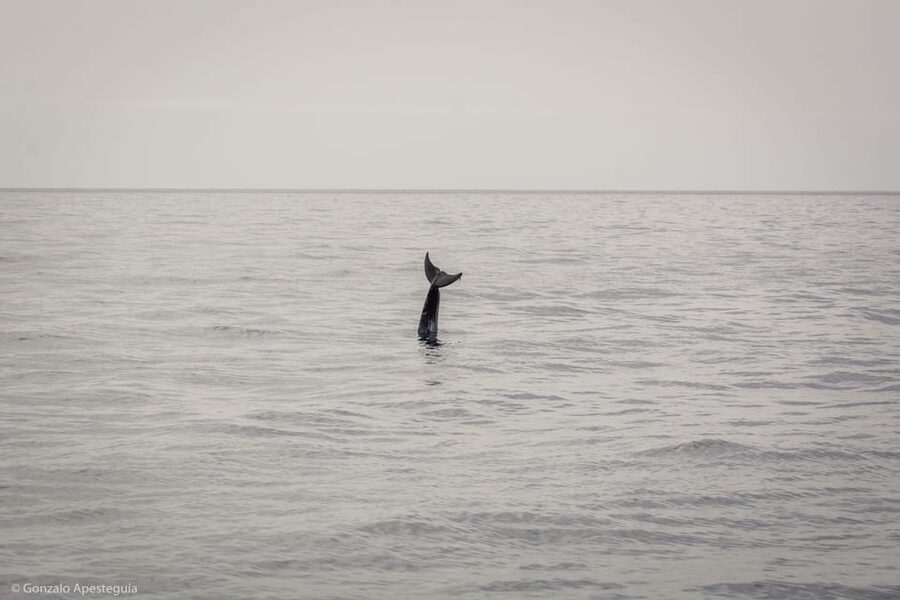
- Fully electric, emission-free catamaran: quieter sailing and no diesel smell hanging around
- Hydrophone listening onboard: hear whale and dolphin communication through underwater audio
- Respectful, low-disturbance viewing: watch without pushing the animals
- Small-group feel: more personal guidance and easier viewing from the boat
- Snacks and local drinks: fresh fruit plus soda/pop during the 4-hour outing
- Puerto Calero docking at F22: clear meeting point inside Marina Puerto Calero (Pontoon F22)
A silent catamaran for real whale-and-dolphin watching
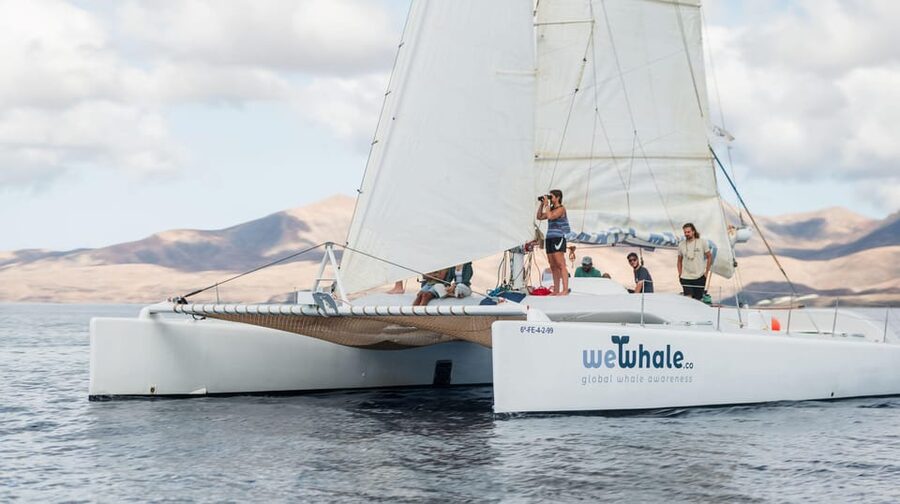
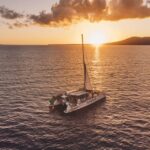
The best part of this kind of trip isn’t just seeing animals. It’s how you watch them. This tour uses a fully electric catamaran, and that changes the whole mood on the water.
Instead of engine noise and vibration, you get a smoother, calmer ride that’s easier on your attention. When the boat moves quietly, you notice more: small surface changes, splashes that are far too precise to be random, and the way dolphins appear as a pattern before they become a spectacle.
Lanzarote is a smart place to do this because you’re sailing from a working marina zone into open Atlantic waters that can host whales and dolphins. The boat is designed for observation, with the crew guiding you on where to look and what behavior to watch for. If you enjoy learning what you’re actually seeing—pod behavior, movement patterns, and general marine ecosystem context—this is built for you.
You can also read our reviews of more tours and experiences in Lanzarote.

Why “eco-friendly” here is more than a marketing line
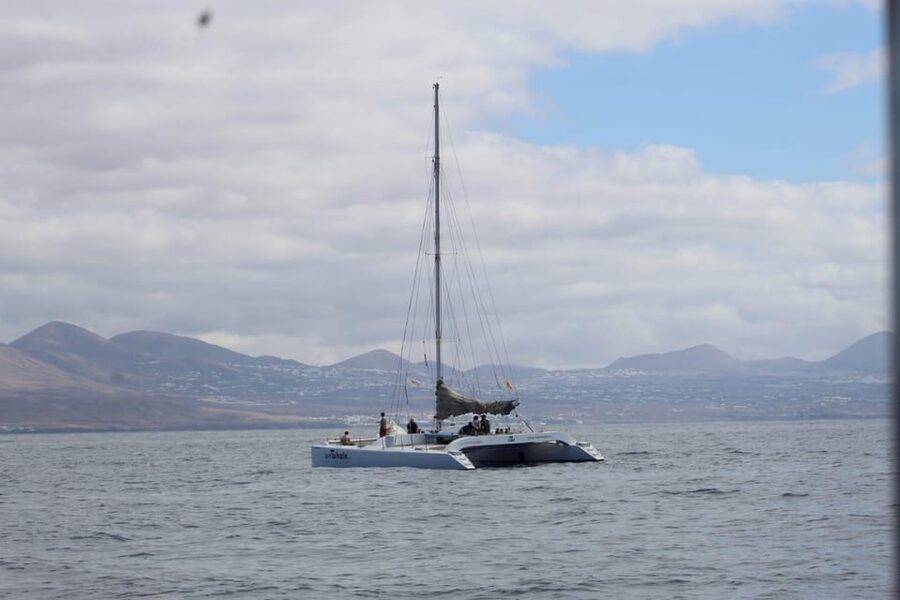
“Eco-friendly” can mean anything these days. Here, it’s practical.
First, the emission-free electric propulsion means you’re not adding diesel exhaust to the air and water near animals. Second, the quiet matters. Wildlife viewing works better when sound and disturbance are minimized, and the tour’s whole approach is centered on observing whales and dolphins without pressing them.
You also get the human side of conservation: the crew gives educational commentary about marine life and the ecosystem around Lanzarote. That helps your experience land differently. You’re not just chasing a photo. You’re learning how these animals live and communicate, and why respectful distance and low disturbance are part of responsible ocean tourism.
And yes, you’ll get the onboard audio feature too. Using a hydrophone, you can listen to whale and dolphin sounds underwater. That turns the trip into something you can feel with your senses, not just see with your eyes.
Puerto Calero to open water: how your 4 hours usually feel
Your adventure starts at Puerto Calero, Dock F22 in Marina Puerto Calero (Pontoon F22). Getting there is straightforward: there’s available parking, and arrivals can be arranged by bus or taxi.
Once you’re aboard, the tone shifts quickly. You’ll be on a catamaran designed to keep the experience stable and observation-friendly. Expect a cruise out to the Atlantic viewing area, guided by the crew’s instructions on where to look and when to slow down your own movements so the animals stay comfortable.
The timing is all about patience. Whale and dolphin encounters aren’t constant; they come in windows. That’s why the tour runs about 4 hours. In a short excursion, you spend too much time waiting. Here, you get room for repeated scanning and for the crew to change tactics if conditions shift.
While you’re sailing, you’ll also get time to enjoy the setting. From the water, you’ll have panoramic views of Lanzarote’s coastline. It’s a good mental reset: the tour isn’t only about wildlife; it also gives you a coastal perspective that’s hard to get from land.
The hydrophone and the crew’s calm guidance
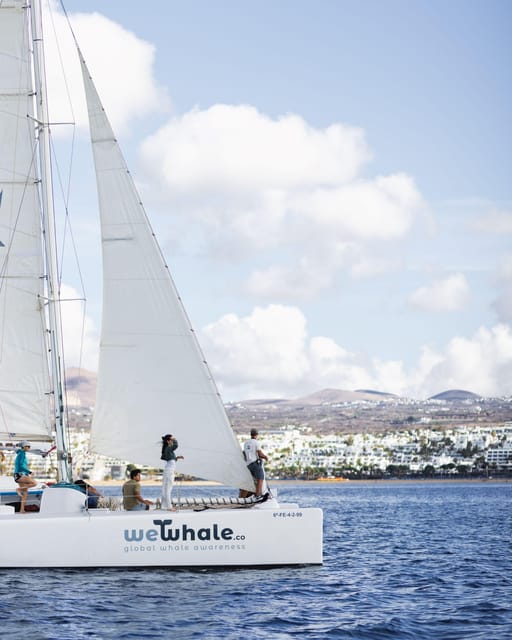
This is one of the most praised parts of the experience for a reason: the crew’s approach is careful, and it’s explained.
The tour includes a live guide who speaks French, Spanish, and English, and they’re there to help you connect the dots. You don’t just get told what you’re looking at—you get context for why those animals are doing what they’re doing in the moment.
The big standout tool is the hydrophone. When the crew brings it into the story, you can listen to sounds underwater—whales and dolphins communicating. Even if you don’t know marine biology terms, you’ll understand the point fast: animals use sound constantly, and listening changes how you interpret what you see on the surface.
Most importantly, the crew focuses on non-intrusive observation. That means you’re watching rather than stalking. You get the sense the catamaran is built for being present without crowding the animals, and the crew actively works to avoid pushing whales or dolphins in unnatural ways.
If you care about animal welfare as much as wildlife sightings, this is where the trip earns its reputation: the experience is designed to help animals stay animals.
What you’ll do on the boat: snacks, drinks, and the viewing rhythm
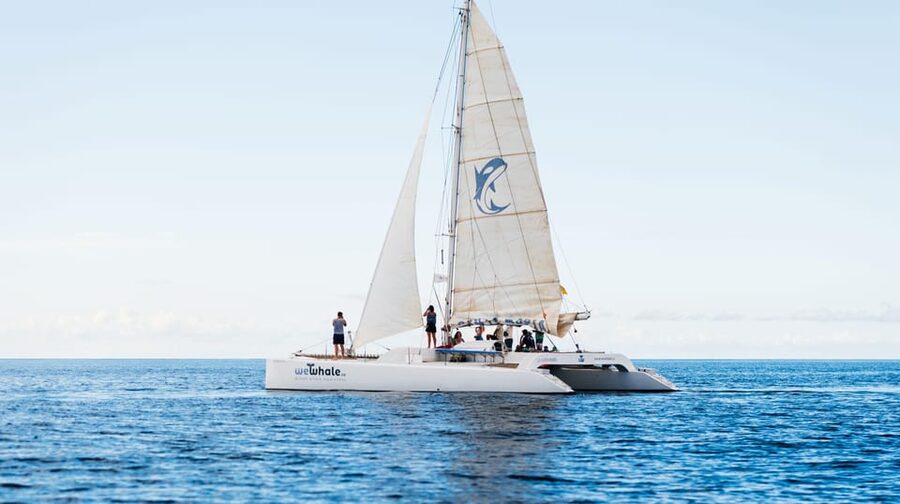
This outing is structured around a simple rhythm: cruise, scan, pause, learn, snack, repeat.
You’ll enjoy complimentary food and drinks onboard, including snacks, soda/pop, and fresh fruits. It’s the kind of inclusion that makes a difference on a 4-hour trip. You’re more comfortable, and you can keep your attention on the water instead of thinking about where your next meal will be.
The boat time also gives you flexibility for how you watch. Some people want to stand and focus on the horizon. Others prefer a slower rhythm—find a spot, watch for changes, and use the crew’s guidance to interpret behavior. Because the catamaran is quieter than typical engine-powered boats, you’re less likely to miss the subtle moments that show up right before a splash.
Do expect wind. Even if the day starts fine, the Atlantic breeze can pick up. Bring your hat and sunscreen so you can stay outdoors comfortably during scanning time.
Also note what you can’t do. Smoking isn’t allowed, and the rules also ban feeding animals and littering. Alcohol and drugs are not permitted. These rules help keep the environment cleaner and calmer for everyone on board.
Wildlife sightings: what to hope for, and how to think about odds
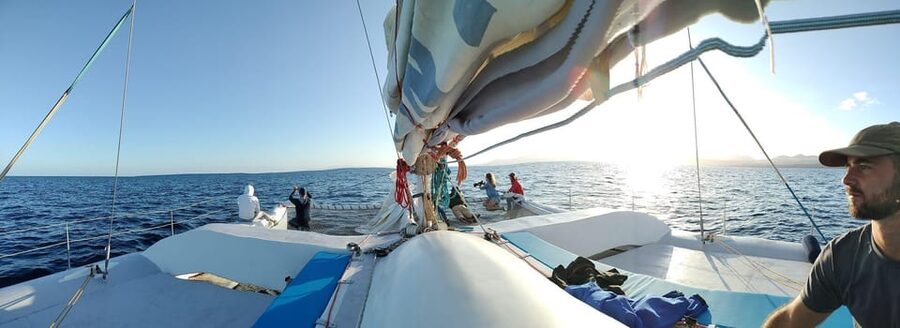
Here’s the honest part: whale and dolphin watching can be hit or miss. Even with a great crew and a good boat, marine animals move based on food, weather, and natural behavior.
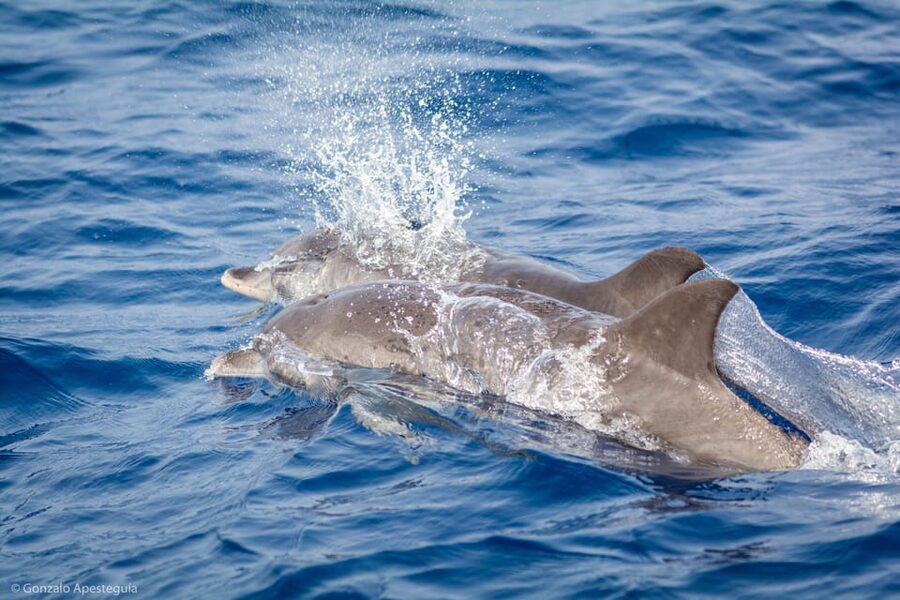
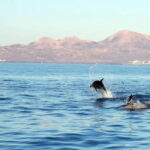
That said, this trip is designed for good odds. You’ll have expert-led searching and repeated viewing time across about 4 hours. You might spot multiple schools of dolphins, and on some departures you can also encounter whales, plus other marine life.
A practical way to approach the trip is to treat it as a nature education cruise with wildlife as the highlight bonus. If you’re lucky with sightings, it turns into a standout memory. If not, you still come away with something useful—sound knowledge from the hydrophone, a better understanding of marine behavior, and the satisfaction of seeing how an eco-minded operation respects animals.
Weather is the other factor. If conditions are cold or windy, that doesn’t automatically ruin the tour, but it can affect visibility and animal activity. If you’re planning around the weather, aim for calmer, clearer conditions when you can.
Price and value: is $112 worth it?
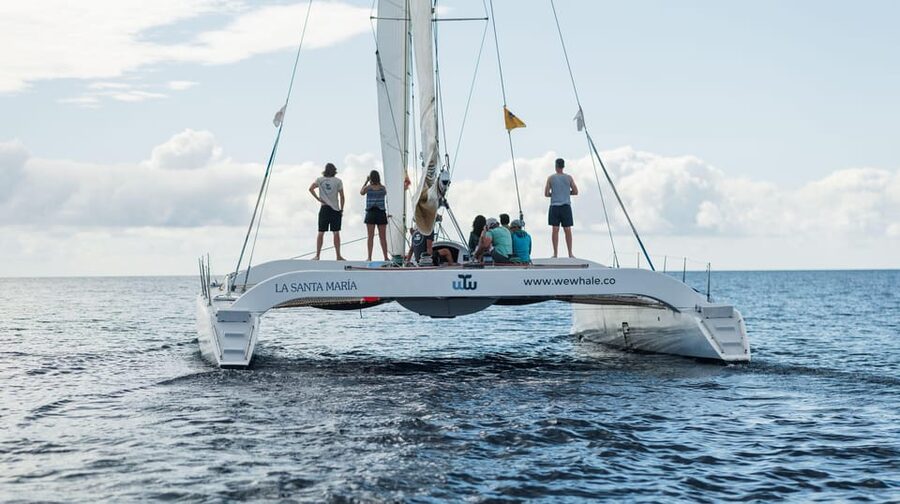
At $112 per person for a roughly 4-hour eco catamaran trip, value comes down to what you’re actually buying.
You’re paying for three things that matter:
- The electric catamaran experience: silent, emission-free sailing that’s more pleasant and more respectful than typical boat engines.
- The observation tooling and guidance: hydrophone listening plus a live guide explaining marine life and ecosystem context.
- Comfort extras: snacks, soda/pop, and fresh fruit so you’re not stuck thinking about food mid-boat.
If you’ve ever done whale watching on large boats, you know the difference. Bigger boats can mean more noise and less personal attention. Here, the experience has a more close-to-the-water feel, and you can get a better sense of what’s happening when the crew is guiding you patiently.
Is it the cheapest way to see dolphins? Probably not. But if your priorities are quiet, education, and respectful wildlife watching, this price starts to feel reasonable fast.
Who this trip fits best (and who should skip it)
I’d recommend this for you if you:
- want a wildlife experience that takes disturbance seriously
- care about learning what you’re seeing, not just snapping a picture
- like calm, quiet travel moments (electric catamarans help a lot)
- appreciate the practical touches like snacks and drinks included
It may not be the best fit if:
- you need wheelchair access, because the tour is not suitable for wheelchair users
- you’re looking for a long, active excursion with many different land stops (this is mainly about being on the water)
- you’re uncomfortable in cooler, breezy conditions, since you’ll spend time outside scanning for wildlife
Also, double-check your own expectations. This is about respectful watching and learning, not guaranteed animal encounters.
Should you book the WeWhale Lanzarote electric catamaran?
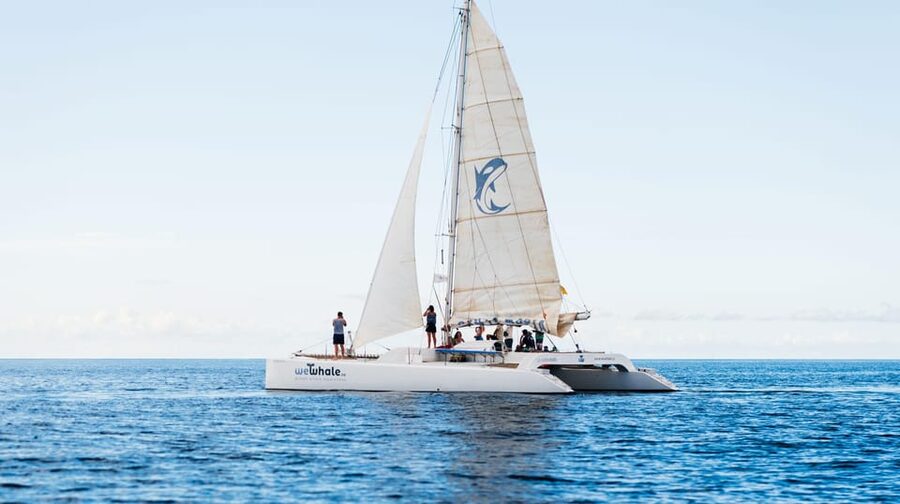
I’d book it if your idea of a great ocean day includes quiet movement, guided interpretation, and a responsible mindset. The fully electric setup plus the hydrophone feature make it more than a standard whale tour. You’re paying for an experience that feels built around animals and understanding, not just chasing sightings.
If you’re the type who gets disappointed when wildlife doesn’t show up, do yourself a favor: go in knowing there’s always an odds factor with whales and dolphins. The day still has value through the education and the unique silent ride.
If you want one clear decision rule: book this when you want calm, eco-minded wildlife viewing from a modern boat, and you’re flexible about sighting outcomes. That combination is where the tour shines.
FAQ
How long is the Lanzarote whale and dolphin watching catamaran trip?
The experience lasts 4 hours.
Where do I meet the tour?
You meet at Puerto Calero, Dock F22, in Marina Puerto Calero (Pontoon F22).
What’s included in the ticket price?
The tour includes snacks, soda/pop, and fresh fruits.
Do they provide onboard information or commentary?
Yes. The tour includes a live tour guide with commentary about marine life and the ecosystem. The guide is available in French, Spanish, and English.
Is there any way to listen to whales and dolphins underwater?
Yes. The experience uses an onboard hydrophone so you can listen to whale and dolphin sounds underwater.
What should I bring?
Bring a hat and sunscreen.
Is the tour wheelchair accessible?
No. The experience is not suitable for wheelchair users.