REVIEW · LISBON
Lisbon: Dolphin Watching with a Marine Biologist – Ocean Safari
Book on Viator →Operated by SeaEO-Tours · Bookable on Viator
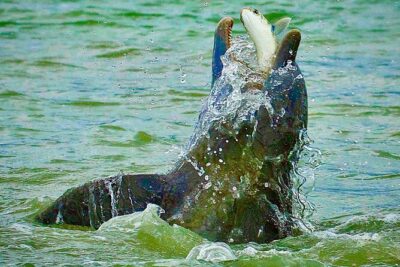
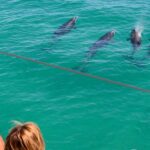
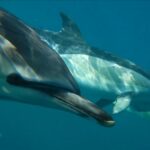
Dolphins off Lisbon, with a scientist onboard. I love the marine biologist commentary and the fast, close-up RIB ride that keeps views clear. You’ll also get landmark sightings as you head out from the Tagus toward the open Atlantic. One thing to plan for: the wind and cold can sneak up on you, and dolphin sightings are excellent but not 100% guaranteed.
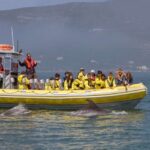
This is a 3-hour outing that starts in central Lisbon at Docas de Santo Amaro in Alcântara, under the 25th of April Bridge area. The boat holds up to 24 people, so you’re not stuck shoulder-to-shoulder with strangers, and you can stand for a better look when conditions allow. If you get seasick easily, this tour is built for rougher comfort thanks to its small RIB design.
In This Review
- Key points before you go
- From Alcântara Dock to the Atlantic in an 8.5m RIB
- Meeting at SeaEO Tours, Doca de Santo Amaro (and the 5-minute window)
- Stop 1: Docas de Santo Amaro, where the tour becomes real
- Stop 2: Farol do Bugio and the best kind of scenery
- Stop 3: Back toward Lisbon sights like Belem Tower
- Marine biologist commentary: the fun science part you’ll remember
- Dolphins aren’t guaranteed, but the odds are strong
- Seasickness, cold wind, and what to wear in Lisbon’s Atlantic air
- Price and value: is $62.88 really worth it?
- Who this tour fits best (and who should think twice)
- When to book and how to time it in your Lisbon days
- Should you book this Lisbon dolphin watching with a marine biologist?
- FAQ
- How long is the dolphin watching tour?
- Where is the meeting point?
- Do you sail to the Atlantic from Lisbon?
- Is a marine biologist onboard?
- What are the chances of seeing dolphins?
- What should I bring or wear?
- Can I cancel for a refund?
Key points before you go
Small RIB (8.5m) for better stability and ocean-breeze views
Marine biologist onboard, plus practical wildlife spotting tips
Sail past major sights like Belem Tower and out toward Farol do Bugio
Dolphin success rate is around 95%, but never a promise
Seasickness help includes a motion-sickness pill if needed
Bring warm layers: wind off the Atlantic can feel colder than you expect
From Alcântara Dock to the Atlantic in an 8.5m RIB
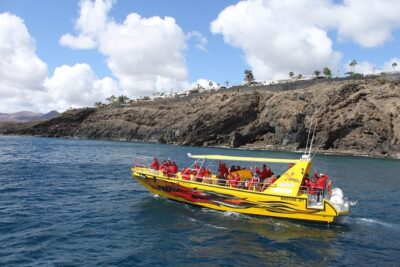
The whole feel of this tour comes down to the boat. Instead of a big, slow vessel, you go out on a fast RIB about 8.5 meters long. That matters in Lisbon because the Tagus Estuary can be one kind of water, and then the Atlantic can flip the mood fast—choppy, windy, and salty. The smaller RIB design is meant to reduce seasickness compared to larger boats, and you’ll feel the breeze instead of getting closed up.
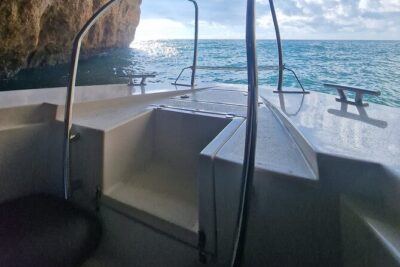
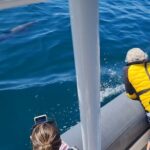
I also like how the seating is set up for real viewing. You sit on comfortable jockey seats, straddle-style, and you can stand when you want to look around. That means you’re not stuck watching over someone’s head the entire time. Just be smart about what you wear. Skirts can be awkward on this style of seating, and the tour description makes it clear you’ll be straddling rather than just sitting back in a chair.
And yes—this is a wildlife trip. You’re not sightseeing at a slow pace. The crew’s job is to find dolphins, then keep you close enough to enjoy the moment without turning the hunt into a chaotic mess.
You can also read our reviews of more tours and experiences in Lisbon.

Meeting at SeaEO Tours, Doca de Santo Amaro (and the 5-minute window)
Your meeting point is SeaEO Tours at Doca de Santo Amaro Gate, Av. Brasília 3, 1350-353 Lisboa. It’s near public transportation, so you can plan to arrive by transit rather than treating this like a car-only mission.
The biggest practical detail: don’t drift in late. There’s only a 5-minute tolerance after the tour start time. After that, you can be denied access and it may not be refunded. In plain terms, show up early, get yourself settled, and use that time to check the wind and grab your layers before you board.
Stop 1: Docas de Santo Amaro, where the tour becomes real
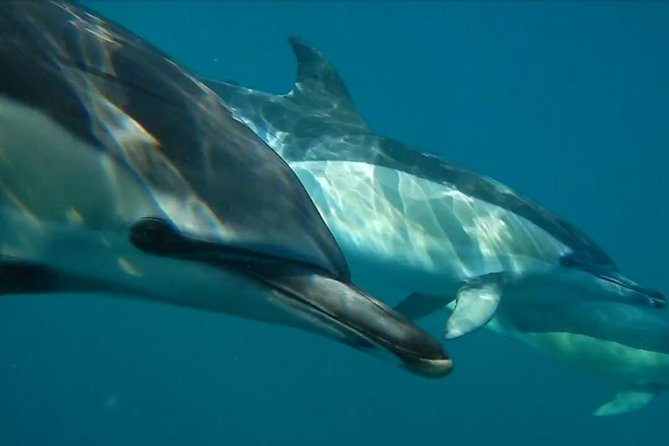
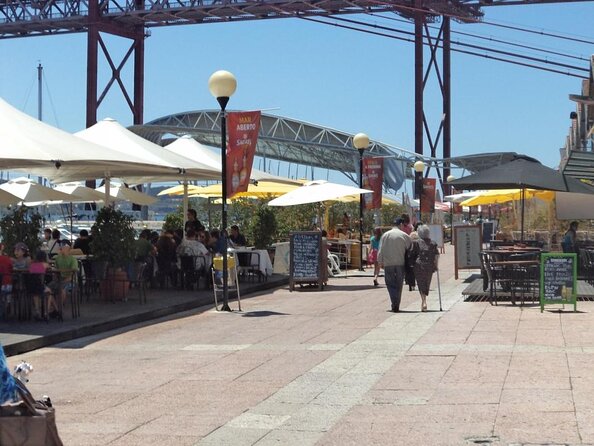
Docas de Santo Amaro is where your “Lisbon on land” day turns into an Atlantic outing. You’ll depart from the docks in Alcântara, and the area is also described as being just below the 25th of April Bridge, which is a handy landmark for orientation.
In this first stage, you’re likely getting your safety briefing and settling into the boat rhythm. This matters because on a RIB you feel the movement right away. If you’re prone to motion sickness, this is where you want to be ready—position yourself comfortably, keep your eyes on the horizon when you can, and don’t wait until you feel awful to think about comfort.
Also, if you’re bringing a jacket, this is when you’ll notice whether you picked the right one. Even in seasons that feel warm in the city, Atlantic wind has a way of cutting through.
Stop 2: Farol do Bugio and the best kind of scenery
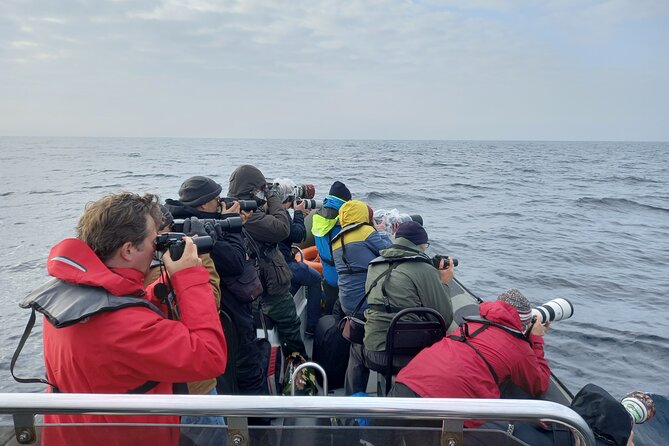
Farol do Bugio is the second stop. Think of it as a lighthouse point and a natural moment to switch from “departure zone” to “open-water searching.”
What you’re really doing here is shifting your geography. You start in the Lisbon center area, leave the Tagus Estuary, and push toward the Atlantic. That transition is part of the fun. The coastline changes, the light changes, and the birdlife changes. The crew’s job is to scan the water and tell you what they’re watching for as they go.
You should also expect the guide to connect what you’re seeing to real animal behavior—why dolphins show up where they do, and what cues can mean more sightings ahead. Even if dolphins don’t appear immediately, this middle section is where you feel like you’re truly out on a marine expedition rather than just doing a quick boat ride.
Stop 3: Back toward Lisbon sights like Belem Tower
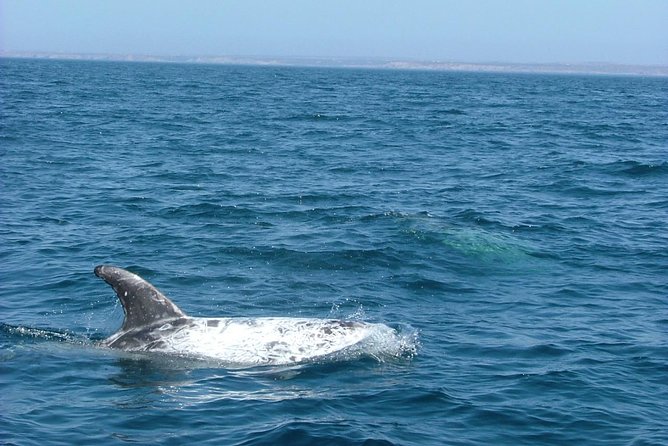
The route brings you back toward Lisbon as part of the loop, and the highlights explicitly call out landmarks like Belem Tower you’ll see while sailing. This is a nice balance: you get a proper stretch of open water, but you’re not isolated from Lisbon’s skyline context.
In many dolphin tours, people forget to look up once they’re chasing the next splash. Here, the overall structure makes it easier to enjoy both: the marine hunt and the iconic Lisbon viewpoints.
If you’re the type who wants a “wow” photo moment without doing a full day of standard sightseeing, this stop helps. You’re on the water, moving, and you’re still getting that Lisbon postcard look—just with waves in the frame.
Marine biologist commentary: the fun science part you’ll remember
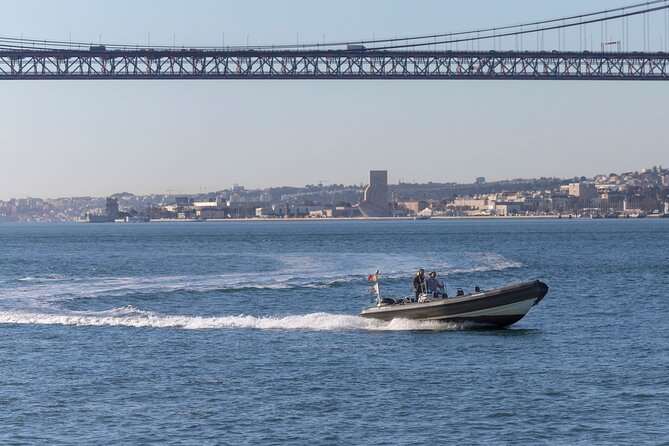
A marine biologist is onboard, and the value here isn’t just trivia. It’s how the information helps you spot animals more confidently.
The tour is built around commentary while you sail, so you’re not waiting until dolphins show up to start learning. You’ll hear explanations about dolphin behavior and what to watch for in the water. And because the crew is actively looking, the commentary tends to line up with what you’re seeing in real time.
From past experiences, you may meet crew members such as Sid, Sarah, or Bart—names that come up in how the team is described by guests. Regardless of who you get, the common thread is clear communication paired with a strong focus on safety and animal respect. This isn’t loud, performative storytelling. It’s the kind of guide voice that helps you notice details fast: surface activity, movement patterns, and the way pods may travel together.
Dolphins aren’t guaranteed, but the odds are strong
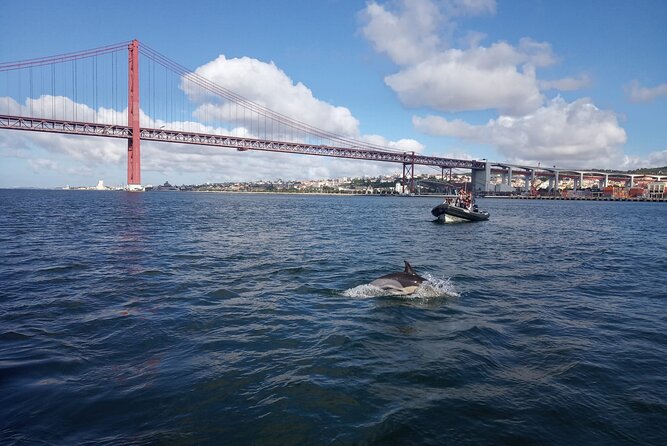
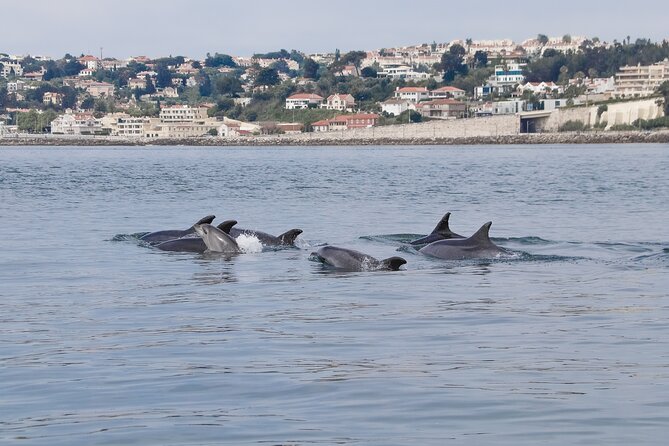
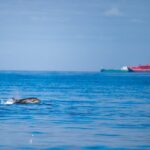
The tour comes with a straight warning: dolphins aren’t guaranteed, and the provider can’t be held responsible if you don’t see them. The stated sighting success is around 95%, which is about as good as it gets in the real world.
This is where the RIB setup pays off again. When dolphins appear, a smaller boat can position better for close views without everyone crowding each other. You’re also in a pace that lets the crew react quickly—turn, search, and try again without wasting the entire trip.
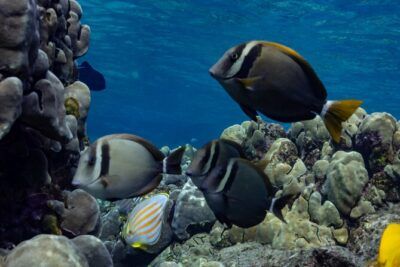
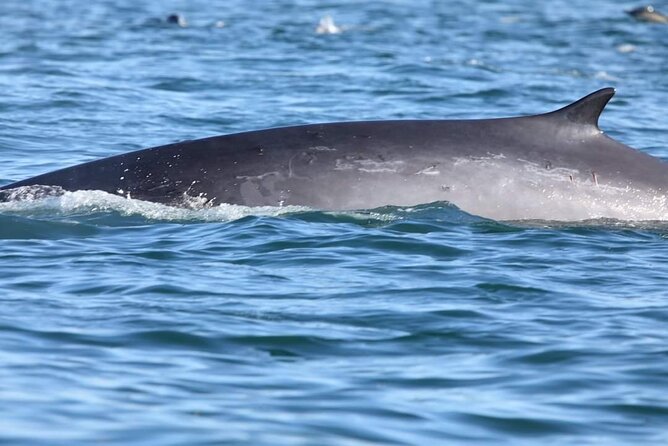
Also, don’t only focus on dolphins. You might spot other sea life and seabirds, depending on conditions. Examples mentioned include sea birds in feeding activity, sunfish, sharks, harbor porpoise, and in rarer cases a fin whale. When the biologist is talking about what you’re seeing, those extra sightings can make the day feel even bigger than the headline.
Seasickness, cold wind, and what to wear in Lisbon’s Atlantic air
If you’re reading this, you’re probably wondering the big question: will I feel sick?
The tour specifically calls out that big boats tend to create more seasickness, which is why they use a fast and safe RIB designed for a better ride. The crew also provides a motion-sickness pill if necessary.
They also give clear food advice. Avoid a breakfast heavy on milk or yoghurt. Eat properly, and include bread and an apple before you go. That’s practical advice that aims to reduce nausea triggers.
Then comes the wardrobe part. You may be surprised by how chilly it gets once you’re out of the estuary and into the wind. A bunch of small details matter here: a warm jacket, something to block wind, and shoes you trust on a moving deck.
And one more style note that’s easy to miss: since passengers straddle the jockey seats, skirts can be uncomfortable or just not work well. Wear pants or something snug enough that you’re not worrying the whole time.
Price and value: is $62.88 really worth it?
At $62.88 per person for around 3 hours, this sits in the “not cheap, but fair” zone. The value comes from three things you’d otherwise have to piece together on your own:
1) A real marine biologist onboard
You’re paying for more than a boat ride. You get science commentary and targeted dolphin spotting help.
2) A fast RIB that aims for better viewing
This isn’t a long, slow cruise where you spend most of the time wishing you were closer. The boat design supports close encounters and easier sightlines.
3) Safety support and practical comfort items
You get lifejackets, insurance coverage, and a motion-sickness pill if needed. That reduces uncertainty.
Will you always see dolphins? No. But the stated success rate is high, and the crew’s focus is clearly on finding pods rather than just running the route like a schedule clock.
If your Lisbon trip has room for one “bucket list” activity, this is a strong candidate because it blends wildlife with a guided learning component. If you’re trying to cram in ten things a day, it might feel like a lot of money for one moment at sea. But if you want a single standout experience, the odds and the format make it easy to justify.
Who this tour fits best (and who should think twice)
This tour is a good match if you:
- Want Lisbon ocean wildlife without a full day away
- Enjoy learning while you travel, not just taking photos
- Don’t mind moving around for better views
- Travel in a small group size (the tour caps at 24, so it’s not a huge crowd)
It’s less ideal if:
- You’re extremely sensitive to wind and cold and hate planning for layers
- You’re traveling with very young kids. It’s not suitable for babies under 5 years.
- You have conditions that the operator states may deny access (the tour mentions that some conditions lead to denial without refund, but it doesn’t list them in the information here). If anything applies medically, confirm first.
When to book and how to time it in your Lisbon days
On average, this is booked about 25 days in advance. That’s not “months ahead,” but it’s also not a last-minute thing if you want good time slots.
If your schedule is flexible, I’d book this earlier in your trip rather than saving it for the last day. The tour requires good weather, and if it’s canceled due to poor conditions, you’ll need an alternate date or a full refund. Having backup days built in reduces the stress.
Also, keep your departure time in mind. In past cases, the crew has adjusted timing based on sea conditions to prioritize safety and your chances at seeing dolphins. So pick a day when you can roll with a possible change.
Should you book this Lisbon dolphin watching with a marine biologist?
I’d book it if you want a serious shot at dolphins, but you also care about the science behind what you’re seeing. The combo of an onboard marine biologist, a fast RIB designed for real viewing, and a route that takes you from central Lisbon out to Atlantic waters makes this feel like a proper marine outing rather than a tourist checklist.
I’d think twice only if you know you’ll struggle with cold wind or motion on open water, or if your whole trip hinges on seeing dolphins for sure. The odds are strong (around 95%), but nature sets the rules. Go in with the right expectations: you’re buying an expert-led marine expedition, not a guaranteed dolphin show.
FAQ
How long is the dolphin watching tour?
It runs for about 3 hours.
Where is the meeting point?
Meet at SeaEO Tours, Doca de Santo Amaro Gate, Av. Brasília 3, 1350-353 Lisboa, Portugal. The activity ends back at the meeting point.
Do you sail to the Atlantic from Lisbon?
Yes. The route leaves the Tagus Estuary and heads toward the Atlantic Ocean.
Is a marine biologist onboard?
Yes. A marine biologist provides commentary on board.
What are the chances of seeing dolphins?
Dolphin sightings are around 95% success, but dolphins are not guaranteed.
What should I bring or wear?
Bring comfortable clothes, a jacket, and shoes you trust on a moving boat. A camera is not included.
Can I cancel for a refund?
Yes. You can cancel up to 24 hours in advance for a full refund. If you cancel less than 24 hours before the start time, the amount paid is not refunded.