REVIEW · BUNBURY
Swim With The Dolphins Experience in Bunbury Australia
Book on Viator →Operated by Dolphin Discovery Centre · Bookable on Viator
You can’t schedule dolphin magic. In Bunbury, this Koombana Bay swim puts you in the water with wild bottlenose dolphins where marine biologists designed the experience around dolphin welfare and you get a free-return guarantee if dolphins don’t appear in the water. One thing to know up front: the interaction level is always up to the dolphins, so nobody can promise how close you’ll get.
The morning runs about 4 hours with a 7:45am start at Dolphin Discovery Centre, and the group stays small (up to 22). You’ll be kitted out with snorkel and mask gear, plus a wetsuit, and you’ll also have an included drink and snack.
If you hate early starts or you’re not into chilly water, this might feel like a tougher sell. If you want a wildlife-focused encounter that feels authentic rather than staged, it’s a strong Bunbury option.
In This Review
- Key things that matter most
- Koombana Bay’s bottlenose dolphins, up close
- Your 4-hour morning: how the flow typically works
- Getting kitted up: snorkel, fins, wetsuit, and being warm enough
- Meeting dolphins in shallow water: what you should expect
- The crew and safety: volunteers, captains, and rules that keep it respectful
- Dolphin welfare, licensing, and how marine biology shapes the experience
- Your money supports conservation, education, and research
- Price and value: $99.64 and what you actually get
- Who should book this Bunbury dolphin swim
- Quick practical tips before you go
- Should you book the Swim With The Dolphins in Bunbury?
- FAQ
- Where is the Swim With The Dolphins experience in Bunbury?
- What time does the tour start?
- How long does the experience last?
- How much does it cost?
- How many people are on the tour?
- What equipment is included for the swim?
- Do I have a guarantee of seeing dolphins?
- Is the tour suitable for most people?
- What happens if the weather is poor?
- What is the cancellation rule for a full refund?
Key things that matter most
- Small group size (max 22): more breathing room in the water and on the boat
- Marine-biologist design + DBCA licensing: built for dolphin welfare and legal wildlife standards
- Dolphins decide interaction: you can’t force closeness, but you can be ready when they choose you
- Real conservation built in: observation and documentation of dolphin ID, behavior, and population
- Gear and fuel included: snorkel, mask, fins, wetsuit, plus drink and snack
Koombana Bay’s bottlenose dolphins, up close
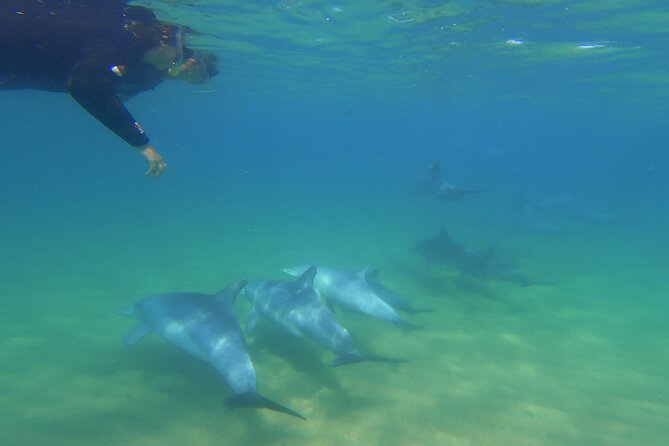
Bunbury’s Koombana Bay is the kind of place that makes you slow down. Not because it’s boring. Because the water has residents. The tour is centered on wild bottlenose dolphins living in and around this bay, with a local population of 100+ that helps explain why the experience is repeatable and, on many days, reliably exciting.
What I like most is the basic premise: you’re not paying for a guaranteed performance. You’re paying to spend time in the dolphins’ environment, guided in a way meant to protect the animals and keep the experience calm for everyone involved—humans included.
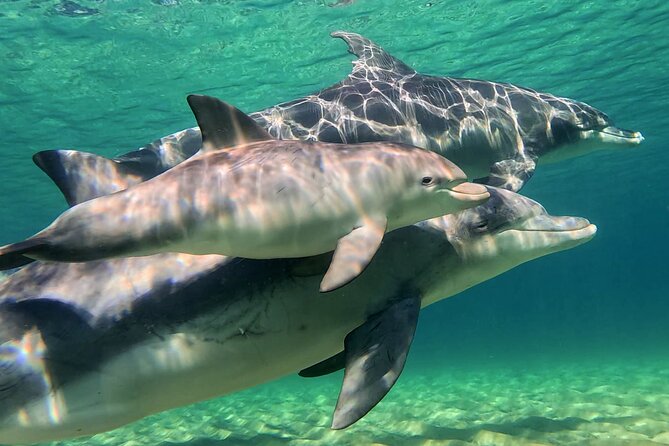
And you’ll hear about the dolphins like they’re neighbors, not trophies. The tour format is designed around moments such as mother-and-calf pairs, male alliances, and playful juveniles, all depending on what’s out there that morning.
You can also read our reviews of more tours and experiences in Bunbury.
Your 4-hour morning: how the flow typically works
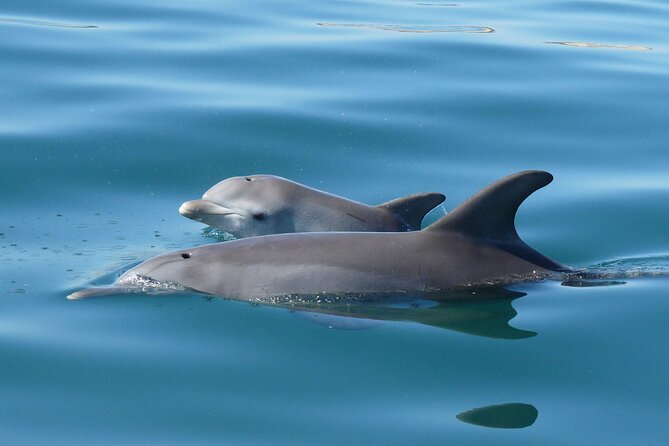
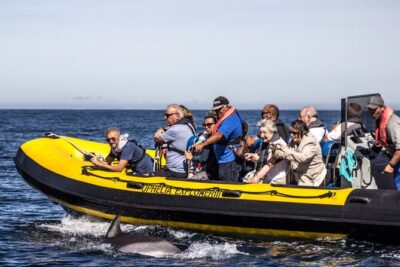
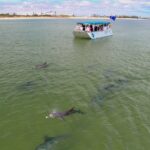
The tour starts at 7:45am at Dolphin Discovery Centre Bunbury (Anchorage Cove, off Koombana Dr). From there, you head to the water via a boat that leaves from the beach in front of the centre—so you’re not dealing with a long drive, winding roads, or a complicated transfer.
You’ll spend roughly 4 hours total, which is long enough to give the dolphins time to move close and give you time to get comfortable in the water without feeling rushed. And importantly, the bay conditions are part of the deal: the tour runs in a calm, shallow, safe bay with short distances to travel. That matters because it keeps the day focused on the dolphins instead of logistics.
The rhythm is simple:
- You meet the crew and get kitted up.
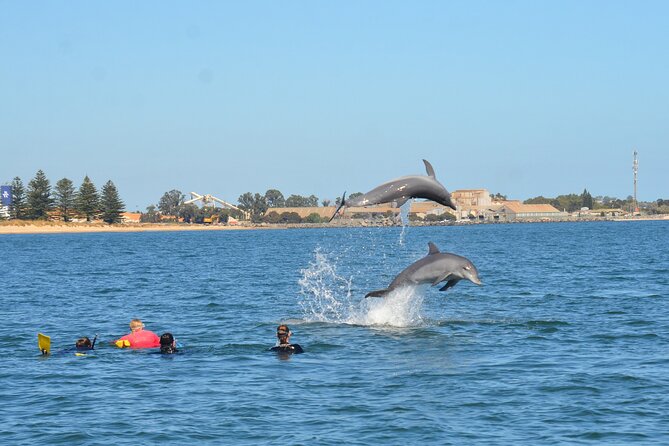
- You head out into protected waters of Koombana Bay.
- When sightings happen, you’re guided into the water.
- The tour keeps documenting and monitoring behavior while you wait for dolphins to come closer.
Depending on what the pod is doing, you might have more than one chance to be in the water, but the key is timing: you go in when the dolphins choose proximity.
Getting kitted up: snorkel, fins, wetsuit, and being warm enough
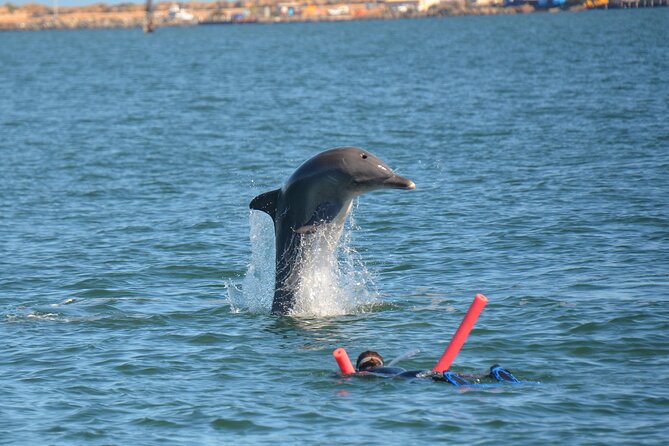
This isn’t a barefoot “stand there and watch” situation. The activity supplies the gear you need for a safe, comfortable swim, including snorkel, mask, fins, and a wetsuit. That’s a big value point. At many marine activities, you end up scrambling to rent equipment or buy last-minute extras. Here, the essentials are handled for you.
One detail worth taking seriously: the water can be chilly. The wetsuit is meant to help you last longer in the bay without turning the experience into a shivering contest. If you tend to run cold, this is one more reason to treat the morning as a real swim—not a casual splash.
You also get a drink and snack, which sounds small until you realize you’re doing physical stuff (snorkel swimming, water time) and you started early. A little fuel helps you stay relaxed instead of feeling grumpy once the novelty wears off.
Meeting dolphins in shallow water: what you should expect
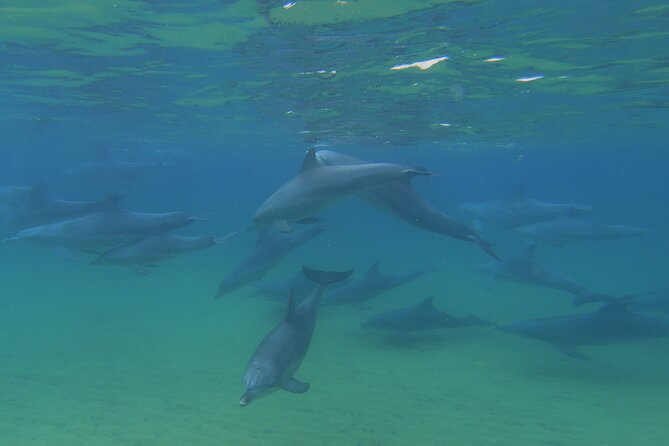
Here’s the honest part, and it’s also the part that makes the experience feel ethical: you can’t force dolphin behavior.
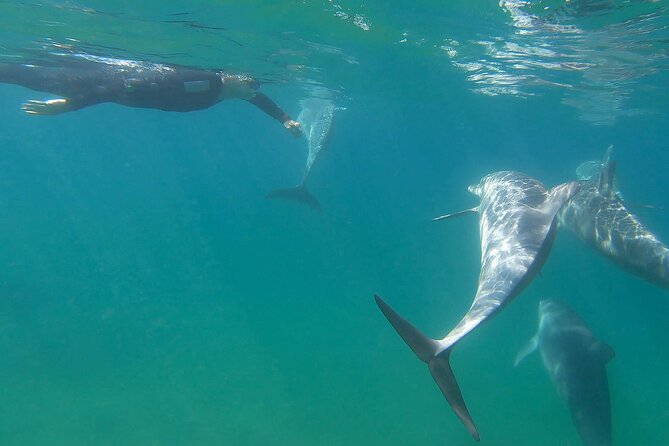
The tour guides you based on sightings, and then you wait for the dolphins to decide what happens next. In their natural environment, dolphins can be curious, playful, cautious, or simply uninterested—sometimes all within the same morning. That’s why the tour includes a guarantee tied to results you can actually verify: you’re guaranteed to see wild dolphins in the water, or you can go again for free (subject to availability).
That free-return guarantee is more than a nice marketing line. It changes the stakes for you. Instead of thinking, I hope I get lucky, you can think, If today isn’t the day, I have a second shot.
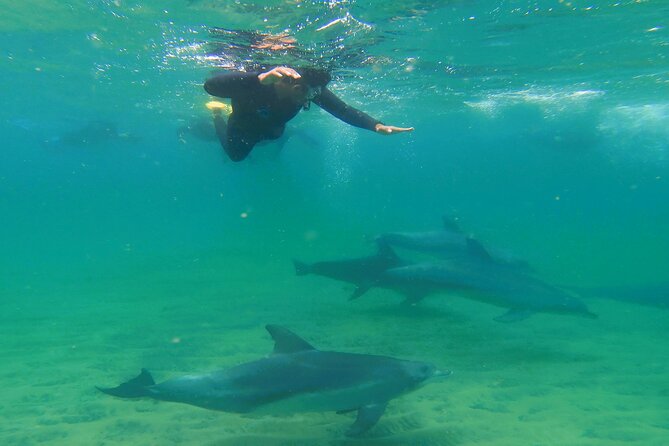
What you might notice is that the interaction isn’t just about closeness. It’s about presence. You’ll be guided to see, hear, and feel the dolphins in the water as they approach or swim nearby. The crew’s job is to keep things controlled—so you can enjoy the encounter without stressing the animals.
The crew and safety: volunteers, captains, and rules that keep it respectful
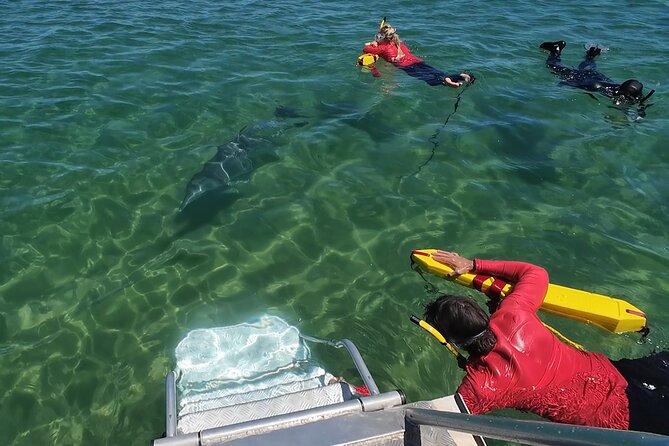
The experience is run with an experienced tour guide plus volunteers who help manage the water time and support safety. You may meet guides such as Yvette, Jess, Ella, or Axel (names shared by the centre’s team). On the boat, you may also interact with the crew members who help run the day, including the boat captain known as Noodles, and other staff like Shane.
Why does this matter? Because dolphin swims live or die on how the operation handles moments when the unexpected happens. A small, structured group and staff who focus on safe water practices usually means fewer awkward surprises.
The tour also emphasizes welfare through its design, so the guiding approach isn’t just about keeping you from slipping on a wet deck. It’s about minimizing stress for the dolphins too—keeping the bay behavior natural, and keeping human movement predictable.
Dolphin welfare, licensing, and how marine biology shapes the experience
One of the strongest points here is how clearly the tour frames itself as a scientific, welfare-first activity—not a thrill ride.
The experience is designed by marine biologists for the most ecologically aware wild dolphin encounter, with dolphin welfare as the top priority. It’s also licensed by the Parks and Wildlife Service Western Australia (DBCA). Licensing doesn’t automatically guarantee a great day, but it does tell you the operator has to meet official standards for how wildlife interactions are handled.
In practical terms, this kind of foundation tends to show up in how the tour runs:
- calm water selection (shallow, protected bay)
- controlled group size (max 22)
- a guided approach to entering the water based on dolphin movement
- an emphasis on observation rather than chasing dolphins
If you care about ethical wildlife viewing, those are the kinds of signals you want before you pay.
Your money supports conservation, education, and research
This is a not-for-profit environmental charity model. The tour states that all profits go toward marine conservation, education, and research. That means your ticket isn’t just covering logistics and staff time; it’s also funding the work that helps protect dolphins and improve how people understand them.
The tour also functions as a research activity. Staff and volunteers document animal population, identification, and behavior. You’re not just watching dolphins—you’re participating in an ongoing monitoring effort that builds better data over time.
This is the difference between a one-off “cool photo” and a day that leaves a paper trail for scientists and conservation teams. You may not see the final reports, but the documentation happens during the experience.
Price and value: $99.64 and what you actually get
At $99.64 per person, this isn’t a budget activity. But the value story here is fairly clear when you look at what’s included and what’s promised.
You’re getting:
- about 4 hours on the water in Koombana Bay
- a small group (up to 22)
- supplied equipment: snorkel, mask, fins, wetsuit
- a drink and snack
- a wild dolphin encounter with a guarantee you’ll see dolphins in the water, or you can return for free (subject to availability)
- participation in conservation and research work
You’re also paying for the welfare-oriented structure: shallow protected bay, short travel distances, and an approach designed around dolphin behavior rather than human demands. That’s the sort of operating philosophy that costs money.
The free-return guarantee matters for value the most. If dolphins don’t show the way they need to for the experience you want, you’re not left feeling like you paid for a maybe.
Who should book this Bunbury dolphin swim
This experience fits best if you:
- want a wildlife interaction that’s wild bottlenose dolphins in their environment (not a controlled stage)
- like structured guidance and you’re okay with waiting for animal behavior
- can handle early morning timing and cool water (wetsuits are provided, but it’s still water time)
It may not fit as well if you:
- need to know in advance exactly how close dolphins will get (nobody can promise that)
- dislike swimming activities, even with supplied gear
- are uncomfortable with a wildlife-based experience where the dolphins set the tempo
If you’re traveling from outside WA and want a genuinely different coastal wildlife morning, Koombana Bay is a strong choice.
Quick practical tips before you go
Based on how the tour is described and how it runs, here are the most useful things to think about:
- Treat it as a real swim day. You’ll be in the water, using snorkel and fins, with a wetsuit to help with warmth.
- Expect dolphin-led timing. Your job is to follow guidance and stay calm. The dolphins’ job is to decide what interaction looks like.
- Plan around the 7:45am start. It’s an early day, and the whole experience is built around morning conditions.
- Bring a conservation mindset. This isn’t just about seeing dolphins; it’s about observing and helping fund research.
Should you book the Swim With The Dolphins in Bunbury?
I’d book it if you want a dolphin swim that feels ethically grounded, not chaotic. The marine biologist design, DBCA licensing, welfare-first approach, and research documentation all point to a more thoughtful operation than the typical dolphin show vibe.
The big reason to feel good about the money is the guarantee: you’ll see wild dolphins in the water, or you can go again for free (subject to availability). That removes a lot of the usual anxiety around wildlife encounters.
Book with a realistic mindset, though. The dolphins control interaction. Some mornings are more magical than others. If you can accept that nature isn’t a scripted show, you’re in the right place.
FAQ
Where is the Swim With The Dolphins experience in Bunbury?
The tour starts at the Dolphin Discovery Centre Bunbury, located at Anchorage Cove, off Koombana Dr, Bunbury WA 6230, Australia. It ends back at the same meeting point.
What time does the tour start?
The start time is 7:45am.
How long does the experience last?
The duration is about 4 hours.
How much does it cost?
The price is $99.64 per person.
How many people are on the tour?
The maximum group size is 22.
What equipment is included for the swim?
The tour supplies snorkel, mask, fins, and a wetsuit, plus a drink and snack.
Do I have a guarantee of seeing dolphins?
Yes. You’re guaranteed to see wild dolphins in the water. If dolphins are not seen in the water, you can go again for free (subject to availability).
Is the tour suitable for most people?
Most people can participate.
What happens if the weather is poor?
This experience requires good weather. If it’s canceled due to poor weather, you’ll be offered a different date or a full refund.
What is the cancellation rule for a full refund?
You can cancel for a full refund if you cancel at least 24 hours before the experience start time. If you cancel less than 24 hours before, the amount paid is not refunded.